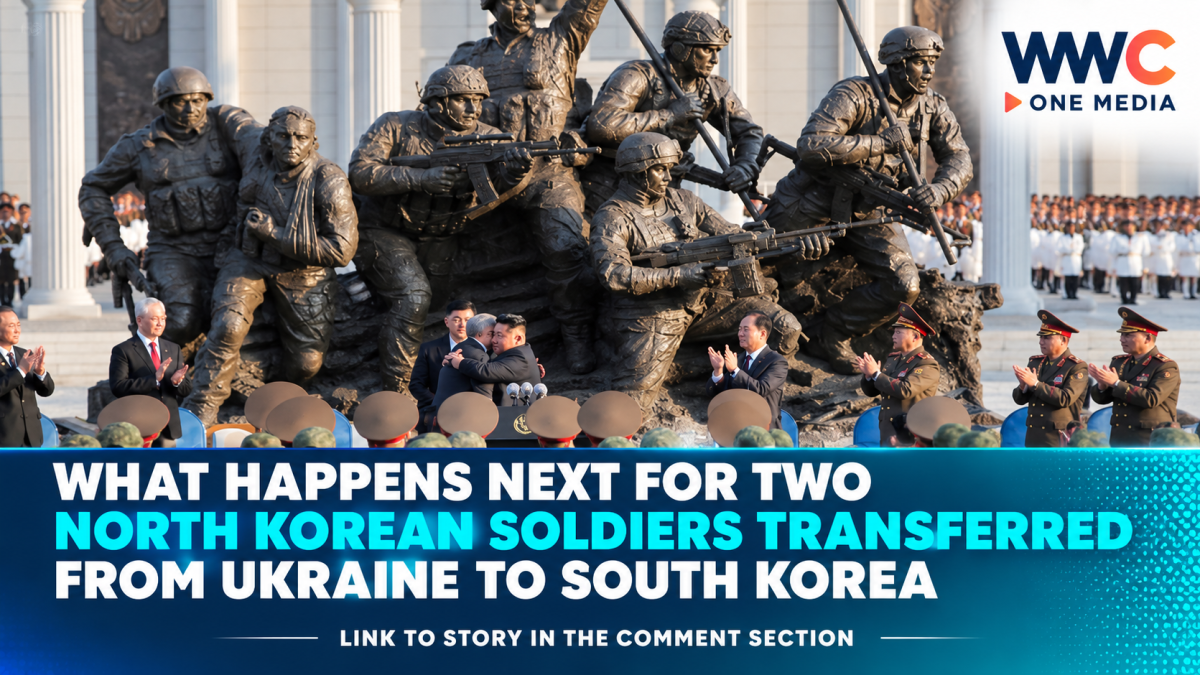
Two North Korean soldiers captured while fighting alongside Russian forces in Ukraine have been transferred to South Korea, where authorities now face the task of determining their legal status, security concerns and future resettlement.
The soldiers were captured by Ukrainian forces in Russia’s Kursk region in January 2025. Both later expressed a desire to go to South Korea, which treats North Koreans who arrive in the country as potential defectors under its legal framework. Ukrainian President Volodymyr Zelenskyy publicly disclosed the transfer during an address to the United Nations General Assembly last week.
South Korea’s Unification Ministry said the two cases will be reviewed under relevant laws and previous practices, including the North Korean Defectors Protection and Settlement Support Act. The process is expected to involve identity checks, questioning and security screening before authorities decide whether the soldiers will receive formal protection.
The National Intelligence Service normally carries out investigations while North Korean arrivals are held in temporary protective custody. The process can last up to 90 days and may be extended when necessary. The soldiers’ military backgrounds could lead to additional questioning about their training, North Korean forces and their deployment to Russia.
South Korean authorities are also expected to assess the soldiers’ physical and psychological condition after their lengthy detention in Ukraine. Officials must consider both their personal circumstances and any potential security issues before determining the next stage of their settlement.
Their transfer also raises questions under international humanitarian law. Prisoners of war are generally subject to rules governing release and repatriation, but legal experts cited in reporting said the rules do not necessarily prevent a transfer to a third country, particularly when returning individuals could expose them to persecution or serious harm. The legal basis for this particular transfer has not been publicly detailed by Seoul and Kyiv.
The soldiers’ stated preference to settle in South Korea is another significant factor. Reports indicate they repeatedly expressed that wish while they were being held in Ukraine. Returning them to North Korea could raise humanitarian concerns if they faced punishment or other serious mistreatment after their return.
Their military experience could also make the case important from a security perspective. A South Korean lawmaker who met the soldiers while they were in Ukraine said they had served in North Korea’s special forces and could potentially provide information about military training, capabilities and North Korean participation in Russia’s war against Ukraine.
The transfer has meanwhile created a diplomatic dispute between South Korea and Ukraine. Seoul says the two governments had agreed to keep the operation confidential because of concerns over the soldiers and their families. Ukraine has disputed the existence of such a nondisclosure agreement, prompting South Korea to summon Ukraine’s acting ambassador and seek an explanation.
For now, the immediate process is expected to center on security screening, legal protection and the soldiers’ eventual resettlement. At the same time, Seoul and Kyiv will have to address their disagreement over the disclosure while authorities determine how the two former prisoners of war will be handled under South Korean law.