
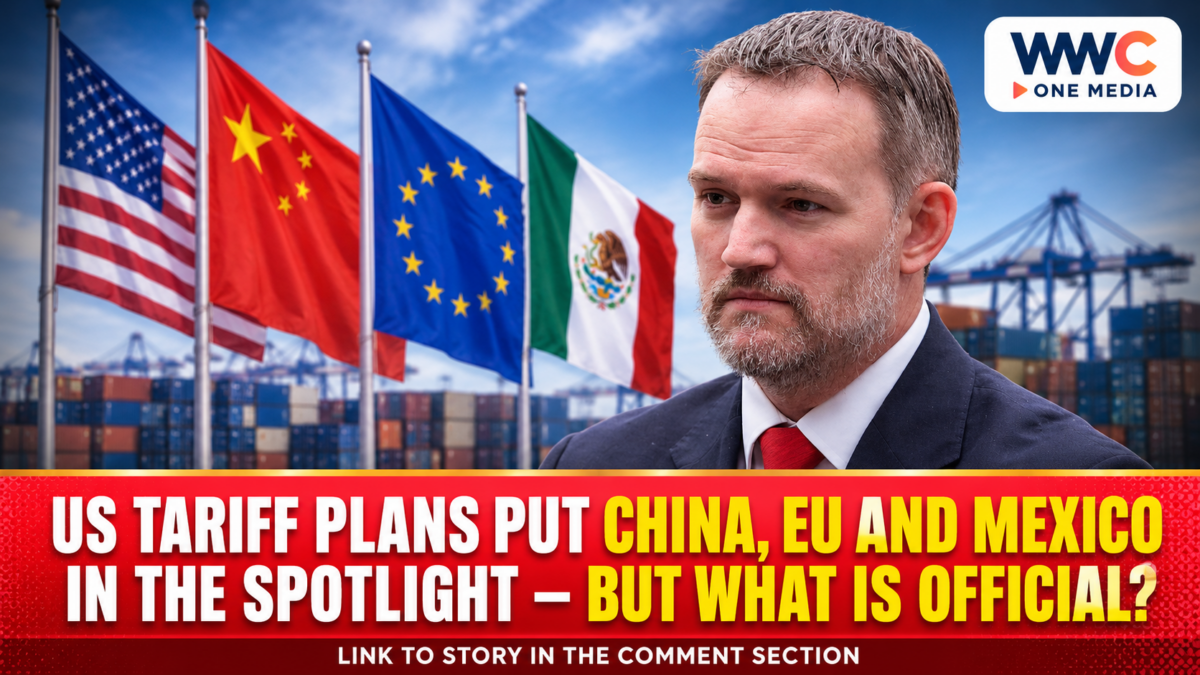
The United States is weighing another trade response to alleged manufacturing overcapacity among major trading partners, with China, the European Union, Mexico and 13 other economies already named in a Section 301 investigation opened on March 11, 2026. However, the latest public records on the US Trade Representative’s investigation page still show the original notice and hearing documents, not a final tariff determination or a new schedule of duties.
That distinction is critical. The investigation gives Washington a legal process to examine foreign government policies and consider trade action, but it does not automatically impose additional charges on imported goods. For exporters, manufacturers and importers, the actual impact will depend on whether the government issues a final decision, which products it covers and when any new duties take effect.
For the Philippines, the issue deserves attention even though the country is not among the 16 economies named in this particular investigation. Changes affecting major manufacturing exporters could influence sourcing, prices, competition and the movement of goods across Asian supply chains.
What the US tariff plans are based on
The formal investigation was initiated by the Office of the US Trade Representative under Section 301(b) of the Trade Act of 1974. Its stated purpose is to determine whether the acts, policies and practices of the economies under review are unreasonable or discriminatory and burden or restrict US commerce.
The 16 economies named are China, the European Union, Singapore, Switzerland, Norway, Indonesia, Malaysia, Cambodia, Thailand, Korea, Vietnam, Taiwan, Bangladesh, Mexico, Japan and India. United States Trade Representative+1
USTR’s stated concern is that some economies may maintain manufacturing capacity beyond what domestic and global demand can absorb. The investigation notice describes possible consequences such as overproduction, persistent trade surpluses and factories or production facilities operating below capacity.
The US government also identified a range of policies it intends to examine, including subsidies, subsidized lending, state-owned enterprise activity, barriers to market access and policies that may encourage production and exports while suppressing domestic demand. These are the administration’s investigative concerns, not final legal findings against every economy named.
The sectors identified in USTR’s fact sheet are broad. They include aluminum, automobiles, batteries, cement, chemicals, electronics, energy goods, glass, machine tools, machinery, paper, plastics, processed food and beverages, robotics, satellites, semiconductors, ships, solar modules, steel and transportation equipment. United States Trade Representative
That list should not be mistaken for a final list of goods that will face new duties. It identifies industries relevant to the investigation; the final product coverage, if any, would need to be stated in a formal government action.
Why China, the EU and Mexico matter
China and the European Union are two of the largest economic participants in international manufacturing and trade. Mexico is also a major US trading partner and is closely integrated into North American production networks.
Their inclusion in the investigation means the review is not limited to one bilateral dispute. It covers a range of economies and industrial sectors, giving the US government a broader basis to examine how foreign production policies may affect US manufacturers.
For China, the formal notice discusses trade surpluses, capacity utilization and production in industries such as electronic equipment, machinery, automobiles and auto parts, plastics, iron and steel, ships and other manufactured goods. The notice also presents the US government’s assessment of China’s trade position. Those figures and interpretations are part of the US investigative record, not independent findings that every Chinese industry is engaging in unfair trade.
The EU is also included as a single investigated economy in the USTR list. Mexico’s presence is important because manufacturing supply chains across the United States, Mexico and Canada are interconnected. A new US tariff action could therefore have consequences for cross-border production planning, depending on the goods covered and the legal treatment of goods originating in different countries.
The commercial question is not simply whether a country appears on the list. It is whether the eventual action applies to a specific product, how customs authorities determine origin and whether existing trade arrangements provide an exemption or limit.
What the public record says about timing and possible duties
USTR’s formal notice opened a process for public submissions and hearings. The agency’s dedicated investigation page lists hearing transcripts dated May 5, May 6, May 7 and May 8, 2026, along with the original initiation notice and the public-comment docket. The comment deadline shown on the page was April 15, 2026. United States Trade Representative
The March notice also asked for views on what action, if any, should be taken, including the possible level and scope of duties or import restrictions. That language confirms that tariffs were among the possible responses being considered. It does not establish that a specific rate was selected.
As of the latest USTR page reviewed for this article, the agency had not posted a final determination or a new tariff schedule for this structural-excess-capacity investigation. No effective date or definitive product list for new duties could therefore be confirmed from that page.
This is where businesses need to be careful with reported estimates. A suggested tariff range, a possible announcement date or a proposed negotiating position is not a customs rule. Importers need the actual government notice and its product classifications, rates, exemptions and effective dates before calculating the cost of a shipment.
Do not confuse this probe with tariffs already in force
The United States has other Section 301 actions that must be treated separately.
In July 2026, USTR announced a final action involving economies that had failed to impose or effectively enforce prohibitions on imports of goods produced with forced labour. That action established separate tariff categories and exemptions. It is not the same legal investigation as the manufacturing-capacity probe.
China is also subject to earlier Section 301 actions involving technology transfer and intellectual property, as well as a separate investigation involving maritime, logistics and shipbuilding sectors. Each action has its own legal record, scope and implementation terms.
For Philippine exporters, the difference is especially relevant. WWC’s earlier report on US–Philippines trade arrangements and what the official records actually confirm explains why a trade announcement should not be treated as a change in customs treatment until the governing documents establish it.
The Philippines is separately affected by the US forced-labour Section 301 action. That is a different matter from the new manufacturing-capacity investigation, and it should not be described as though the Philippines were one of the 16 economies named in this probe.
Why Philippine businesses should watch the outcome
The Philippines is not included in the 16-economy list for the structural-excess-capacity investigation. Still, the country is part of the same regional manufacturing and logistics network.
If the United States imposes additional duties on selected goods from China, the EU, Mexico or other investigated economies, suppliers may reassess where they manufacture, where they sell and how they organize their distribution networks. That could create opportunities for alternative suppliers, but it could also increase competition in markets outside the United States if affected producers redirect shipments.
The outcome may matter to Philippine firms importing machinery, components, chemicals, electronics and industrial materials. A change in the cost of imported inputs could affect production budgets, while changes in US market access could influence the decisions of multinational companies choosing where to locate factories or source components.
The Philippines is already navigating its own tariff discussions with Washington. WWC has reported on the effort to bring lower US tariffs back onto the Philippine trade agenda, as well as the implications of the Marcos–Trump trade discussions for Philippine exporters.
Analysis: The potential opportunity for the Philippines is not automatic. Companies would need to demonstrate competitive pricing, reliable delivery, sufficient production capacity and compliance with the rules of origin and other customs requirements. A tariff imposed on a competitor does not guarantee that Philippine suppliers will win the displaced orders.
What happens next
The next decisive step would be a formal USTR determination or another official government notice setting out whether action will be taken. If new duties are adopted, the document should identify the affected products, applicable rates, exemptions and effective dates.
Until that happens, the established facts remain narrower than the broad political discussion surrounding tariffs: the United States opened a Section 301 investigation into 16 economies, held public hearings and invited comments. The public investigation page reviewed does not yet show a final tariff schedule for this case.
For businesses, the practical advice is to monitor the official USTR and Federal Register notices rather than make cost or sourcing decisions based on estimated rates. The real commercial impact will only become clear when the government publishes the terms that customs authorities are required to apply.
Frequently Asked Questions
1. Which economies are covered by the US manufacturing investigation?
The investigation covers 16 economies: China, the European Union, Singapore, Switzerland, Norway, Indonesia, Malaysia, Cambodia, Thailand, Korea, Vietnam, Taiwan, Bangladesh, Mexico, Japan and India.
2. Have new tariffs from this investigation already taken effect?
The USTR investigation page reviewed does not list a final determination or tariff schedule for this specific manufacturing-capacity investigation. Other US tariff actions are separate and may already be in force.
3. What is Section 301 of the US Trade Act?
Section 301 allows the US Trade Representative to investigate foreign government acts, policies or practices that may be unreasonable or discriminatory and burden or restrict US commerce. It can lead to responsive trade measures.
4. Which industries could be affected?
USTR’s illustrative list includes automobiles, batteries, chemicals, electronics, machinery, semiconductors, ships, solar modules, steel and other manufacturing industries. The list does not mean every product in those sectors will automatically face additional duties.
5. Is the Philippines included in this investigation?
No. The Philippines is not one of the 16 economies listed in the structural-excess-capacity investigation. It is, however, covered by a separate US Section 301 action involving forced-labour import prohibitions.










