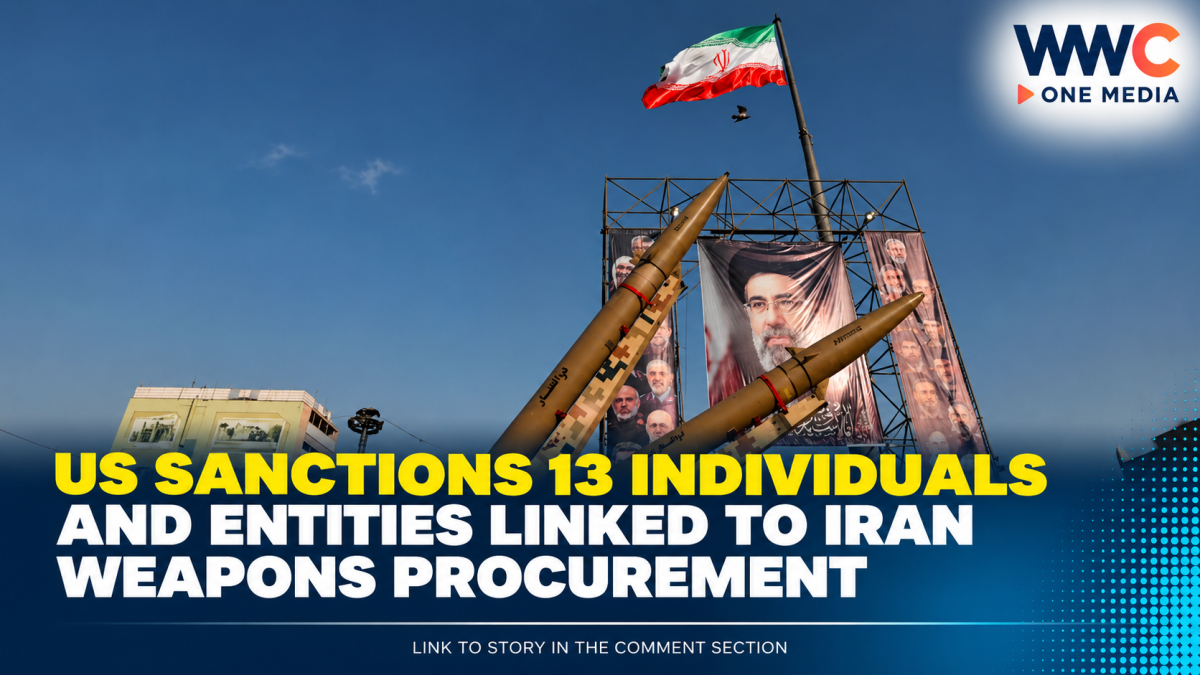
The United States has imposed fresh sanctions on 13 individuals and entities accused of helping Iran procure weapons and military components, targeting networks operating across Russia, China, Hong Kong and Pakistan.
The sanctions were announced on Sept. 29 by the US Treasury and State departments as part of Washington’s broader campaign to restrict Iran’s access to international markets and disrupt its military procurement networks.
The Treasury said 10 individuals and entities were specifically targeted for procuring weapons and weapons components for Iran’s Ministry of Defense and Armed Forces Logistics, known as MODAFL. The agency oversees weapons research, production and acquisition, including programs involving ballistic missiles and unmanned aerial vehicles.
Among those sanctioned is Seyyed Asghar Alizadeh Tabatabai, described by the Treasury as a Beijing-based representative of Iran’s defense ministry. US officials said he coordinated the procurement of finished weapons systems and dual-use components from China on Iran’s behalf.
The measures also target companies and intermediaries involved in supplying electronic components and other materials. The broader sanctions announced by the State Department include eight entities and five individuals linked to what Washington described as Iran’s procurement and proliferation of weapons and weapons components.
Two Russian companies were also included in the sanctions, alongside targets in China, Hong Kong and Pakistan. The move expands the geographic reach of Washington’s effort to disrupt the supply networks that Iran uses to obtain military-related equipment.
Treasury Secretary Scott Bessent said the United States would continue targeting people and organizations providing material, technological or financial support to Iran. The department said the latest measures are intended to make it more difficult for Tehran to rebuild its weapons programs and raise the costs for entities assisting its procurement efforts.
The sanctions come amid the ongoing US-Iran conflict and renewed diplomatic efforts aimed at ending the fighting. Washington has described the economic pressure campaign as a way to restrict Iran’s military and financial networks while pushing Tehran toward negotiations.
The latest action forms part of “Operation Economic Outcast,” a broader US sanctions campaign announced in August that seeks to restrict Iran’s access to global financial and commercial networks.
The practical effect of the new sanctions remains uncertain. While US officials say the measures are designed to disrupt Iran’s ability to replenish military equipment, some analysts have questioned how significantly individual sanctions will affect Tehran’s missile and drone capabilities.