WASHINGTON, UNITED STATES / MANILA, PHILIPPINES — November 5, 2026 | WWC ONE MEDIA | US Politics, 2026 Midterm Elections and 2028 Presidential Race
The Republican Party is plunging into an extraordinary political reckoning after a devastating defeat in the 2026 US midterm elections handed Democrats control of both chambers of Congress, triggered a bitter blame game among President Donald Trump’s allies and accelerated the battle to succeed him in the 2028 presidential election.
At the center of the growing Republican divide is Vice President JD Vance, widely considered one of the leading contenders for the party’s next presidential nomination.
In a striking departure from the White House’s initial response, Vance publicly blamed the Republican defeat on the administration’s war with Iran, soaring living costs and voter dissatisfaction with American foreign policy.
The comments exposed tensions within a party that has spent years organizing itself around Trump’s political leadership.
According to Bloomberg’s November 4 report, Republican Blame Game Starts as 2028 Hopefuls Angle for Position, Republican politicians are increasingly seeking to explain the electoral collapse while potential presidential candidates begin positioning themselves for the next national contest.
The stakes extend far beyond the November election.
With Trump constitutionally barred from being elected to a third presidential term, Republicans face a consequential leadership battle over who will inherit his political coalition.
The question now is whether the Republican Party can rebuild its support before 2028 — or whether the struggle to succeed Trump could divide the conservative movement when it can least afford another political crisis.
Democrats Capture Congress in Historic Rebuke of Trump’s Presidency
The November 3 midterm elections delivered one of the most significant shifts in American political power in decades.
Democrats won control of the House of Representatives and the Senate, overturning Republican majorities and delivering a major setback to Trump’s second-term agenda.
The Republican losses extended beyond traditional swing districts into states and communities that had strongly supported Trump in the 2024 presidential election.
Democrats recorded important victories in Texas, South Carolina, Iowa, Kansas and Ohio, illustrating the breadth of voter dissatisfaction.
Axios reported that Democrats were on course to gain as many as 40 House seats and at least seven Senate seats as results continued to develop.
The precise final margins remain subject to outstanding vote counts and official certification.
The results nevertheless establish that Republicans will enter the next Congress without control of either chamber.
WWC ONE MEDIA covered the historic shift in Democrats Capture Both Houses of Congress in Sweeping Midterm Victory — Trump Faces Major Political Setback With Two Years Left in Office.
The election significantly changes the final two years of Trump’s presidency.
Democrats will gain greater authority over congressional investigations, legislative priorities and Senate confirmation proceedings once the newly elected Congress takes office in January 2027.
However, Democratic control does not mean the party can automatically enact its preferred policies.
Trump retains presidential veto authority, and Senate procedural rules can limit legislation.
For Republicans, the more immediate problem is political: determining why so many voters rejected the party’s candidates.
JD Vance Breaks With Trump’s Election Narrative
The most consequential response came from Vice President JD Vance.
While Trump and several administration officials emphasized candidate weaknesses and other explanations for the defeat, Vance identified the Iran war as a central cause.
In a November 4 statement, Vance said Republican voters had grown frustrated with the conflict and its economic consequences.
He pointed to four concerns reported by a Republican pollster: ending the Iran war, addressing the cost of living, prioritizing America First policies and reconsidering the United States’ relationship with Israel.
According to The Washington Post, Vance said the conflict had contributed to Republicans losing the Senate for at least the next six years.
That assertion was Vance’s political assessment, not a legal or electoral guarantee. Senate control can change at subsequent elections.
His broader argument was that Republicans cannot rebuild their coalition without acknowledging the dissatisfaction of voters who previously supported Trump.
The statement was significant because Vance remains a senior member of the administration.
As vice president, he has been closely associated with Trump’s agenda and political coalition.
But as a potential 2028 presidential candidate, he must also convince voters that he understands why Republicans lost.
That creates a difficult balancing act.
He needs to maintain support from Trump’s loyal conservative base while demonstrating that his own leadership could address the policies that became unpopular during the midterms.
Trump Rejects Responsibility as Republican Infighting Intensifies
Trump responded to the election by emphasizing that his own name had not appeared on the ballot.
The president suggested Republicans would have performed better had he personally been running.
That argument reflects his longstanding belief that his political appeal is stronger than that of many other Republican candidates.
However, critics within the party argue that the election was heavily influenced by the administration’s decisions.
The Iran war, elevated fuel prices, tariffs and cost-of-living pressures became major campaign issues.
Trump had also urged voters at campaign rallies to treat the midterms as a referendum on his leadership.
The contrast has intensified the dispute over responsibility.
Axios reported before the election that Republican strategists were already preparing for disagreements involving candidate selection, campaign strategy, funding decisions and Trump’s political influence.
Some Republicans blamed weak nominees in competitive races.
Others questioned whether the party spent too much time defending unpopular policies rather than focusing on economic affordability.
The result is a party struggling to agree on whether its next priority should be defending Trump’s record or changing direction.
Iran War Becomes the Biggest Political Flashpoint
The US-led war with Iran emerged as one of the election’s most consequential issues.
The conflict contributed to higher energy prices and growing concerns about American involvement in another prolonged military confrontation.
For voters who supported Trump’s promises to avoid costly foreign wars, the conflict represented a major source of frustration.
Rising gasoline and diesel prices also intensified household financial pressures.
These costs affected transportation, business operations and consumer spending.
The Washington Post, Bloomberg and Axios identified the Iran war as a major political liability for Republican candidates.
WWC ONE MEDIA had previously highlighted the issue in US Midterms 2026: Six Things That Could Decide Control of Congress — Is Trump Facing a Political Turning Point?.
That pre-election report examined the political importance of fuel prices, foreign policy and economic dissatisfaction.
The outcome suggests that voters did not evaluate the conflict solely through national-security considerations.
Many also judged its economic effects.
However, it would be inaccurate to attribute every Republican loss exclusively to the Iran war.
Candidate quality, tariffs, immigration policy, local issues and Trump’s personal approval ratings also influenced the election.
Ron DeSantis Signals a Possible Republican Alternative
Florida Governor Ron DeSantis, a former Trump presidential rival, delivered one of the strongest Republican reactions to the election results.
DeSantis described the scale of the defeat as approaching an extinction-level event for Republicans in many parts of the country.
He contrasted the national losses with Florida’s Republican victories, arguing that the state demonstrated how conservative leaders could deliver results.
The remarks immediately attracted attention because DeSantis has previously challenged Trump for the Republican presidential nomination.
Although his earlier campaign failed to displace Trump, the latest electoral defeat could provide an opportunity to revive his national political ambitions.
DeSantis may seek to present himself as a conservative who can maintain Republican policies while improving the party’s electoral performance.
However, he has not secured a place in the 2028 contest.
His appeal outside Florida, ability to attract donors and relationship with Trump’s supporters remain important uncertainties.
The wider question is whether Republicans want a different style of leadership or a more substantial policy change.
Marco Rubio Emerges as a Potential Rival to JD Vance
Secretary of State Marco Rubio is another prominent Republican whose political future is attracting attention.
The former Florida senator has gained international visibility through his role in the Trump administration.
A Wall Street Journal report published before the midterms described Trump’s private interest in comparing the political strengths of Vance and Rubio.
The two represent potentially different approaches to Republican foreign policy.
Vance has emphasized skepticism toward prolonged overseas military commitments and has sought to appeal to voters concerned about the costs of foreign intervention.
Rubio has traditionally adopted a more assertive international-security position.
The Iran war could make that distinction especially important.
If Republicans conclude that overseas military involvement contributed substantially to their defeat, Vance’s argument may gain support.
If the party instead prioritizes a more forceful national-security approach, Rubio could appeal to a different group of conservative voters.
However, the 2028 Republican primary has not formally established a clear contest between the two.
Both remain potential contenders rather than declared nominees.
Ted Cruz and Other Republicans Could Enter the 2028 Race
Texas Senator Ted Cruz has also been discussed as a possible presidential candidate.
Cruz previously sought the Republican nomination in 2016 and has openly considered another campaign.
According to Associated Press reporting, he devoted significant time and political resources to helping Republican candidates during the 2026 midterms.
Those efforts did not prevent major defeats, including in his home state.
The results create both opportunities and difficulties for Cruz.
His established conservative profile and national recognition could help him compete.
But the party’s poor performance raises questions about whether voters want familiar Republican figures or a new generation of leadership.
Other potential contenders include former New Jersey Governor Chris Christie, who has been a prominent Trump critic.
At this stage, the Republican presidential field remains unsettled.
Speculation about a possible candidacy should not be confused with a formal campaign announcement.
Candidate Selection Becomes Another Source of Republican Anger
The midterm defeat has renewed questions about Trump’s influence over Republican nominations.
Several candidates supported by the president lost races Republicans had hoped to win.
In Texas, Trump’s support for Ken Paxton became a particular subject of criticism after Democrat James Talarico won the Senate race.
Republicans also suffered defeats in other contests where strategists had questioned candidate strength or campaign strategy.
The Washington Post identified candidate selection as one factor contributing to the party’s losses.
However, it remains difficult to determine precisely how different candidates would have performed.
A more experienced nominee might have improved Republican prospects, but broader voter dissatisfaction could still have produced a Democratic victory.
The debate is likely to influence future primary elections.
Republican leaders must decide whether loyalty to Trump should remain a dominant consideration or whether electability should receive greater weight.
That disagreement could become a central issue in the 2028 nomination contest.
Georgia’s Election Results Expose Problems for the Republican Coalition
Georgia provided another important example of the electoral shift.
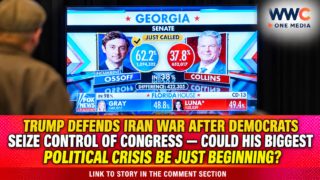
Democratic Senator Jon Ossoff won reelection despite efforts by Republicans to defeat him.
His victory highlighted the challenges facing Republican candidates in competitive Southern states.
WWC ONE MEDIA examined the outcome in Democrat Jon Ossoff Defeats Trump’s Senate Pick in Georgia, Securing a Crucial Battleground Victory — But Can Democrats Turn It Into Control of Congress?.
The election also produced a major change in Georgia’s governorship.
Democrat Keisha Lance Bottoms defeated Republican Rick Jackson, ending more than two decades of Republican control of the governor’s office.
WWC ONE MEDIA covered the result in Democrat Keisha Lance Bottoms Makes US History, Flips Georgia Governor’s Mansion After 23 Years of GOP Rule — But Could Her Victory Change the 2028 Presidential Race?.
Together, the victories demonstrate how Democrats expanded their appeal in states that Republicans had regarded as important parts of their national coalition.
For potential 2028 Republican presidential candidates, rebuilding support in these states will be essential.
Could the Republican Party Split Over the Future of MAGA?
The Republican Party now confronts a difficult strategic question.
Should it maintain Trump’s political style and policy priorities, or should it begin developing a different approach for the post-Trump era?
Supporters of the existing MAGA movement may argue that the party needs stronger candidates, better communication and greater commitment to its original promises.
Other Republicans may contend that the election revealed deeper problems involving foreign policy, economic management and political messaging.
Those perspectives are not necessarily mutually exclusive.
The party could attempt to retain Trump’s emphasis on immigration enforcement, economic nationalism and cultural issues while changing its approach to military intervention and affordability.
But competing presidential candidates may disagree about which parts of Trump’s agenda should be preserved.
Such disagreements could produce a contentious primary campaign.
Nevertheless, sharp internal debate does not automatically mean the Republican Party is headed for a formal split.
American political parties have repeatedly experienced difficult leadership transitions and competitive presidential primaries without dividing into separate national organizations.
The significance of the current dispute will depend on whether Republicans can eventually unite behind a candidate and a governing agenda.
What Democratic Control of Congress Means for Trump’s Final Two Years
The election has consequences beyond the Republican nomination battle.
When the new Congress convenes in January 2027, Democrats will gain control of congressional committees and legislative scheduling.
They can launch investigations into the administration, conduct oversight hearings and seek additional information about government decisions.
Potential subjects include the Iran war, economic policy, immigration enforcement and allegations involving administration officials.
Democrats will also control the Senate’s confirmation process for federal judges and senior executive-branch officials.
That could make it harder for Trump to secure approval for nominees opposed by the new majority.
However, the presidency will remain in Republican hands until January 2029.
Trump will retain substantial executive authority, including powers related to foreign policy and the implementation of federal law.
This division of political power could lead to negotiations on some issues and prolonged confrontation on others.
For Republicans hoping to win the presidency in 2028, the administration’s performance during those final two years may prove decisive.
Can JD Vance Rebuild the Trump Coalition Before 2028?
Vance enters the post-election period with substantial advantages.
He is the sitting vice president, has national visibility and maintains connections to the Republican Party’s conservative base.
But the same association that gives him political prominence could become a major liability.
As a member of Trump’s administration, he cannot easily separate himself from policies that voters criticized during the midterms.
His statements about the Iran war suggest an effort to acknowledge those concerns while preserving elements of the broader MAGA movement.
The challenge is convincing Republican voters and eventually the wider electorate that his leadership would produce different results.
Rubio, DeSantis, Cruz and other potential contenders may offer competing interpretations of the defeat.
Some could emphasize economic policy.
Others may prioritize national security, immigration or party organization.
The resulting contest could shape the Republican Party’s identity for years.
The Bigger Question: Is Trump’s Political Movement Entering Its Most Dangerous Transition?
The Republican Party’s 2026 election defeat has created a political crisis with implications extending to the next presidential race.
Democrats have captured Congress.
Trump’s preferred candidates have suffered notable losses.
Vance has openly challenged the administration’s handling of the Iran war.
DeSantis is highlighting Republican successes in Florida.
And Rubio remains a potential contender as the party begins considering its future leadership.
The election does not mean Trump’s influence has disappeared.
He remains president, maintains considerable support among Republican voters and could play a major role in determining which candidate ultimately receives the party’s nomination.
But the results have weakened the argument that loyalty to Trump alone guarantees electoral success.
For Republicans, the coming months will involve more than assigning blame for a disappointing election.
They must decide which policies to defend, which political alliances to rebuild and who can lead the party after Trump’s second term.
For potential presidential candidates, the stakes could hardly be higher.
As Republicans confront the loss of both chambers of Congress and JD Vance publicly blames the Iran war for the defeat, one question could dominate American politics heading into 2028: Will Trump’s chosen political heir unite the MAGA movement — or could a bitter succession battle hand Democrats another victory before the next presidential campaign even begins?