
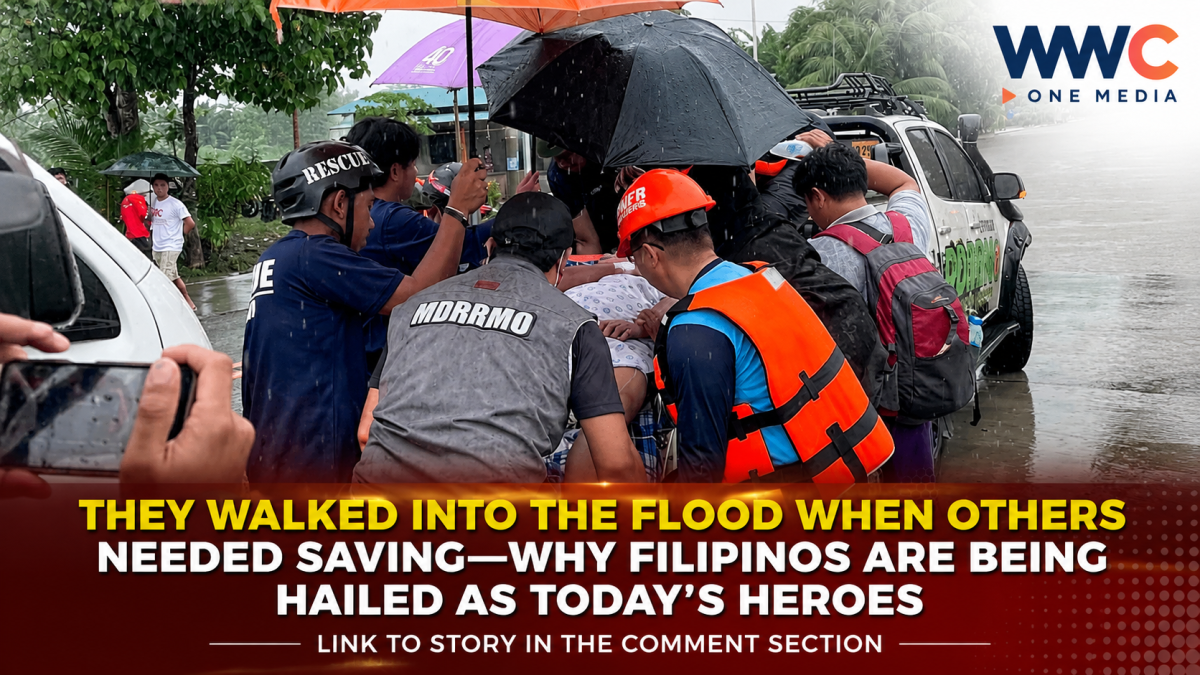
MANILA, Philippines — They may not wear capes or have monuments built in their honor. But as floodwaters rose and communities faced danger in recent weeks, countless Filipinos stepped forward—rescuing strangers, transporting the sick, delivering aid and refusing to leave others behind.
This National Heroes’ Day, lawmakers paid tribute not only to the heroes immortalized in Philippine history, but also to the ordinary Filipinos who continue to show extraordinary courage when disaster strikes.
Sen. Francis “Kiko” Pangilinan said heroism remains alive in the everyday sacrifices of Filipinos—from parents and overseas Filipino workers to farmers, fisherfolk, environmental defenders, truth-tellers and citizens who hold those in power accountable.
He also recognized the people who braved the recent southwest monsoon, or habagat, including neighbors, delivery riders, social workers, health professionals and disaster-response volunteers who entered flood-hit communities to help others.
Their actions come against the backdrop of weeks of severe weather that have battered parts of the country and placed communities under immense pressure. In Pampanga alone, authorities reported more than one million people affected by massive flooding as of August 24, with hundreds of barangays inundated and thousands of families displaced.
The stories behind the statistics are where the meaning of heroism becomes clear.
One image highlighted in the National Heroes’ Day report showed emergency responders in Naujan, Oriental Mindoro bringing a patient to the hospital despite flooding and difficult road conditions—an example of the countless frontline efforts that often unfold far from television cameras.
Sen. Bong Go likewise honored frontliners, health workers, rescuers, uniformed personnel and volunteers who continue to respond during calamities, saying many did not hesitate to put themselves in harm’s way to protect fellow Filipinos.
More Than a Tribute: Rescue Operations Continue
The recognition comes as government agencies and emergency responders continue to mobilize resources for communities affected by the habagat and flooding.
The Philippine National Police previously reported deploying hundreds of personnel and rescuing residents during the heavy rains, while police vehicles were also used to help stranded commuters.
The Armed Forces of the Philippines has also deployed disaster-response personnel, vehicles and humanitarian assistance assets to flood-hit areas in Central Luzon and Metro Manila as the southwest monsoon continued to affect communities.
Meanwhile, relief operations have continued across affected areas, with the national government directing agencies to reach residents—including those who have already returned home from evacuation centers.
These coordinated operations highlight an often-overlooked reality during disasters: heroism is not limited to one uniform, profession or title. It can be a rescuer entering dangerous waters, a health worker refusing to abandon a patient, a volunteer carrying relief goods, or an ordinary neighbor helping someone get to safety.
‘Hindi Nagpapasiil sa Hamon ng Buhay’
Pangilinan described this resilience as a defining trait of the Filipino people—those who refuse to be defeated by life’s challenges and instead choose to help one another.
Senate President Win Gatchalian, meanwhile, called on Filipinos to carry the spirit of heroism beyond commemorations by standing up for what is right and putting the welfare of the country first. Other senators, including Senate President Pro Tempore Vicente “Tito” Sotto III, Senate Majority Leader Juan Miguel “Migz” Zubiri and Sen. Jinggoy Estrada, also used the occasion to honor Filipinos who have dedicated themselves to service across generations.
National Heroes’ Day, observed every last Monday of August, commemorates the sacrifices and contributions of the country’s heroes. But this year’s observance carries a message that resonates beyond history books.
A hero does not always carry a flag or lead a revolution. Sometimes, a hero simply sees someone in danger—and walks into the flood anyway.
As the country continues to confront extreme weather, disasters and other challenges, the courage shown by rescuers, volunteers, frontliners and ordinary citizens offers a powerful reminder: the spirit of bayanihan is still alive—and some of today’s heroes may be living right next door.




Leave a Reply