
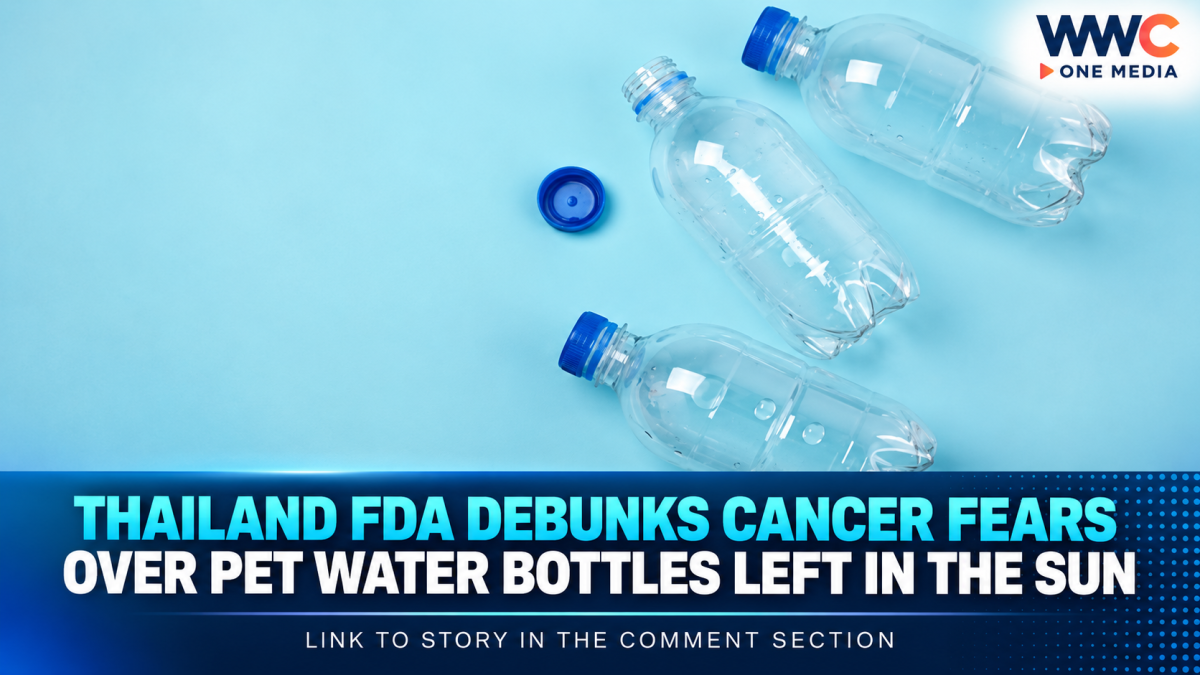
BANGKOK — Thailand’s Food and Drug Administration has moved to calm growing public fears over claims that drinking water from plastic bottles left inside hot cars or exposed to direct sunlight can cause cancer.
The agency said ordinary PET drinking water bottles do not contain bisphenol A, or BPA, as a manufacturing ingredient, rejecting viral claims suggesting that sunlight and heat automatically cause cancer-causing BPA to leak into bottled water.
The clarification came after warnings circulated online claiming that water bottles left in vehicles or under prolonged sunlight could release dangerous chemicals and pose a cancer risk.
FDA Tests 30 Bottled Water Samples
To address public concerns, Thailand’s FDA said it collected and tested 30 samples of sealed bottled drinking water for BPA and phthalates, another group of chemicals often mentioned in online health warnings.
According to the agency, none of the 30 samples tested contained BPA or phthalates.
The FDA said PET, or polyethylene terephthalate, is widely used for drinking water bottles and must comply with national safety standards governing plastic food and beverage containers.
PET Bottles Are Not Made With BPA
The key point behind the FDA’s clarification is that PET and BPA are not the same thing.
PET bottles commonly used for bottled water are not manufactured using BPA as a starting ingredient. BPA is instead associated with certain other plastic materials, including some polycarbonate plastics and can coatings.
That distinction has become increasingly important as misleading social media posts continue to link all plastic bottles with BPA and cancer concerns.
The FDA said consumers should avoid assuming that every plastic container contains BPA simply because it is made from plastic.
But FDA Still Warns Against Leaving Bottles in Extreme Heat
While dismissing the cancer claims surrounding BPA in PET bottles, authorities are still advising consumers to store bottled water properly.
The FDA recommends avoiding leaving bottled water in extreme heat or direct sunlight for long periods.
The agency said excessive heat can affect the quality, smell and taste of the water, as well as the physical condition of the packaging.
So while a PET bottle left in a hot car should not automatically trigger fears about BPA-related cancer, prolonged exposure to harsh heat is still not considered ideal for product quality.
Don’t Keep Reusing Single-Use Bottles
Thailand’s FDA also renewed its warning about repeatedly reusing single-use PET water bottles.
The agency said the bigger concern with repeated reuse is not BPA but the possible accumulation of germs and dirt, particularly if bottles are not properly cleaned.
Older bottles can also become scratched, damaged or difficult to clean, creating more opportunities for contamination to build up.
Consumers are therefore advised not to repeatedly reuse bottles designed for single use.
Viral Health Claims Put Under the Spotlight
The latest clarification highlights a growing problem facing consumers: health warnings spreading rapidly online without proper scientific context.
Claims involving plastic, cancer and chemical exposure can quickly go viral because they play on legitimate public concerns about health and safety.
But officials are urging people to check whether such warnings come from credible scientific or government sources before sharing them.
Thailand’s FDA said it will continue monitoring the safety of food and beverage packaging and urged consumers to verify health claims before believing or reposting them.
The Bottom Line
Thailand’s FDA says PET bottled water is safe to drink and has rejected viral claims that bottles exposed to sunlight automatically release cancer-causing BPA.
Tests on 30 bottled water samples found no BPA or phthalates, while officials stressed that PET bottles are not manufactured using BPA.
However, consumers are still advised to avoid storing bottled water under extreme heat for prolonged periods and not to repeatedly reuse single-use bottles because of potential hygiene and contamination concerns.
The message is clear: a plastic water bottle left in the sun may affect quality over time — but Thailand’s FDA says viral claims that PET bottles automatically become cancer-causing BPA containers are misleading.

Leave a Reply