TAIPEI, Taiwan — October 23, 2026 — Taiwan was brought to a near-standstill on Friday as Typhoon Champi approached the island, forcing hundreds of flight cancellations, shutting financial markets and prompting widespread suspensions of work and classes as authorities warned of dangerous winds, torrential rainfall and coastal hazards.
Although the once-powerful super typhoon has weakened and is no longer forecast to make a direct landfall in Taiwan, its enormous circulation remains capable of disrupting much of the island and threatening neighboring areas, including Japan’s southwestern islands.
According to Taiwan’s Central Weather Administration (CWA), Champi was packing gusts of approximately 191 kilometers per hour near its center. Its wind field extended roughly 320 kilometers from the storm’s center, large enough to affect most of Taiwan.
The typhoon was approximately 330 kilometers east of Taiwan’s southern tip when the latest conditions were reported.
With potentially hazardous weather expected to persist for nearly two days, authorities moved to minimize the risks to residents, transport networks and businesses.
More Than 600 Flights Cancelled as Taiwan’s Airports Face Major Disruptions
The impact on air travel has been immediate and extensive.
Taiwan’s transport ministry reported that all 262 scheduled domestic flights on Friday had been cancelled, along with more than 350 international flights, disrupting travel plans for passengers across the region.
That brings the reported total to more than 612 cancelled flights, with the possibility of additional schedule changes as airlines continue to evaluate weather conditions.
Major Taiwanese carriers, including China Airlines, EVA Air and STARLUX Airlines, announced significant flight adjustments.
STARLUX cancelled its Taiwan-Asia services scheduled for October 23, while China Airlines and EVA Air announced cancellations affecting international services during the storm.
The disruption has also extended beyond Taiwan.
Thai Airways cancelled six flights linking Bangkok with Taipei and Kaohsiung, while Malaysia Airlines suspended its October 23 services between Kuala Lumpur and Taipei.
Affected travelers have been advised to monitor their airlines’ official websites, check flight notifications and confirm rebooking or refund options before heading to airports.
Financial Markets Close as Storm Disrupts Daily Life
Taiwan’s financial markets were closed Friday as the island implemented widespread precautionary shutdowns.
Most areas suspended normal work and school activities, although the Taiwan-controlled Kinmen islands, located near China’s southeastern coast, were allowed to maintain regular operations.
In Taipei, heavy showers and gusty conditions were already being felt, although public transportation, including the city’s metro system, continued operating with reduced services.
The shutdown reflects the seriousness with which Taiwanese authorities are treating Champi, even without a forecast direct landfall.
Why Typhoon Champi Remains Dangerous Despite Weakening
Champi was previously classified as a super typhoon and ranked among the strongest tropical cyclones to develop in the Pacific during 2026.
While the storm has lost some intensity, meteorologists continue to warn that a weakening typhoon can still cause widespread damage.
Its large wind field means communities far from the storm’s center may experience strong gusts, intense rainfall and hazardous coastal conditions.
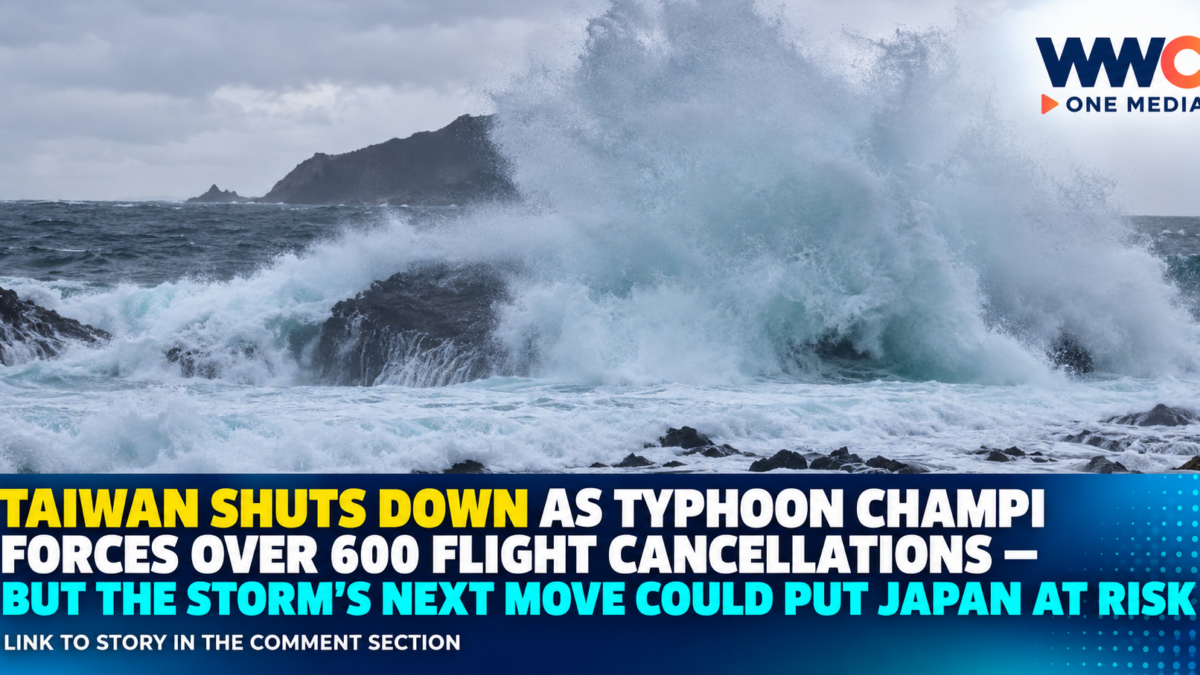
Earlier forecasts warned that mountainous areas in northern Taiwan could receive rainfall approaching one meter, while waves along exposed coastlines could exceed six meters.
Such conditions can increase the danger of flooding, landslides, falling trees and disruptions to coastal transportation.
Taiwanese President Lai Ching-te urged residents to avoid hazardous mountain and coastal areas and take appropriate precautions.
Japan Could Face the Storm’s Next Major Test
While Taiwan prepares to endure Champi’s immediate effects, attention is shifting toward Japan.
Forecast models indicate that the typhoon will pass near northeastern Taiwan before turning northward toward the Chinese coast and eventually heading toward southern Japan.
Japan’s Yonaguni Island, the country’s westernmost inhabited island and part of Okinawa Prefecture, lies along the projected path.
Japanese aviation operations have already been affected, with more than 100 domestic flights cancelled in earlier reports, disrupting travel for thousands of passengers.
The storm has also affected preparations for Keen Sword, a major United States-Japan military exercise involving approximately 56,000 personnel and participating allied nations, including the Philippines and Australia.
Organizers have adjusted training activities in response to weather-related safety concerns.
The developing situation highlights how a single powerful typhoon can interrupt commercial aviation, regional transportation and multinational military operations simultaneously.
A Late-Season Typhoon With Regional Consequences
Taiwan is no stranger to tropical cyclones, having developed extensive storm preparedness and emergency response systems.
However, Champi serves as a reminder that destructive typhoons can still strike East Asia during the autumn months, even after the region’s traditional summer storm peak.
For travelers and businesses, the consequences extend beyond the immediate danger of heavy rainfall and strong winds.
Airline cancellations can disrupt connecting flights, international business travel, tourism schedules and cargo movement, with knock-on effects potentially continuing after weather conditions improve.
For Taiwan, the immediate priorities are public safety, maintaining essential services and assessing when normal operations can resume.
For Japan, the concern is whether Champi’s northward movement will bring another round of dangerous weather and transport disruption.
The biggest uncertainty now is not whether Champi will directly strike Taiwan, but how long its massive storm system will affect the region — and how severely Japan’s southwestern islands will be hit next.
As the typhoon continues moving north, meteorologists and emergency authorities are monitoring its path, strength and rainfall patterns.
For millions of residents and travelers across East Asia, the storm’s next movement could determine when normal life and transportation can safely resume.