TAIPEI — Taiwan is turning to artificial intelligence to make long-term care more organized, accessible and easier for families to manage.
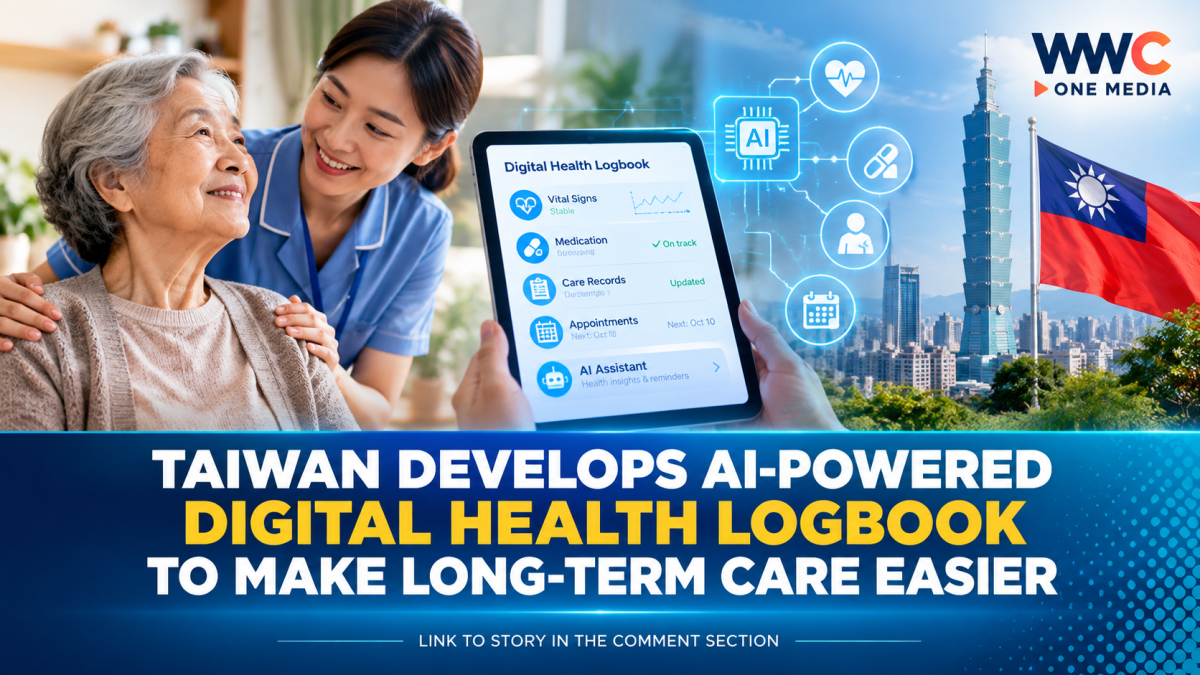
The Institute for Information Industry (III) has developed a digital health logbook that allows patients and caregivers to record important medical information electronically, helping families keep track of conditions such as blood pressure and body temperature without relying on handwritten notes.
The system is designed particularly for seniors and people receiving long-term care, where medical information may need to be shared among patients, relatives, caregivers and healthcare professionals.
AI Turns Health Records Into a Simpler Digital Summary
One of the system’s key features is its ability to use AI image recognition.
Instead of requiring users to manually enter every piece of information, users can upload photographs for the system to recognize and process relevant data.
The technology can then help organize the information into a more manageable health record.
The system can also generate a one-page health summary for hospital visits, giving medical staff a quick overview of a patient’s recorded information.
For older adults and caregivers, that could reduce the burden of remembering or carrying multiple handwritten records during medical appointments.
Health Information Can Be Shared Through LINE
The digital logbook can export information to LINE, allowing family members to access and compare health data.
Records can include measurements such as blood pressure and temperature, making it easier for relatives and caregivers to observe changes over time and identify information that may warrant attention.
The system was developed with input from medical professionals, including National Cheng Kung University physician Yang Yi-ching, who provided guidance on how health conditions such as hypertension could be explained in a way that is easier for users to understand.
Designed With Seniors and Caregivers in Mind
The project reflects a broader challenge facing Taiwan as its population ages: making long-term care easier to coordinate among seniors, families and healthcare workers.
For caregivers, maintaining accurate and accessible health information can be especially important when a patient receives care from multiple people or visits different medical facilities.
The III said it has tested the system in multiple nursing homes, gathering feedback from nurses, patients and family members to improve the platform’s usability and accessibility.
The testing phase is significant because technology designed for older users needs to be practical as well as technically capable.
AI Is Being Used to Reduce the Paperwork Burden
The project is another example of Taiwan’s growing use of AI beyond areas such as semiconductors and manufacturing.
Rather than replacing doctors or caregivers, the digital logbook is designed to help organize information so people responsible for care can access it more efficiently.
Its automatic summary function could be particularly useful during medical consultations, when healthcare workers need to understand a patient’s recent condition quickly.
However, the system should be viewed as a record-management and support tool, not a substitute for professional medical diagnosis or treatment.
A Potential Tool for Taiwan’s Aging Society
Taiwan has been expanding its long-term-care infrastructure as demand for elderly care grows.
Digital tools such as this health logbook could eventually help connect different parts of the care system by making information easier to record, share and review.
The III’s approach also highlights the importance of designing technology around the needs of actual users. Feedback from nursing staff, patients and family members is being incorporated into further development.
The Bigger Picture: Taiwan’s AI Push Moves Into Healthcare
Taiwan is widely known for its semiconductor and technology industries, but AI applications are increasingly reaching everyday services.
Healthcare and long-term care present a particularly important area because technology can potentially reduce administrative workloads while helping families remain informed about relatives’ conditions.
The digital logbook developed by III combines several technologies—AI recognition, digital health records and messaging-platform integration—into a system intended to make routine care information easier to manage.
For families caring for older relatives, the goal is straightforward: less time searching through scattered medical notes and more time understanding the information that matters.
The technology remains under development and testing, but its progress signals how Taiwan is looking beyond AI’s industrial applications and toward tools that could directly affect everyday healthcare and long-term-care services.