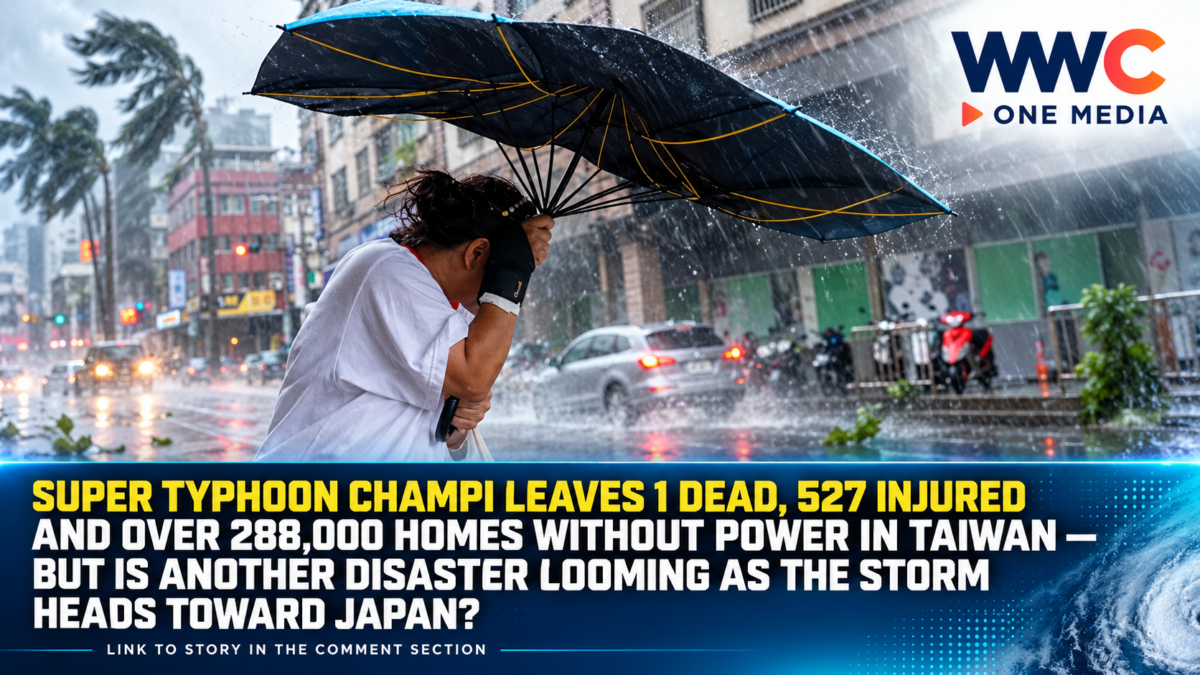
TAIPEI, Taiwan — One of the Pacific’s most powerful storms of 2026 has left a trail of destruction across Taiwan, killing at least one person, injuring 527 others and disrupting hundreds of flights as authorities assess the aftermath of Typhoon Champi.
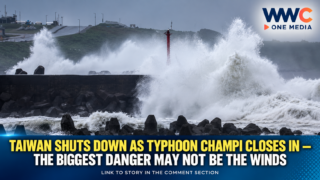
The powerful weather system swept past Taiwan’s northeastern coastline early Saturday, October 24, unleashing destructive winds, torrential rainfall and dangerous coastal waves that uprooted trees, damaged buildings and knocked out electricity across large parts of the island.
Although Champi has weakened from its earlier super typhoon strength, the storm remains dangerous, with its projected path raising fresh concerns for coastal communities in eastern China and parts of southern Japan.
The destruction has also highlighted how a tropical cyclone can cause widespread disruption even without making a direct landfall.
One Dead, Hundreds Injured as Powerful Winds Batter Taiwan
Taiwan’s Central Emergency Operations Center confirmed that one person had died and 527 others had sustained injuries during the storm.
The fatality occurred in Liuqiu Township, Pingtung County, where a man was swept away by powerful waves along the coast.
According to Taiwan’s Central News Agency, many of the injuries were reported in Taipei and Taichung, with falling trees, damaged electrical cables, collapsing billboards and storm-related debris among the major hazards.
Across affected communities, residents encountered fallen branches, scattered debris, damaged structures and dangerous road conditions.
Some of the most destructive winds struck northeastern Taiwan, particularly around Yilan County, as Champi passed close to the coastline overnight.
Wind gusts reached approximately 227 kilometers per hour in some coastal areas, strong enough to rip roofing materials from buildings and topple trees and power infrastructure.
The storm’s unusual movement near Yilan, including a loop offshore before tracking northward, added to its unpredictable behavior.
More Than 288,000 Homes Lose Electricity
The storm also inflicted significant damage on Taiwan’s power infrastructure.
According to the Taiwan Power Company, or Taipower, more than 288,000 households experienced electricity interruptions at one point during the typhoon.
Strong winds damaged power lines and other electrical equipment, leaving utility crews working to restore connections across affected districts.
Most affected households had regained electricity by Saturday, although repairs and restoration work remained important for communities dealing with localized damage.
The widespread outages demonstrate how vulnerable overhead electrical networks can be during particularly intense typhoons.
Beyond power disruptions, fallen trees and damaged roadside structures created additional challenges for emergency personnel responding to storm-related incidents.
Nearly 1,000 Flights Cancelled Friday as Travel Disruptions Continue
Air transportation across Taiwan faced major interruptions as airlines and airport authorities adjusted operations to account for severe winds and dangerous weather conditions.
Nearly 1,000 flights were cancelled on Friday, October 23, followed by another 242 cancellations reported by Taiwan’s transport ministry on Saturday.
The disruptions affected travel plans while authorities worked to protect passengers and aviation personnel from hazardous operating conditions.
Offices and schools across broad areas of northern and central Taiwan, including Taipei, remained closed for a second consecutive day on Saturday.
Authorities maintained precautionary restrictions as intermittent squalls, wind gusts and falling debris continued to threaten public safety.
The temporary shutdowns reflected the seriousness of the storm, even as its center began moving farther from Taiwan.
Storm Weakens but Remains a Threat
Taiwan’s Central Weather Administration reported that Champi had weakened considerably from its earlier super typhoon classification.
By Saturday, the system had sustained winds of approximately 126 kilometers per hour, with higher gusts near its center.
The storm was positioned roughly 150 kilometers east of Taiwan after passing near the island’s northeastern coastline.
Despite weakening, Champi continued to generate hazardous waves and strong winds in surrounding waters.
Taiwanese forecasters warned that waves exceeding six meters remained possible in waters north and east of the island.
Heavy rainfall advisories also continued across several northern and central districts, particularly mountainous areas vulnerable to intense precipitation.
Authorities expected weather conditions to improve as the storm moved away, although residual rainfall and dangerous coastal conditions remained a concern.
China Mobilizes Emergency Teams as Typhoon Approaches Its Coast
The storm’s movement toward the Chinese coastline prompted emergency preparations in Zhejiang province.
China’s emergency management authorities deployed personnel and equipment as officials warned of strong winds and heavy rainfall through Sunday.
Preparations included approximately 400 rescue workers and 600 pieces of emergency equipment, with more than 41,000 firefighters placed on emergency duty.
In the coastal city of Taizhou, more than 3,800 fishing vessels returned to harbor.
Authorities also evacuated 2,084 island visitors, halted 25 offshore construction projects and suspended 18 passenger ferry routes.
These measures were introduced to reduce exposure to dangerous sea conditions as Champi approached the coastal region.
Forecasts indicated that the storm would track north along China’s eastern coastline without necessarily making landfall.
Its eventual movement toward southern Japan remained another development closely watched by regional weather authorities.
Why Taiwan Remains Vulnerable to Powerful Typhoons
Taiwan regularly experiences tropical cyclones during the western North Pacific typhoon season, with its mountainous terrain and densely populated cities creating unique challenges during extreme weather events.
Typhoons can generate multiple simultaneous threats, including destructive wind gusts, landslides, flash flooding, falling debris and dangerous coastal conditions.
Taiwan’s extensive weather warning systems, emergency preparations and precautionary closures have historically helped reduce casualties.
However, Champi demonstrates that even a storm passing offshore can cause substantial injuries, infrastructure damage and transportation disruption.
The risks extend beyond Taiwan as tropical cyclones frequently influence weather conditions across multiple East Asian countries.
What Happens Next?
As Taiwan begins assessing damage and restoring normal operations, authorities across the wider region are monitoring Champi’s weakening circulation and remaining hazards.
For Taiwan, the immediate priorities include restoring damaged infrastructure, clearing dangerous debris and protecting residents from lingering heavy rainfall and high surf.
For eastern China, emergency preparations remain important as the storm tracks near coastal provinces.
Southern Japan could also experience weather effects if the system continues along its projected path, although the severity of any impacts will depend on its subsequent movement and weakening.
The biggest question now is whether Champi will continue losing strength quickly enough to spare neighboring coastlines from another round of damaging winds, heavy rain and dangerous waves.
For communities already dealing with the aftermath, the storm is a reminder that a typhoon does not need to make landfall to leave serious destruction behind.