
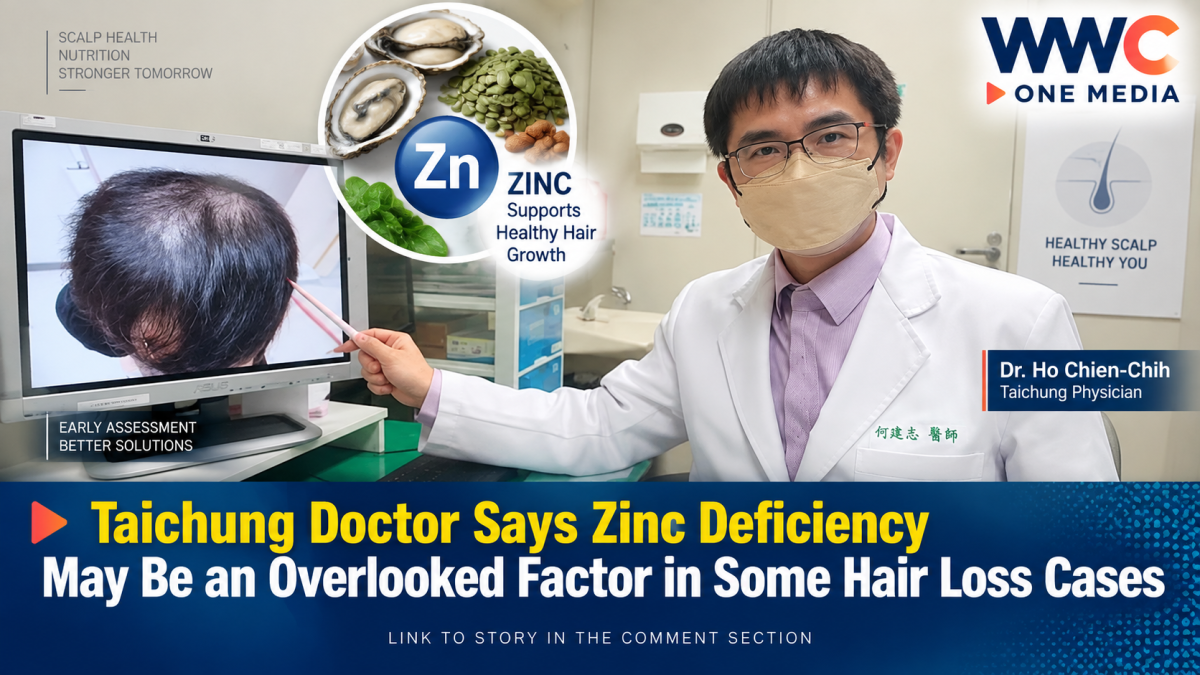
TAICHUNG, TAIWAN — Could a Nutrient Deficiency Be Behind Some Cases of Hair Loss?
Hair loss is often blamed on genetics, stress, aging or hormonal changes. But a Taichung dermatologist is drawing attention to another possible factor: zinc deficiency.
Dr. Ko Wei-li, director of dermatology at Taichung Cheng Ching Hospital, said about 30% of the hair-loss patients he treats have been found to have zinc deficiency, according to a report cited by Taiwan News and CNA.
Ko highlighted the case of a 37-year-old man with a family history of baldness who sought treatment after experiencing hair loss. Blood testing found that his zinc level was below the normal range, and the dermatologist considered the deficiency the primary contributor in that particular case.
His Case Improved After Addressing the Deficiency
According to the report, the patient increased his intake of zinc-rich foods and used zinc supplements after medical evaluation.
At a follow-up examination about six weeks later, his zinc level had returned to the normal range and his hair volume had increased.
The case illustrates why doctors may look beyond hereditary hair loss when a patient’s symptoms do not fit the expected pattern.
However, one patient’s improvement does not establish that zinc deficiency is responsible for hair loss in everyone.
Why Zinc Matters to Hair Growth
Zinc is an essential mineral involved in processes including cell growth and protein synthesis. Because hair follicles contain rapidly dividing cells, adequate nutrition is important for normal hair production.
Ko explained that insufficient zinc can interfere with keratin production, potentially contributing to weaker or thinner hair.
But hair loss is a complicated medical symptom. Genetics, hormonal conditions, illness, stress, nutritional deficiencies and certain scalp disorders can all contribute to shedding.
Research published in 2025 found that people with hair loss had somewhat lower zinc levels than comparison groups, but the difference was considered small, and the researchers concluded that routine zinc testing is not recommended for every person experiencing hair loss.
Don’t Assume Every Balding Problem Is a Zinc Problem
This distinction is important.
A person experiencing hair loss should not automatically conclude that they are zinc deficient or start taking large amounts of supplements.
For people who actually have a deficiency, correcting the underlying nutritional problem may help. But taking extra zinc when deficiency has not been established is not a universal hair-growth treatment.
Ko recommends medical evaluation for people with unexplained or persistent hair loss rather than assuming the cause is hereditary.
Food Sources May Help Maintain Adequate Zinc
Ko specifically mentioned oysters, beef and pumpkin seeds as zinc-rich foods.
For people with a confirmed deficiency, supplements may sometimes be appropriate under medical guidance. But excessive zinc intake can itself create health problems by interfering with the body’s absorption of copper.
The U.S. National Institutes of Health lists 40 milligrams per day as the tolerable upper intake level for adults from food, beverages and supplements combined. That limit is not a recommended daily target, and individual needs vary by age and circumstances.
The Bigger Hair-Loss Picture
The Taichung doctor’s observation adds to the growing discussion about nutrition and hair health, but it should not overshadow the many other possible explanations for hair shedding.
A careful evaluation can help determine whether a person is dealing with hereditary pattern hair loss, temporary shedding, a scalp condition or an underlying nutritional or medical issue.
The takeaway is simple: hair loss may sometimes signal a nutritional problem, but zinc is only one possible piece of a much larger puzzle.
For anyone experiencing persistent or unexplained hair loss, identifying the underlying cause is more useful than simply reaching for a supplement.
As research continues to examine the relationship between nutrition and hair health, one question remains especially important: how many cases that look hereditary may actually have another contributing factor hiding underneath?




Leave a Reply