
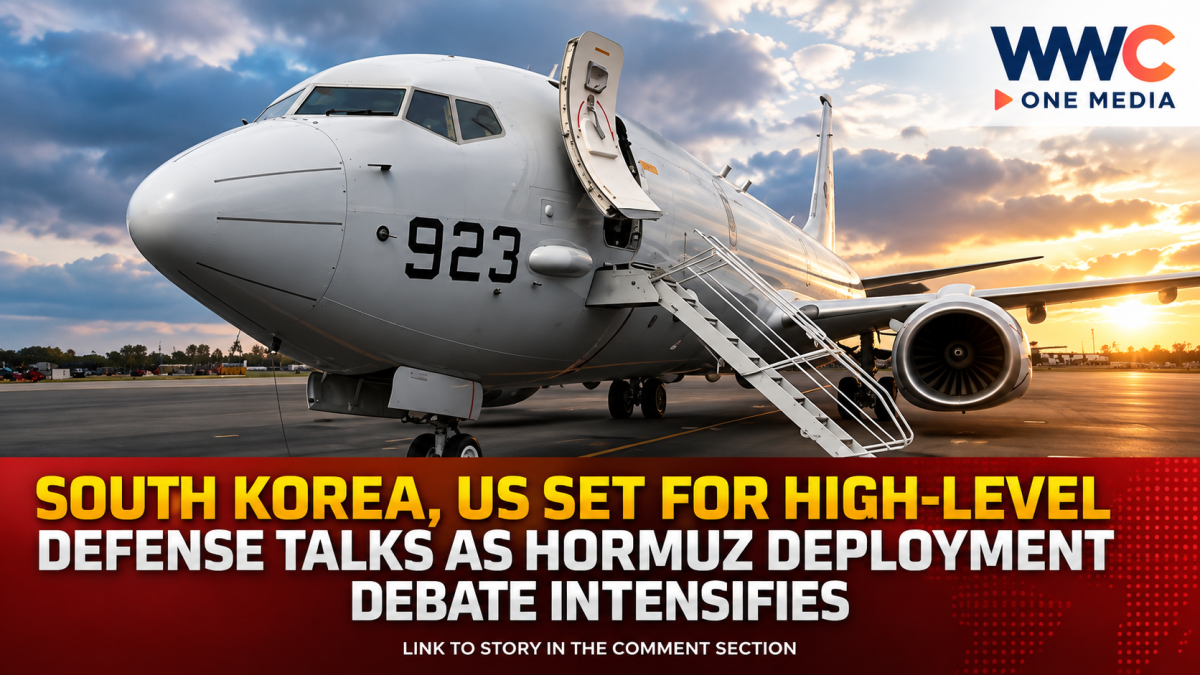
SEOUL — South Korea and the United States are preparing for high-level defense consultations this week as Seoul weighs how it could contribute to efforts to maintain freedom of navigation through the Strait of Hormuz, adding a potentially sensitive issue to an already complex U.S.-South Korea security agenda.
The two allies are scheduled to hold senior-level defense talks beginning September 16 in Busan, with discussions expected to cover the broader security environment as well as Seoul’s possible role in the strategically important waterway. The talks come as Washington continues to seek greater contributions from allies amid the escalating security situation surrounding the Strait of Hormuz.
Seoul has not made a deployment decision
Despite growing speculation, South Korea has repeatedly stressed that no final decision has been made to deploy military forces to the Strait of Hormuz.
The government has been examining different ways to support freedom of navigation while taking into account South Korea’s military readiness on the Korean Peninsula, domestic legal procedures and the need for parliamentary approval for an overseas military deployment.
South Korea recently sent an inspection team to the United Arab Emirates to assess conditions in the region. The Defense Ministry said the mission was intended to gather information and assess the situation, rather than signal that a deployment had already been approved.
The distinction has become increasingly important as reports of possible Korean participation have circulated in recent weeks.
Washington pressure adds to Seoul’s dilemma
The issue also carries implications for the U.S.-South Korea alliance.
Reuters reported that Seoul has been reviewing possible measures to support freedom of navigation, while President Donald Trump has previously criticized South Korea over its level of support for U.S. efforts related to the conflict involving Iran.
For Washington, greater participation by allies could demonstrate international support for maritime security. For Seoul, however, any decision must be balanced against the risk of becoming directly entangled in a wider regional conflict.
That makes the upcoming defense discussions particularly significant: they could provide an opportunity for Washington and Seoul to clarify expectations without necessarily producing an immediate deployment decision.
Seoul is also talking to other countries
South Korea’s discussions are not limited to Washington.
President Lee Jae Myung has discussed the Strait of Hormuz with French President Emmanuel Macron, while Foreign Minister Cho Hyun has also held talks with his Iranian counterpart. Seoul has emphasized that its discussions with international partners concern possible contributions to maritime security and freedom of navigation, rather than a confirmed decision to send troops.
The diplomatic effort highlights Seoul’s attempt to keep multiple channels open while assessing its options.
Iran, meanwhile, has warned that South Korean military participation in the Gulf or Strait of Hormuz could be viewed as support for U.S. actions, raising another potential diplomatic risk for Seoul.
Why Hormuz matters to South Korea
The Strait of Hormuz is particularly important to South Korea because of its dependence on energy transported through the region.
Reuters reporting cited South Korean data showing that the country relied on the waterway for a substantial share of its crude oil and naphtha imports last year. Any prolonged disruption could therefore have consequences far beyond military and diplomatic affairs, potentially affecting energy security, shipping and the broader South Korean economy.
That economic exposure is one reason Seoul faces a difficult balancing act: protecting freedom of navigation is directly relevant to South Korea’s national interests, but military involvement could create additional security and diplomatic complications.
A decision with alliance and domestic consequences
The coming U.S.-South Korea defense talks therefore arrive at a critical moment.
Seoul must weigh its responsibilities as a U.S. ally against its own security priorities, domestic political considerations and relations with Iran. Any overseas military deployment would also require the appropriate legal and parliamentary process in South Korea.
For now, the message from Seoul remains cautious: South Korea is assessing its options, but a Hormuz deployment has not been approved.
The September defense talks could nevertheless reveal how far Washington is asking Seoul to go — and whether the two allies can find a role that supports maritime security without pulling South Korea deeper into the regional conflict.




Leave a Reply