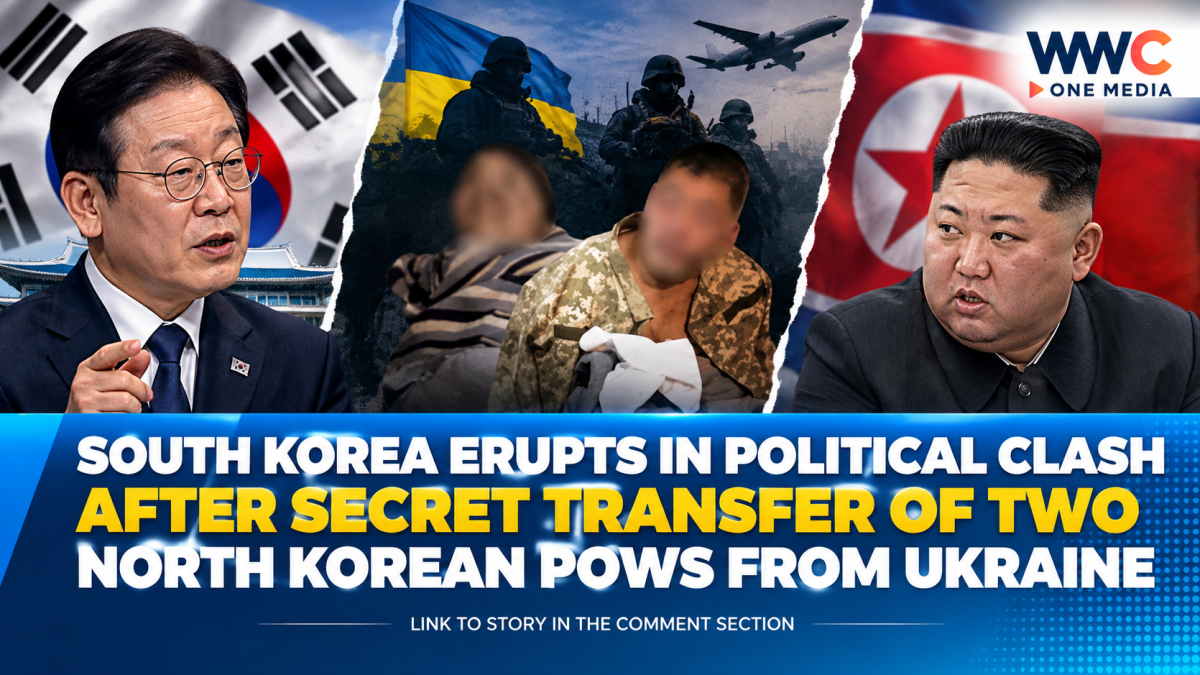
SEOUL — A confidential transfer of two North Korean prisoners of war from Ukraine to South Korea has triggered a political dispute in Seoul after Kyiv publicly disclosed the operation.
The controversy erupted after Ukrainian President Volodymyr Zelenskyy revealed that two North Korean soldiers captured during the war in Ukraine had recently been transferred to South Korea.
South Korean President Lee Jae Myung said Seoul and Kyiv had agreed to keep the transfer confidential, arguing that public disclosure could create risks for the former soldiers, their relatives in North Korea, diplomacy and national security.
The revelation has now become a point of contention between South Korea’s ruling Democratic Party of Korea (DPK) and the opposition People Power Party (PPP).
Why Was the Transfer Kept Secret?
The South Korean government had previously declined to confirm that the two North Korean POWs had arrived in the country.
Officials cited concerns about the safety of the two men and their family members still in North Korea, according to Yonhap reporting carried by The Korea Times. Seoul and Kyiv had reportedly been discussing the transfer after the two prisoners expressed a desire to come to South Korea.
Lee said the confidentiality arrangement was appropriate because revealing the transfer could affect South Korea’s national security and the wider security environment on the Korean Peninsula.
The Ukrainian presidential office, however, said the transfer was conducted through direct discussions with Seoul and maintained that it had disclosed the transfer without revealing detailed information about how it was carried out.
Ruling Party Defends Confidentiality
The Democratic Party defended the government’s decision to keep the transfer private.
DPK spokesperson Shin Hyun-young said protecting the two former North Korean soldiers should remain the priority and called on political opponents to avoid turning the issue into a partisan dispute.
She also criticized Ukraine’s disclosure, saying it damaged trust between Seoul and Kyiv and could create national-security concerns.
The ruling party’s position is that detailed information about the two men’s identities and protection arrangements should not be publicly discussed because of potential risks to their safety.
Opposition Demands Answers
The People Power Party took a different position, questioning why the government chose to keep the repatriation confidential.
PPP floor leader Jeong Jeom-sig argued that the transfer should eventually have been made public and asked why the government had become so determined to keep it secret.
Other opposition lawmakers, including Ahn Cheol-soo and Kim Yong-tae, also criticized the government’s handling of the disclosure, arguing that South Korea should have been able to announce the transfer independently. Their statements represent the opposition’s political position and have not been independently established as factual findings.
Lee Criticizes Ukraine’s Disclosure
Lee publicly expressed regret over Zelenskyy’s announcement, saying Ukraine had violated the confidentiality agreement between the two countries.
The president also criticized domestic opponents who questioned the government’s decision, using unusually strong language to argue that national security and the safety of the former POWs should take precedence over political credit.
The dispute therefore involves two separate questions: whether confidentiality was necessary to protect the individuals involved, and whether the South Korean government should have publicly disclosed the transfer despite those concerns.
Who Are the Two North Korean POWs?
The two soldiers were captured by Ukrainian forces in January 2025 after being deployed to Russia’s Kursk region alongside North Korean troops supporting Moscow in its war against Ukraine.
Their eventual transfer to South Korea followed discussions involving Seoul and Kyiv after the men expressed a desire to come to South Korea.
The case is significant because it involves North Korean personnel captured while fighting in support of Russia and raises questions about their future status, protection and treatment after arriving in South Korea.
For now, Seoul’s political dispute is likely to continue as lawmakers debate the balance between transparency, diplomatic agreements and the security of the two former POWs.
The next focus will be how South Korea handles the two men following their transfer—and whether the disagreement over the secrecy surrounding their arrival escalates further.
WWC ONE MEDIA G,A