MANILA, Philippines — November 4, 2026 | WWC ONE MEDIA | Entertainment, Lifestyle & Philippine Culture
Filipino social media personality and entrepreneur Small Laude has once again captured the internet’s attention, but this time, the viral moment did not come from a luxury shopping trip, extravagant home tour or glamorous vacation.
Instead, it came from an unexpected setting: a cemetery during Undas 2026.
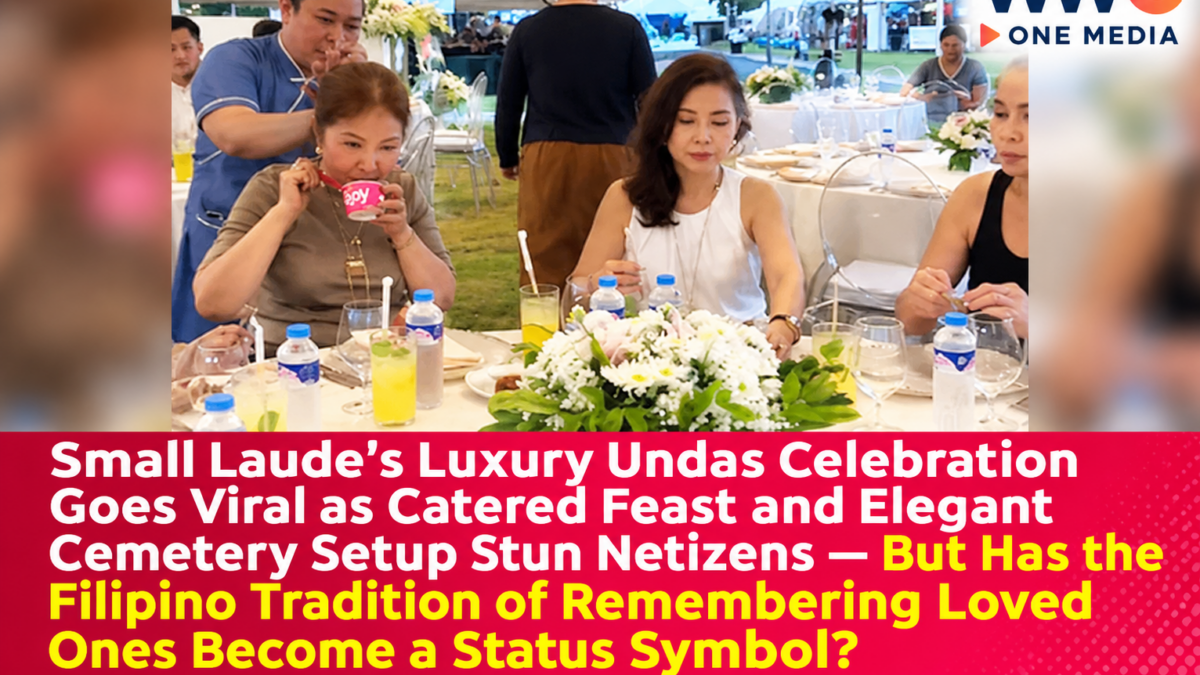
Photos and videos of the Laude family’s visit to The Heritage Memorial Park in Taguig City circulated online, showing an elaborate dining arrangement complete with catered food, clear chairs, tables, plates, cutlery and elegant glassware.
The setup quickly attracted attention from Filipinos accustomed to simpler cemetery gatherings featuring home-cooked meals, rice cakes, bread and drinks shared among relatives.
Some social media users found the luxurious presentation amusing, joking that the Laude family had brought an entirely different level of comfort to the traditional graveside gathering.
Others questioned whether such an elaborate setup was appropriate for an occasion devoted to remembering departed loved ones.
But amid the jokes, criticism and comparisons between social classes, a bigger question has emerged.
Is Small Laude’s extravagant Undas gathering simply another expression of Filipino family tradition—or does the viral reaction reveal how wealth and social media are changing the way people view even the most solemn celebrations?
Small Laude’s Cemetery Gathering Becomes an Online Sensation
According to Bilyonaryo’s November 3 report, Small Laude and her family drew attention after photos showed an unusually elaborate dining setup during their All Souls’ Day cemetery visit.
The family was surrounded by prepared dishes and coordinated furniture, creating an atmosphere some viewers compared to a private event.
Abante TNT separately reported that the gathering took place at The Heritage Memorial Park in Taguig, where Laude’s late father, Andres Eduardo, is laid to rest.
The outlet also noted the presence of Laude’s longtime household staff member, widely known to viewers as Yaya Lotlot.
For followers familiar with Laude’s lifestyle content, the setting reflected the polished presentation often associated with her online personality.
But placing that level of hospitality in a cemetery made the occasion particularly noticeable.
The photographs and videos prompted social media users to compare the family’s arrangement with their own experiences of Undas.
For some viewers, the contrast was humorous.
For others, it raised questions about luxury, public displays of wealth and cultural expectations surrounding memorial visits.
Netizens Joke About Belonging to a Different Tax Bracket
One of the most widely circulated reactions came from an X user who compared the Laudes’ catered gathering with the simpler food Filipino families usually bring to cemeteries.
The post humorously suggested that ordinary cemetery meals of bread, rice cakes and roasted chicken could hardly compete with the family’s elaborate arrangements.
Other commenters joked about the transparent chairs, formal dining presentation and the apparent level of preparation.
The reactions reflected the kind of self-deprecating humor frequently seen on Filipino social media when celebrities share glimpses of their affluent lifestyles.
Laude has built a large online following through content featuring fashion, family activities, travel and luxury experiences.
Her familiar image made the cemetery setup especially shareable.
Yet not everyone interpreted the gathering in the same way.
Some commenters questioned whether the arrangements were excessive for a cemetery.
Others raised concerns about the people working during the holiday.
These were individual online opinions, not verified findings of inappropriate conduct.
There is no established evidence in the reviewed reports that Laude’s family violated the memorial park’s policies.
Why Filipinos Bring Food to Cemeteries During Undas
While the Laude family’s setup stood out because of its presentation, sharing meals during cemetery visits is not unusual in the Philippines.
Undas encompasses All Saints’ Day on November 1 and All Souls’ Day on November 2.
During these observances, Filipino families visit cemeteries to clean graves, offer flowers, light candles and pray for relatives who have passed away.
Many families also spend several hours together at burial sites.
Food often becomes part of the gathering, particularly when relatives travel from different towns or provinces.
In a November 2026 Associated Press report, anthropologist Nestor Castro explained that Undas reflects both Catholic observances and older Filipino practices of honoring ancestors.
The report also described how family members use cemetery visits to share memories and reconnect across generations.
Rice cakes and other familiar foods can carry social and cultural meaning because they are shared among relatives.
Against that background, the Laude family’s catered meal is better understood as an unusually elaborate version of an existing practice rather than proof that the family invented a new tradition.
The difference lies largely in the scale and presentation.
From Simple Gatherings to Luxury Tributes
Traditional Undas visits can look very different depending on a family’s circumstances.
Some households bring flowers, candles and small meals.
Others arrange larger gatherings involving extended relatives, hired transportation or prepared food.
Memorial parks also differ significantly in their facilities and visitor policies.
A private memorial park may offer a different environment from a crowded public cemetery.
In the Laude family’s case, the formal dining arrangement created a striking contrast with the simpler cemetery gatherings familiar to many Filipinos.
However, there is no independently verified public estimate of the cost of their setup.
Nor do the reports establish who provided the catering or whether the family hired an external event organizer.
It would therefore be misleading to assign a specific peso value to the gathering or describe it as a commercially sponsored event without evidence.
The visible arrangements are enough to explain why the gathering attracted public attention.
Small Laude’s Personal Brand Helps Explain the Viral Reaction
Small Laude has become recognizable for lifestyle content that combines family moments, luxury experiences and a playful public personality.
Her online appeal comes partly from showing everyday activities through the perspective of a wealthy Filipino household.
The contrast between ordinary situations and unusually lavish arrangements often becomes a source of audience amusement.
Her Undas gathering fits that pattern.
What might have attracted little attention at a private family event became a national social media talking point because the images circulated among people already familiar with her personality.
That distinction matters when interpreting the controversy.
The available coverage does not establish that the gathering was organized primarily to generate publicity.
It became a viral subject after the photographs and videos reached a wider online audience.
The reactions illustrate how a familiar cultural activity can take on a different meaning when viewed through celebrity and social media culture.
The Larger Picture: Millions of Filipinos Observed Undas 2026
Small Laude’s gathering took place during one of the Philippines’ most important annual periods of family remembrance.
Across the country, millions of Filipinos traveled to cemeteries, memorial parks and columbaria to pay their respects to departed loved ones.
GMA News reported that Manila North Cemetery recorded approximately 540,000 visitors by noon on November 1 alone.
The heavy turnout created significant logistical and security challenges for local authorities.
WWC ONE MEDIA previously examined the preparations in Undas 2026 Alert: Manila North Cemetery Announces Strict Entry Rules, Vehicle Ban and October 27 Deadline — But Are Thousands of Visitors Ready for the Restrictions?.
That report detailed special cemetery schedules, vehicle restrictions and rules on prohibited items.
The restrictions applied to Manila’s public cemeteries and should not automatically be assumed to govern The Heritage Memorial Park, where the Laude family reportedly gathered.
The broader point is that Undas activities vary considerably across different locations.
Even Philippine Political Families Observe Undas Through Personal Tributes
The Laude family’s visit was not the only high-profile commemoration to attract attention this year.
President Ferdinand Marcos Jr. also participated in Undas-related remembrance activities, including honoring his late father and sending flowers to the Aquino family’s tombs.
WWC ONE MEDIA covered these events in Marcos Honors His Father Ahead of Undas — Then Sends Flowers to the Aquino Family’s Tombs.
The political and personal circumstances are very different from Laude’s family gathering.
However, both stories demonstrate how Undas remains an important occasion for remembering relatives, regardless of social status.
For public figures, these acts of remembrance can also attract wider attention because their activities are visible to audiences beyond their families.
That visibility can generate appreciation, curiosity or criticism.
It does not necessarily change the personal meaning of the remembrance itself.
How Undas 2026 Became a Major Nationwide Event
The holiday also triggered extensive preparations involving transportation, security and telecommunications.
WWC ONE MEDIA reported on SMC’s preparations for a projected 10% Undas traffic increase across five major Luzon expressway systems.
The company deployed additional personnel and suspended scheduled roadworks to prepare for the seasonal movement of motorists.
Meanwhile, Globe Telecom strengthened network preparations ahead of the expected Undas mobile traffic surge.
These developments illustrate how the annual commemoration affects more than cemeteries.
For many families, visiting departed relatives involves coordinating travel, arranging meals, communicating with relatives and spending time together.
Small Laude’s gathering became an unusually visible example of the family-centered aspect of the occasion.
A Different Reality for Some Filipino Families
While the Laudes’ elaborate dining arrangement amused many viewers, not all families were able to enjoy comfortable cemetery visits during Undas 2026.
GMA News and SunStar reported that flooding affected cemeteries in parts of Pampanga and Bulacan.
Some visitors faced muddy grounds and submerged tombs, while others were unable to reach the graves of their relatives.
The contrast demonstrates how significantly the experience of Undas can differ across households and communities.
For some, the holiday involves carefully prepared gatherings.
For others, simply reaching a loved one’s resting place can become a difficult challenge.
These differences provide important context for the social media discussion about wealth and privilege.
However, they do not establish that the Laude family bears responsibility for the circumstances faced by other cemetery visitors.
The comparison is about the varied experiences of Filipino families, not an allegation against any particular household.
Was the Lavish Undas Setup Really Controversial?
The online debate reveals two competing interpretations.
Some users viewed Laude’s arrangements as a harmless and entertaining expression of her family’s lifestyle.
Others believed a cemetery should be associated with restraint and solemnity rather than formal dining.
Both views reflect personal expectations about remembrance and appropriate behavior.
But neither should be confused with evidence of a policy violation.
The published reports do not establish that the family disrupted other visitors or breached the memorial park’s regulations.
There is also no verified statement from the memorial park indicating that the setup was unauthorized.
For that reason, descriptions such as “illegal cemetery party” or “disrespectful conduct” would go beyond what the available evidence supports.
What can be established is that the arrangement became viral and prompted mixed public reactions.
What Other News Outlets Confirm
Bilyonaryo reported on November 3 that Small Laude’s family attracted attention because of its catered cemetery gathering.
Abante TNT separately identified The Heritage Memorial Park in Taguig City as the reported location and described the formal table settings shown in circulating images.
Both publications referenced online reactions that compared the family’s luxurious presentation with ordinary Filipino cemetery meals.
The Associated Press provided independent cultural context on Undas, explaining the tradition of family reunions, shared food and remembrance.
GMA News independently documented the broader scale of cemetery visits in Manila during the holiday.
These sources support the central account and its cultural background.
However, the available reports do not independently establish the cost of the arrangements, the precise catering provider, or whether any memorial park rules were violated.
The Bottom Line: Luxury, Tradition or Just Another Viral Moment?
Small Laude’s 2026 Undas gathering illustrates how even deeply rooted Filipino traditions can become subjects of national conversation when shared online.
The family visited the cemetery to remember a departed loved one.
The elaborate dining arrangement caught the attention of netizens, many of whom reacted with humor, surprise and comparisons to their own experiences.
For some viewers, the gathering demonstrated how wealthy families approach familiar occasions.
For others, it raised questions about whether social media has changed expectations surrounding celebrations and remembrance.
But beneath the viral discussion is a tradition that continues to connect millions of Filipino families every year.
Whether a household brings a simple meal, flowers and candles, or an elaborate catered spread, the purpose of Undas remains honoring those who have passed away.
Small Laude’s lavish cemetery setup may have captured the internet’s attention, but the bigger question goes beyond the furniture and food.
As social media transforms private family moments into public spectacles, will Filipinos continue to see Undas primarily as a time for remembrance—or are wealth, lifestyle and online attention beginning to reshape how the tradition is perceived?