Filipino entrepreneurs are being given new pathways to bring homegrown products, creative ideas and youth-led businesses into a wider Southeast Asian market as private-sector and government initiatives seek to help micro, small and medium enterprises move beyond local markets.
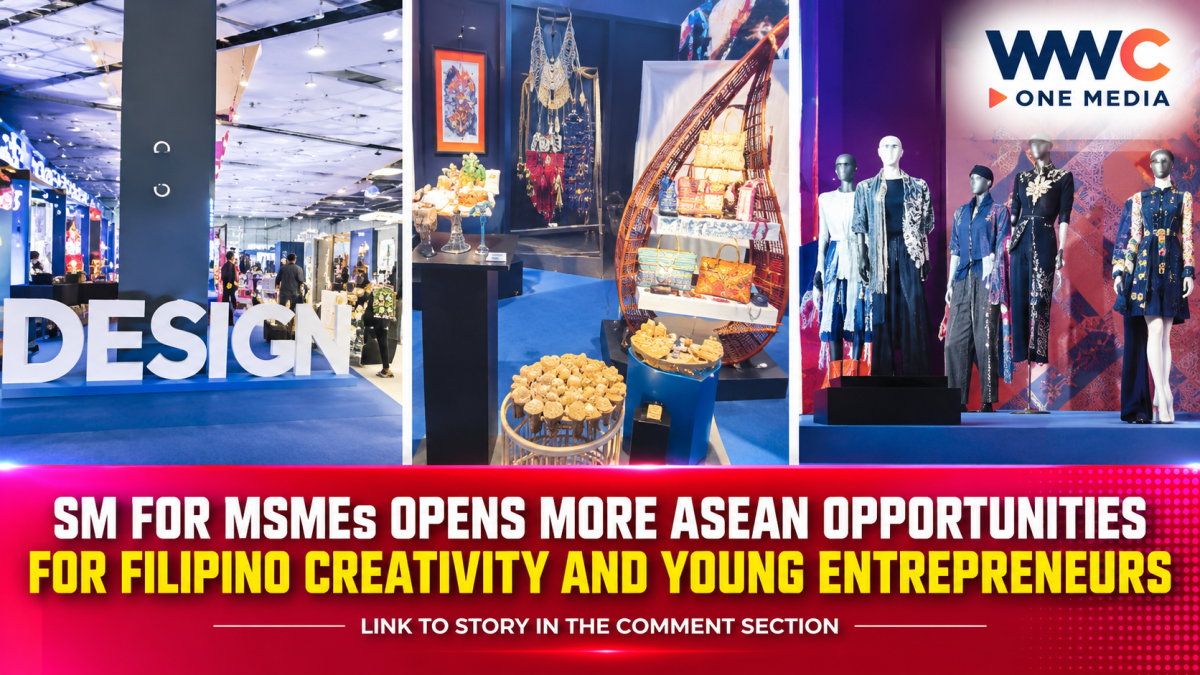
SM Supermalls highlighted the role of MSMEs and young entrepreneurs through two engagements held on Sept. 18, bringing together Filipino creators, students, business leaders and industry stakeholders around opportunities in the region.
The activities placed a particular focus on Filipino creativity and entrepreneurship, while connecting local businesses with the broader opportunities emerging from ASEAN’s increasingly integrated economy.
For many Filipino entrepreneurs, the challenge is no longer simply coming up with a product or starting a small business. The bigger hurdle is finding consistent customers, building visibility, developing the capabilities needed to scale and eventually reaching markets beyond the Philippines.
That challenge is particularly relevant for MSMEs, which make up the overwhelming majority of businesses in the country and provide livelihoods across communities.
SM for MSMEs has sought to address some of those barriers by giving entrepreneurs access to physical retail spaces, trade fairs, customer networks and opportunities to test their products in real market conditions.
The program’s broader approach reflects a shift from treating entrepreneurship as a one-time selling opportunity toward building an ecosystem in which businesses can learn, improve their products, strengthen their brands and eventually expand.
Earlier initiatives under the program have already provided market access to hundreds of entrepreneurs. In the first half of 2026, SM Supermalls supported more than 600 new MSMEs through DTI-led trade fairs and partner events nationwide, while 90 participating MSMEs had transitioned into regular SM tenants.
Those pathways are becoming more important as ASEAN economies pursue deeper regional integration.
The ASEAN Strategic Action Plan for MSME Development 2026–2030 identifies stronger integration of MSMEs into regional and global value chains as one of its central objectives. The plan also emphasizes digital transformation, technology adoption and the development of more competitive and inclusive business environments.
For Filipino businesses, that creates potential opportunities in markets where consumers are increasingly connected through digital platforms and regional supply chains.
But entering ASEAN markets requires more than having a product that sells domestically.
Entrepreneurs need to understand customer preferences in different countries, comply with market and product requirements, develop competitive pricing, improve production capacity and build reliable distribution networks.
Young entrepreneurs face additional challenges because many are still developing the basic systems needed to manage growing businesses.
Programs that combine market exposure with mentoring, capability-building and customer feedback can therefore provide an important bridge between having a promising idea and building a sustainable enterprise.
The push toward regional opportunities is also taking place alongside wider government efforts to strengthen the Philippine MSME ecosystem.
The Department of Trade and Industry has been working with regional organizations and business groups to create more opportunities for MSMEs to participate in regional value chains and prepare for changes brought by digitalization and evolving consumer markets.
The Philippines recently hosted the ASEAN MSME Summit 2026, where government and business representatives discussed ways to make enterprises more future-ready and competitive across Southeast Asia. The discussions focused on public-private partnerships, inclusive business development and regional platforms for MSME growth.
Another recent initiative involved discussions on a proposed ASEAN Centre of Excellence for MSMEs. A feasibility study supported by the Economic Research Institute for ASEAN and East Asia, the DTI’s Bureau of Small and Medium Enterprise Development and the Philippine Institute for Development Studies examined institutional and operational gaps affecting MSMEs across the region.
These developments point to a broader recognition that Filipino businesses need support not only to survive locally but also to become competitive in regional markets.
Creativity could be one of the Philippines’ strongest assets in that effort.
Local entrepreneurs are increasingly building businesses around Filipino design, food, fashion, crafts, culture, technology and other creative industries. Turning those ideas into scalable businesses, however, requires access to financing, markets, technology, skills and networks.
The ASEAN Creative Industries Expo held in Manila earlier this month similarly placed Filipino creative businesses at the center of a regional conversation about cultural and commercial opportunities.
For young entrepreneurs, the opportunity is particularly significant because digital platforms can allow small businesses to reach customers outside their immediate communities without immediately establishing physical stores overseas.
At the same time, digital access alone does not guarantee sustainable growth. Entrepreneurs still need to develop strong brands, consistent quality, efficient operations and the ability to respond to changing consumer demand.
This is where initiatives connecting young creators with established retail and business networks can play a role.
SM’s broader MSME program has positioned its malls not only as selling venues but also as spaces where entrepreneurs can interact directly with customers, receive feedback and build awareness for their brands. SM has said its network supports a large community of MSMEs across its retail operations.
The potential ASEAN opportunity therefore extends beyond simply selling more products.
A Filipino brand that successfully develops a loyal customer base at home can use that experience to refine its products, improve its operations and prepare for international expansion. Regional exposure can then become another stage in the company’s development.
For the Philippine economy, helping more MSMEs reach that stage could also have wider effects through job creation, local supply chains and increased demand for Philippine-made products and creative services.
The challenge is ensuring that opportunities remain accessible to businesses that are still small and have limited resources.
As ASEAN continues to deepen economic integration, Filipino entrepreneurs will increasingly compete with businesses from across the region. That competition will make product quality, innovation, digital readiness, branding and operational efficiency increasingly important.
The latest SM for MSMEs engagements highlight that the path from a local idea to a regional business can begin with something as basic as access to customers, mentors and a platform to test an idea.
The bigger opportunity now is whether more Filipino entrepreneurs, particularly young business owners and creators, can turn those early opportunities into sustainable companies capable of competing across ASEAN.