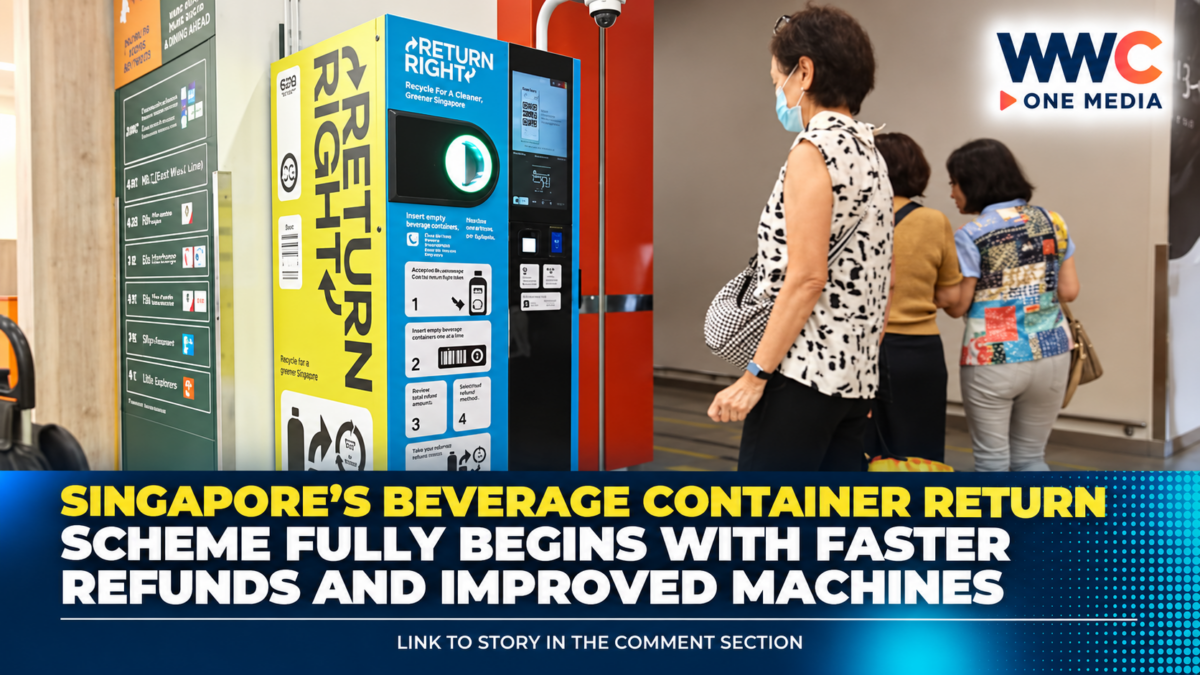
Singapore’s Beverage Container Return Scheme (BCRS) has entered full implementation, bringing new rules for consumers buying regulated drinks as authorities introduce improvements aimed at making container returns and refunds easier.
The scheme officially moved into its full phase on Oct. 1, following a six-month transition period that began in April. Under the new rules, regulated pre-packaged beverages sold in Singapore in plastic or metal containers from 150ml to 3 litres must carry the BCRS Deposit Mark and include a refundable 10-cent deposit.
Consumers can recover the 10-cent deposit by returning eligible empty containers through Return Right reverse vending machines. The containers must be emptied and kept intact, with the barcode remaining visible so the machine can identify and accept them.
The scheme covers a wide range of pre-packaged drinks, including bottled water, soft drinks, juices, dairy products, concentrates and cordials, as well as alcoholic beverages. Beverage cartons, pouches and glass containers are excluded, along with freshly prepared drinks such as freshly brewed coffee, bubble tea and freshly squeezed juices.
One of the biggest changes accompanying the full rollout is the introduction of a digital refund portal for consumers who encounter transaction problems when using the return machines.
Previously, customers facing refund issues could have to contact the operator by email and wait as long as 30 working days for a refund. Under the new system, users can scan the QR code printed on their service ticket or visit the refund portal to upload a photo of the ticket and submit their details.
The expected processing period has been reduced to as long as 10 working days, although the final timing remains subject to bank processing. The digital refund service began with machines operated by SG Recycle in northern and western parts of Singapore before being expanded to other machines across the island.
The authorities have also made changes to the operation of Return Right machines following feedback collected during the transition period.
Some consumers had raised concerns about machine errors, unpleasant smells and cleanliness. Operators said they would continue working to reduce technical problems and improve the machines’ ability to recognise and accept containers.
Consumers are also being reminded to empty and rinse bottles and cans before returning them. Leaving liquid inside containers can affect machine performance and cleanliness.
Return Right machines are cleaned and serviced at least once a day, while users are encouraged to keep the areas around the machines clean and avoid leaving unreturned containers or rubbish nearby.
The number of return machines has also expanded significantly during the rollout. More than 1,300 machines had been deployed by Sept. 27, with around 90 per cent of HDB residents living within a five-minute walk of a return point.
The network is expected to grow further, with as many as 2,000 return points planned within the first year of the scheme.
Consumers have also been returning larger numbers of containers as they become more familiar with the system. More than 48 million beverage containers had been collected by Sept. 27, while the average number returned per transaction increased from 2.8 in April to 8.2 in September.
Plastic containers accounted for about 55 per cent of the collected materials, while metal made up the remaining 45 per cent.
The 10-cent deposit is intended to give consumers a financial incentive to return their empty beverage containers instead of disposing of them as general waste. The broader goal is to increase recycling and recover higher-quality plastic and metal materials for reuse, supporting Singapore’s efforts to reduce waste and move towards a more circular economy.
There are also temporary arrangements for some smaller retailers that still have older beverage stock without the BCRS Deposit Mark. Eligible retailers that were granted a grace period may continue clearing such stock until Oct. 31. These products are not subject to the 10-cent deposit.
For most retailers, however, the transition has ended. From Oct. 1, only BCRS-labelled beverage products can generally be supplied, sold or distributed in Singapore, subject to the approved grace-period arrangements.
With the scheme now fully operational, consumers will need to check beverage labels before attempting to claim a refund. Only containers carrying the BCRS Deposit Mark qualify for the 10-cent return.
Authorities and operators are expected to continue monitoring the system and making adjustments based on consumer feedback as Singapore moves toward wider adoption of beverage-container recycling.