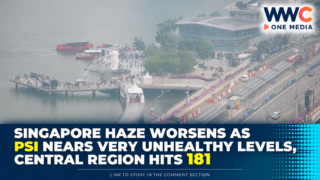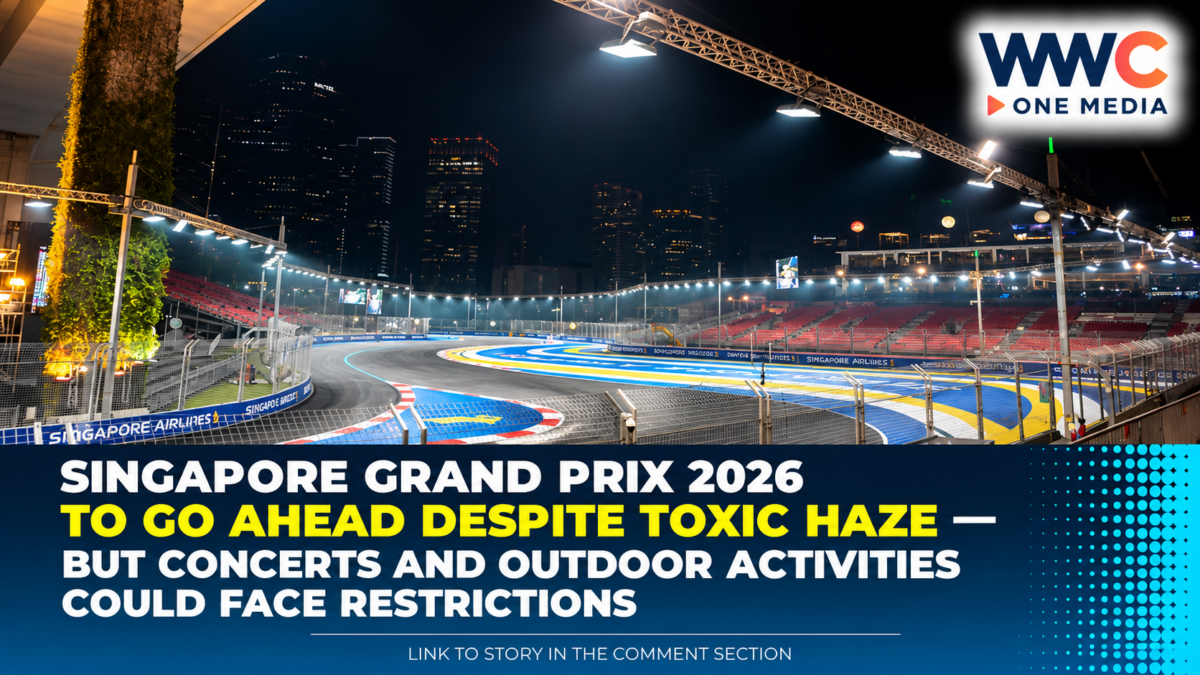
Singapore’s highly anticipated Formula 1 Grand Prix is set to proceed despite worsening haze blanketing the city-state, as authorities prepare contingency measures to protect hundreds of thousands of spectators expected at the Marina Bay Street Circuit this weekend.
The 2026 Singapore Grand Prix, scheduled for October 9 to 11, is taking place amid unhealthy air quality linked to smoke from forest and land fires in neighbouring Indonesia. Although the haze has raised concerns about public health and outdoor entertainment, Formula One officials have said the racing programme is not currently expected to be disrupted.
According to AsiaOne, the race promoter, Singapore GP, has included haze-related risks in its contingency plans, developed in consultation with government agencies and other stakeholders.
An F1 spokesperson told AsiaOne that there was “absolutely no risk to the event” under the conditions at the time of the statement. However, officials continue to monitor air quality, and that assessment could change if the situation deteriorates.
Could Haze Disrupt Singapore’s Biggest Sporting Weekend?
While the main race is expected to continue as planned, the International Automobile Federation (FIA) has warned that worsening haze could lead to restrictions on outdoor entertainment and other activities surrounding the event.
This means concerts and other festivities could face changes if air pollution becomes a more serious threat to public health, visibility or event operations.
The Singapore Tourism Board (STB) said it is working closely with the government’s Interagency Haze Task Force and other agencies to monitor the situation.
Contingency measures include keeping spectators informed about air quality developments, providing access to medical assistance and making N95 masks available at the circuit if required.
Authorities have not announced a specific pollution threshold that would automatically trigger restrictions on concerts or other entertainment activities.
More Than 300,000 Spectators Expected as Haze Raises Health Concerns
The haze comes at a critical time for Singapore, which is preparing to welcome a massive influx of international visitors for one of its biggest annual sporting events.
The Singapore Grand Prix attracts fans from around the world and provides a major boost to tourism, hospitality, restaurants and retail businesses.
However, unlike drivers, who spend much of the race inside their cars, spectators may remain outdoors for several hours while watching practice sessions, qualifying, the race and concerts.
Prolonged exposure to polluted air can cause throat irritation, coughing and breathing difficulties. People with asthma or existing heart and lung conditions, as well as children, older adults and pregnant women, may face greater health risks.
Singapore’s National Environment Agency advises members of the public to reduce prolonged or strenuous outdoor physical activity when the 24-hour Pollutant Standards Index (PSI) reaches unhealthy levels. People should also check one-hour PM2.5 readings when assessing immediate outdoor conditions.
Indonesia’s Forest Fires Blamed for Worsening Regional Haze
The haze affecting Singapore has been linked to smoke drifting from fires in parts of Sumatra and Kalimantan in Indonesia.
According to Singapore’s Meteorological Service, moderate to dense smoke plumes from southern and central Sumatra, along with parts of West Kalimantan, were observed moving towards Singapore on October 8.
Dry conditions and prevailing winds could allow the haze to persist, although forecast thundery showers over the race weekend may help improve conditions.
Reuters and The Guardian have also reported on the growing air pollution concerns surrounding the Grand Prix, highlighting the impact of Indonesian wildfires and the risks posed to spectators spending extended periods outdoors.
The situation has revived memories of the 2019 Singapore Grand Prix, when unhealthy air quality also prompted organisers to make medical assistance and N95 masks available.
Heat Adds Another Challenge for Drivers and Fans
The haze is not the only environmental concern facing this year’s race.
The FIA has also declared a heat hazard for the Singapore Grand Prix, with temperatures forecast to exceed 31 degrees Celsius. Temperatures could reach around 33 degrees Celsius during the weekend.
The combination of high humidity, heat and poor air quality could make conditions uncomfortable for spectators and physically demanding for drivers competing around the tight, twisting Marina Bay street circuit.
Formula One teams and event organisers will therefore need to monitor both air quality and weather conditions throughout the weekend.
Will Rain Clear the Haze Before Race Day?
Forecast showers could offer some relief, but their impact will depend on how much rain falls and how prevailing winds affect the movement of smoke from Indonesia.
For now, the Grand Prix remains scheduled to proceed, with officials maintaining contingency plans should conditions worsen.
Fans attending the event should monitor official announcements, check air quality readings and follow health advisories. Those who are particularly vulnerable to air pollution should take extra precautions and seek medical advice if they develop breathing difficulties.
Singapore’s challenge is clear: deliver one of Formula One’s most recognisable night races while ensuring that the health and safety of spectators, workers and teams remain a priority.
The race may still go ahead under the lights of Marina Bay, but whether every concert and outdoor celebration proceeds as planned will depend on how the haze develops over the coming days.