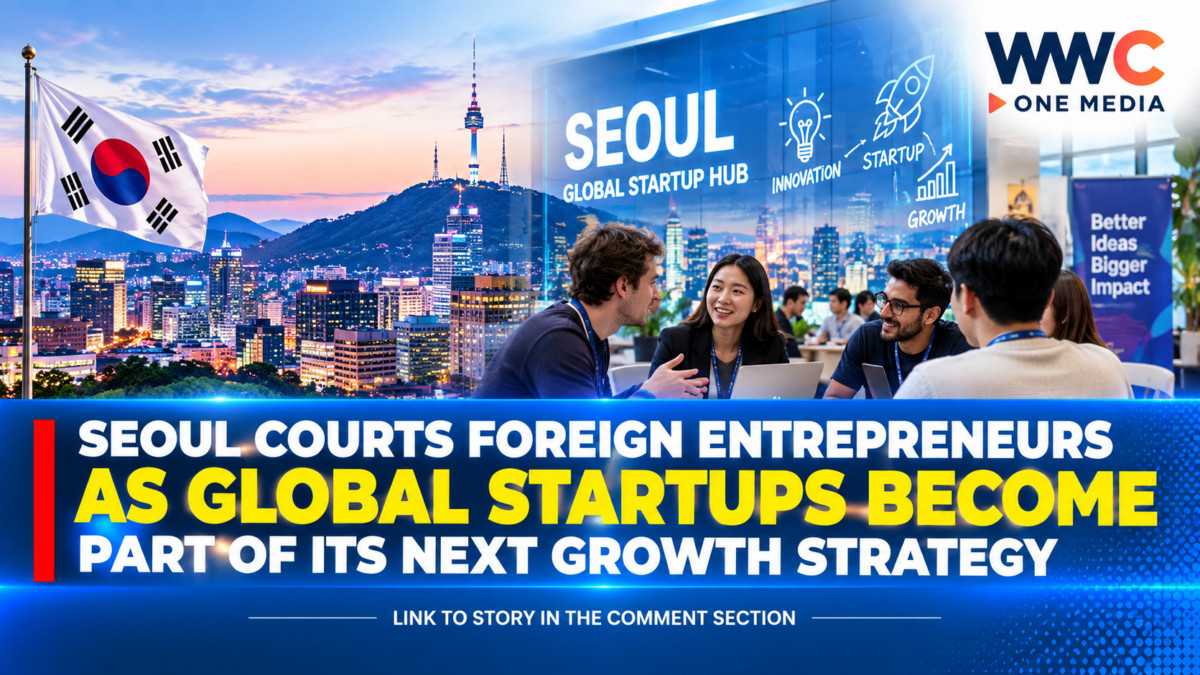
Seoul is turning to foreign entrepreneurs and technology startups as it looks for new sources of economic growth, with an international startup competition highlighting the city’s push to attract global talent.
At the center of the latest initiative is NeuroDetectYO, a Ukrainian-led startup that won Seoul’s second annual “Jump Up, Start Up” competition for foreign entrepreneurs.
Founder Oleksandr Yuhai received a prize of 2 million won (about US$1,500) along with 30 points toward South Korea’s D-8-4 technology startup visa.
The startup has developed an artificial intelligence platform designed to predict fall risks among elderly people, bringing health technology and AI together in a business model aimed at addressing a growing social challenge.
But the competition offered more than prize money. For foreign founders seeking to establish businesses in South Korea, the additional visa points can be particularly significant.
The D-8-4 technology startup visa operates under a 300-point system, with applicants required to reach at least 60 points, alongside required technical or intellectual-property qualifications.
Seoul Opens Its Startup Door to the World
This year’s competition attracted 40 teams from around the world, with nine finalists representing countries including Germany, Indonesia, the United States and Uruguay.
The finalists presented startups spanning several rapidly developing sectors, including artificial intelligence, healthcare, education technology and food technology.
Second place went to FlixFluent, led by German entrepreneur John Heinemann. The startup developed an AI-powered Chrome extension designed to help users learn foreign languages through streaming-video content.
Third place went to Dots, an AI platform created by Uruguayan entrepreneur Maria Noel De La Paz Suzacq that aims to connect Korean startups with markets across Latin America.
The diversity of the finalists reflects Seoul’s attempt to bring international perspectives into its startup ecosystem.
Sohn Hyeong-kwon, director of foreign immigration at the Seoul Metropolitan Government, said foreign entrepreneurs are creating new business opportunities in Seoul through their experiences and technological expertise.
The city says it will continue supporting foreign founders as it seeks to turn innovative ideas into new growth engines.
Visa Barriers Remain a Major Challenge
For many foreign entrepreneurs, however, building a company in Korea is only one part of the challenge.
Navigating the country’s immigration system can also be difficult. Many participants in the competition currently hold student or job-seeker visas, making opportunities to earn points toward a technology startup visa particularly important.
Through the Seoul Global Center, the city provides support under the government’s OASIS startup immigration system, which can assist foreign entrepreneurs through stages including startup training, business registration and office incubation.
Seoul’s strategy is also looking beyond individual competitions.
Last year’s competition winner, Konnect, an AI-powered travel platform founded by Indian entrepreneur Ravi Sankar, recently secured backing from Korea’s TIPS government-matched investment program.
That development provides an example of how Seoul hopes foreign founders can move from startup competitions into longer-term business activity.
Seoul’s Bigger Bet on Global Talent
The push comes as South Korea faces demographic and economic challenges, including declining birth rates and slower economic growth.
For Seoul, attracting entrepreneurs from overseas offers another potential source of ideas, technology, investment and international connections.
Rather than relying solely on domestic founders, the city is seeking to build an ecosystem where foreign entrepreneurs can launch businesses, connect with Korean companies and eventually establish long-term operations in the country.
The latest competition therefore represents more than a startup pitch event. It is part of Seoul’s broader effort to position itself as a destination for international founders—and to turn global entrepreneurial talent into another pillar of the city’s future economy.
WWC ONE MEDIA G,A