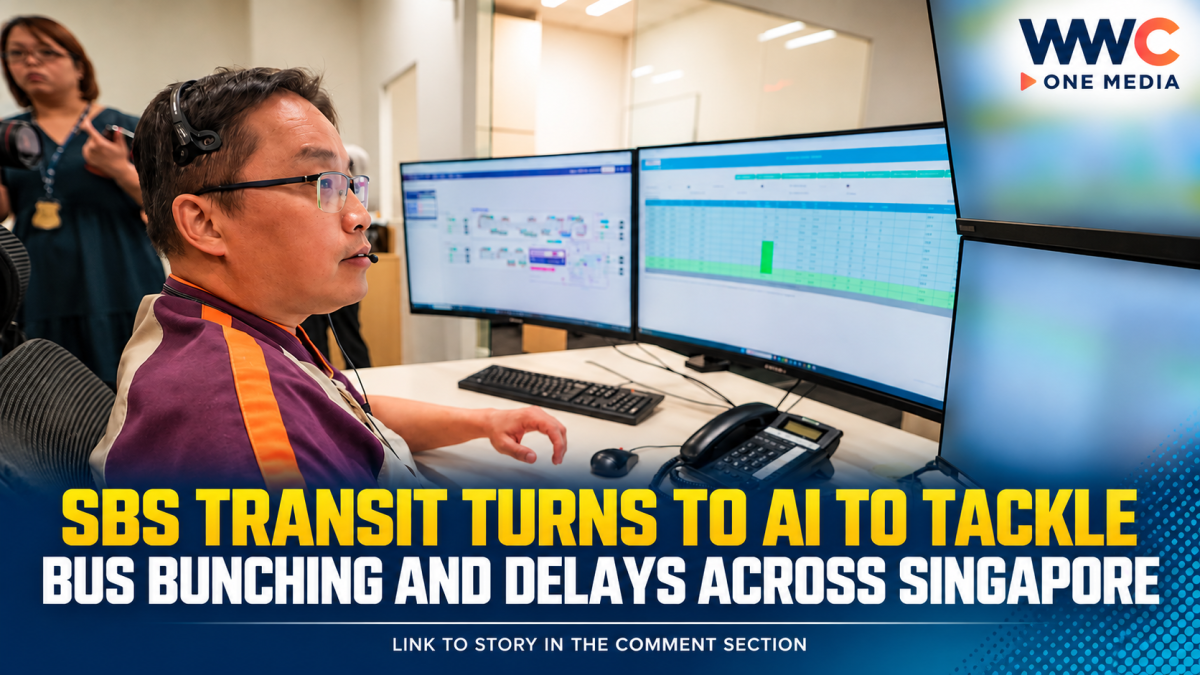
SBS Transit is turning to artificial intelligence to tackle one of the most frustrating problems for commuters — long waits followed by two buses arriving almost at the same time.
The operator is trialling an AI-powered decision-support system called FlowOS, designed to help service controllers identify delays, bus bunching and other disruptions in real time and recommend actions to keep buses more evenly spaced along their routes.
Bus bunching can happen when traffic congestion, bad weather, accidents or other disruptions cause one bus to fall behind. The delay can then create a gap in service, while another bus catches up, resulting in multiple buses arriving together and leaving commuters with another long wait afterward.
The challenge is particularly demanding for service controllers, who may monitor dozens of buses simultaneously. SBS Transit said a controller can oversee as many as 70 buses, making it difficult to spot every developing problem quickly as road conditions change.
FlowOS continuously analyses live bus operations and combines current information with historical operating patterns. When buses on the same route get too close together or another issue requires attention, the system alerts the controller and recommends possible interventions.
Those recommendations could involve adjusting when buses leave an interchange or asking a driver to slow down temporarily to restore more even spacing.
The AI, however, will not be making the final decisions.
Service controllers remain responsible for deciding whether to accept, modify or reject the system’s recommendations based on their experience and what is happening on the road.
The system is currently being tested on Services 70 and 145. The trial is expected to expand to seven additional routes before concluding in March 2027, with wider deployment across SBS Transit’s bus fleet planned for the second quarter of 2027 if the rollout proceeds as planned.
The technology comes after SBS Transit signed a memorandum of understanding with UK-based Prospective Labs in June 2026 to explore FlowOS for Singapore’s bus operations. The system has also been used by SBS Transit’s sister company Metroline in the United Kingdom.
The push for more reliable bus arrivals comes as Singapore continues to deal with the wider challenge of keeping public transport dependable amid unpredictable road conditions. Earlier in 2026, a separate technical fault affecting the national bus arrival timing system caused missing or intermittent arrival predictions for thousands of buses, although actual bus operations were not otherwise affected.
For commuters, the bigger test will be whether AI can translate behind-the-scenes improvements into shorter and more predictable waits at the bus stop. If the trial succeeds, technology could increasingly become part of how Singapore’s bus network responds to disruptions before they turn into longer delays and bunching.