
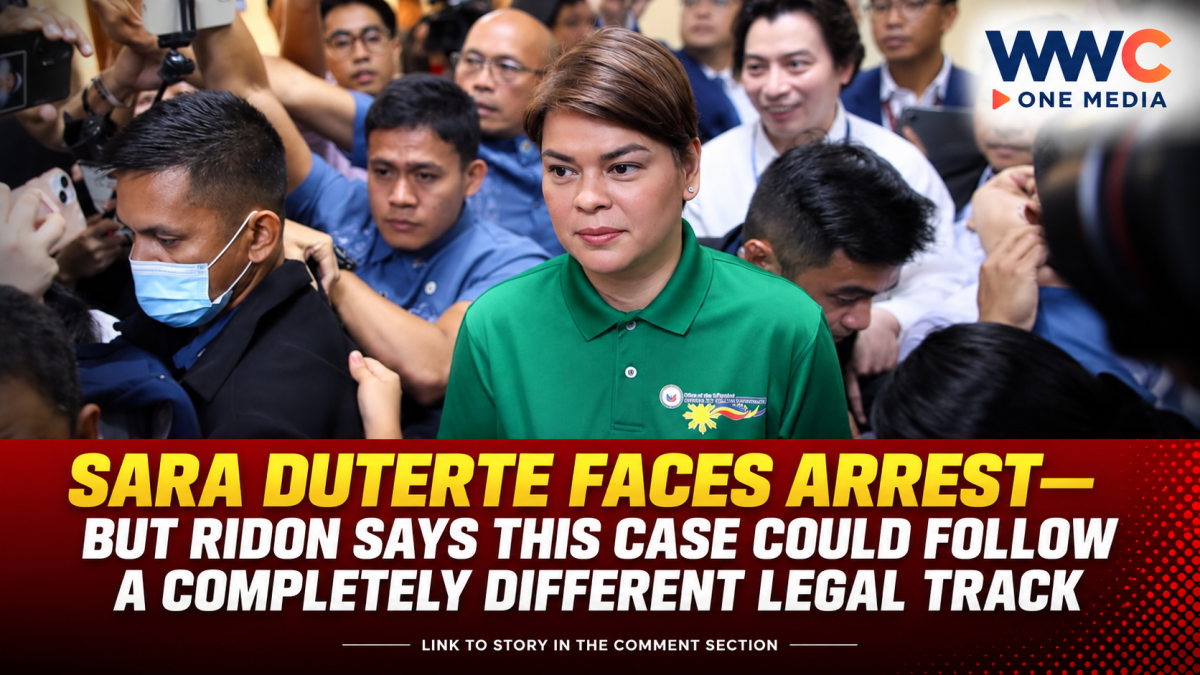
MANILA, Philippines — Vice President Sara Duterte is now facing an arrest warrant over a criminal grave-threats case, but House impeachment prosecutor Terry Ridon stressed that the development does not replace or automatically determine the outcome of her ongoing impeachment trial.
The Quezon City Regional Trial Court Branch 98 issued a warrant of arrest against Duterte on Friday, September 4, in connection with three counts of grave threats. The court also set bail at ₱120,000 for each count.
The development came while Duterte is simultaneously defending herself before the Senate sitting as an impeachment court.
Ridon, a Bicol Saro party-list representative and member of the House prosecution team, emphasized that the two proceedings operate under different legal frameworks.
“The impeachment proceedings are a separate constitutional accountability process.”
According to Ridon, the criminal case will determine Duterte’s possible criminal liability, while the impeachment proceeding concerns constitutional accountability and whether she should remain in public office.
WARRANT DOES NOT MEAN CONVICTION
Ridon also cautioned against treating the arrest warrant as proof that Duterte has already been found guilty.
An arrest warrant allows authorities to proceed with the criminal process, but guilt must still be established in court. Duterte will have the opportunity to present her defenses and pursue available legal remedies.
Duterte’s lawyer, Paul Lawrence Lim, confirmed that her camp had received the warrant and said the vice president had no intention of evading the law.
Her lawyers said they would continue pursuing the legal remedies available to her, including their challenge to the court’s jurisdiction.
WHAT IS THE GRAVE-THREATS CASE ABOUT?
The criminal case stems from remarks Duterte made during online press conferences in 2024 concerning President Ferdinand Marcos Jr., First Lady Liza Araneta Marcos and then-House Speaker Martin Romualdez.
The Department of Justice said the Quezon City court found probable cause to hold Duterte for trial on all three counts and rejected her motion seeking to defer or recall the arrest warrant and quash the information.
The criminal complaint was filed in August after findings from the National Bureau of Investigation were forwarded to the DOJ.
Importantly, the same remarks have also become part of the political battle surrounding Duterte’s impeachment.
THE SAME REMARKS, TWO DIFFERENT PROCEEDINGS
The alleged threats are included in the impeachment articles against Duterte, meaning the same underlying statements can have consequences in two separate legal processes.
That does not, however, make the proceedings the same.
The criminal case is intended to determine whether the elements of the offense of grave threats have been established and whether Duterte bears criminal liability.
The impeachment proceeding, meanwhile, is a constitutional process conducted by the Senate acting as an impeachment court.
Ridon said the House prosecution panel would continue presenting its case despite the criminal proceedings.
“The House prosecution panel will continue performing its constitutional mandate and prosecute the impeachment case until its conclusion,” Ridon said.
IMPEACHMENT TRIAL CONTINUES
The arrest warrant arrives as Duterte’s Senate impeachment trial remains underway.
The House prosecution has been presenting evidence involving several allegations against the vice president, including issues surrounding confidential funds and other accusations contained in the impeachment articles.
Just this week, Ridon said prosecutors had received bank and tax records of Duterte, her husband and their companies as the prosecution prepared evidence related to the unexplained-wealth allegation.
The House prosecution has also been examining safeguards governing confidential and intelligence funds, with Ridon saying lawmakers are considering a proposed Confidential and Intelligence Fund Integrity Bill following issues raised during the trial.
WHAT HAPPENS NEXT?
Duterte’s camp is expected to address the arrest warrant through the courts while the impeachment proceedings continue separately.
Interior Secretary Jonvic Remulla said Duterte’s lawyers had received the warrant and were planning to post bail as soon as possible.
For now, the most important legal distinction is clear: an arrest in the criminal case would not by itself decide Duterte’s impeachment case, just as the Senate’s eventual impeachment judgment would not substitute for the criminal court’s determination of guilt.
The two proceedings can therefore move forward on separate tracks—putting Duterte in the middle of an unusually consequential legal and political battle on two fronts.
And with both cases still unfolding, the next major question is no longer simply whether Duterte will face the courts—but how the criminal case and the impeachment proceedings will affect one another as both move toward their respective conclusions.



Leave a Reply