
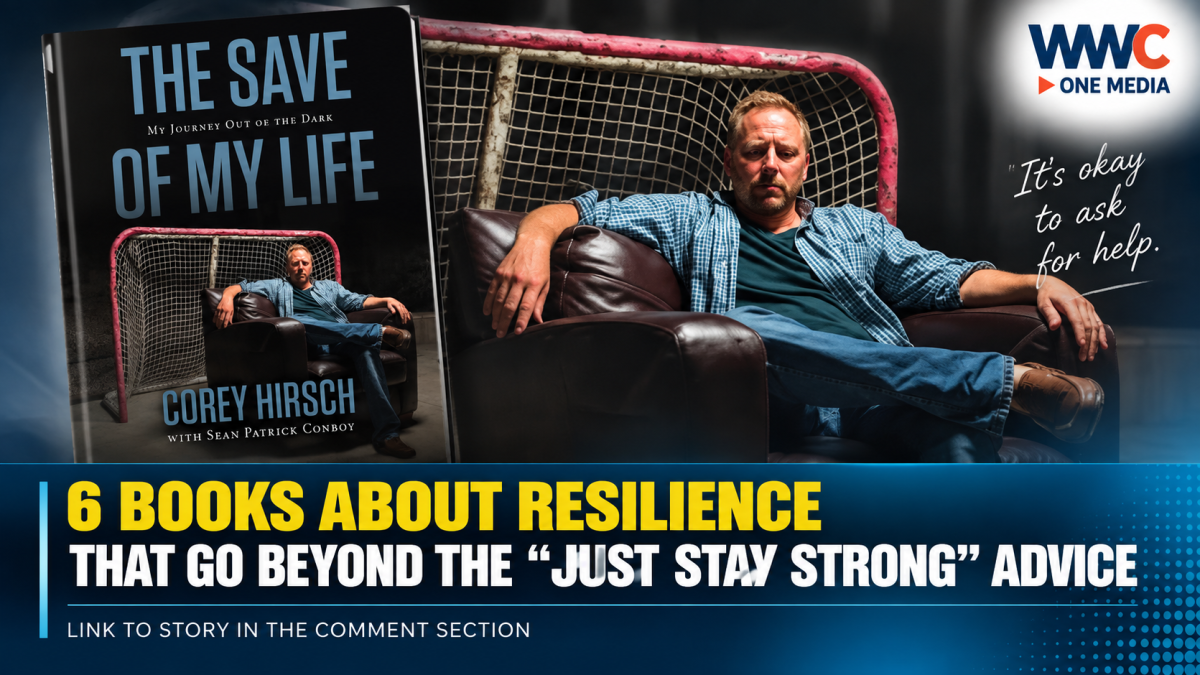
From grief and addiction to trauma, mental health and finding purpose, these memoirs offer a more honest look at what it means to survive difficult times
MANILA, Philippines — Resilience is often reduced to a simple message: stay strong, keep going and bounce back.
But real life rarely works that neatly.
Recovery from grief, trauma, addiction or a mental-health crisis can be uneven. Some days bring progress; others can feel like setbacks. The American Psychological Association describes resilience as the process of adapting to difficult experiences, with factors including social support, coping strategies and the ability to adjust to changing circumstances. It also emphasizes that resilience can be developed and practiced.
That is the idea behind Tatler Asia’s latest reading list, which brings together memoirs and books that examine resilience through lived experience rather than presenting it as an easy formula. The list comes ahead of World Suicide Prevention Day on September 10.
Here are six books that take a deeper look at surviving life’s hardest chapters.
1. The Save of My Life — Corey Hirsch
Former NHL goaltender and Olympic silver medallist Corey Hirsch spent much of his professional career privately dealing with severe obsessive-compulsive disorder and intrusive thoughts.
His memoir, The Save of My Life: My Journey Out of the Dark, examines the contrast between his public image as an elite athlete and the private struggles he was experiencing.
The book challenges the assumption that physical strength or professional success automatically translates into psychological well-being.
Its central message is particularly relevant in cultures where talking openly about mental health can still carry stigma: asking for professional help can be an important part of survival, not a sign of weakness.
Why it stands out
It shows that someone who appears strong on the outside can still be struggling internally—and that resilience can include admitting that help is needed.
2. Chase the Rainbow — Poorna Bell
Journalist and author Poorna Bell turns personal tragedy into an examination of grief, depression and the pressures surrounding masculinity in Chase the Rainbow.
The book reflects on the death of her husband, Rob, and the depression and addiction that preceded it. Rather than presenting grief as a straightforward journey toward closure, Bell explores the complicated emotions that can remain after a devastating loss.
The publisher describes the memoir as an account of a woman’s life affected by, but not defined by, her husband’s death, while also examining modern expectations placed on men.
Why it stands out
It asks readers to look beyond stereotypes about how men are “supposed” to deal with emotional pain.
3. A Heart That Works — Rob Delaney
Comedian and actor Rob Delaney takes readers into one of the most painful experiences imaginable: losing a child.
His son Henry died from a brain tumour at the age of two. A Heart That Works recounts Henry’s illness, treatment and death, as well as the family’s experience of grief afterward.
The book has also received significant critical attention. The Guardian described Delaney’s memoir as exceptionally moving while highlighting its unusual combination of devastating grief, honesty and dark humour.
Rather than offering a tidy lesson about “moving on,” the memoir explores what it means to continue living while carrying profound loss.
Why it stands out
It treats grief as something that can change a person permanently—not simply as a problem that eventually disappears.
4. Option B — Sheryl Sandberg and Adam Grant
After the sudden death of her husband, Sheryl Sandberg co-wrote Option B with psychologist Adam Grant.
The book combines personal experience with psychological ideas about adversity, grief and rebuilding a life after unexpected loss.
It does not suggest that resilience means returning to exactly the person you were before tragedy. Instead, it explores how people can adapt when the future they expected is suddenly no longer possible.
Kirkus Reviews describes the book as a memoir of losing a husband while searching for a path forward beyond the grieving process.
Why it stands out
For readers looking for something that combines memoir with practical psychological concepts, Option B offers a more structured approach to adversity.
5. Fight for the Forgotten — Justin Wren
Former UFC fighter Justin Wren takes a different approach to resilience in Fight for the Forgotten.
The memoir traces his experiences with childhood bullying, depression and addiction before describing his eventual turn toward humanitarian work.
According to publisher Simon & Schuster, Wren’s journey eventually led him from professional fighting into advocacy and humanitarian efforts involving the Mbuti community in the Democratic Republic of Congo.
The book’s broader theme is about transforming personal suffering into a sense of purpose and service to others.
Why it stands out
It presents resilience not simply as surviving adversity, but also as finding meaning and direction afterward.
6. Man’s Search for Meaning — Viktor E. Frankl
Few books on resilience have had the cultural staying power of Viktor E. Frankl’s Man’s Search for Meaning.
Frankl, a psychiatrist and Holocaust survivor, wrote about his experiences in Nazi concentration camps and developed the psychological approach known as logotherapy, which emphasizes the human search for meaning.
The book was first published in 1946 and has since become an international bestseller. Beacon Press says it has sold more than 16 million copies and been translated into more than 50 languages.
Its central idea is that even when circumstances cannot immediately be changed, people can still search for meaning in how they respond to them.
Why it stands out
Nearly eight decades after its first publication, it remains one of the most widely recognized books connecting suffering, purpose and psychological resilience.
What these books get right about resilience
The most striking thing about Tatler Asia’s list is that none of these stories treats resilience as simply “being tough.”
That aligns with modern psychological thinking.
The APA describes resilience as involving flexibility and adaptation, while also pointing to social resources and coping skills as important factors.
Harvard Health similarly describes resilience as an ability to adapt to life’s difficulties and notes that chronic stress can make coping harder, while resilience skills can be cultivated.
That makes these books valuable for a different reason: they show resilience through real stories of people dealing with circumstances they did not choose.
There is grief.
There is illness.
There is addiction.
There is trauma.
There is uncertainty.
And, in different ways, there is the difficult question of what comes next.
Resilience doesn’t always look like bouncing back
Perhaps the biggest takeaway is that resilience doesn’t necessarily mean returning to your old life.
Sometimes it means learning how to live differently.
Sometimes it means accepting help.
Sometimes it means finding meaning after loss.
And sometimes it simply means getting through one difficult day at a time.
These books don’t promise that reading a memoir can solve a personal crisis—and they shouldn’t. For someone experiencing serious emotional distress, professional and personal support can be far more important than any book.
But stories can help people feel less alone.
And that may be the most powerful thread connecting all six titles.
WWC ONE MEDIA J.M.D




Leave a Reply