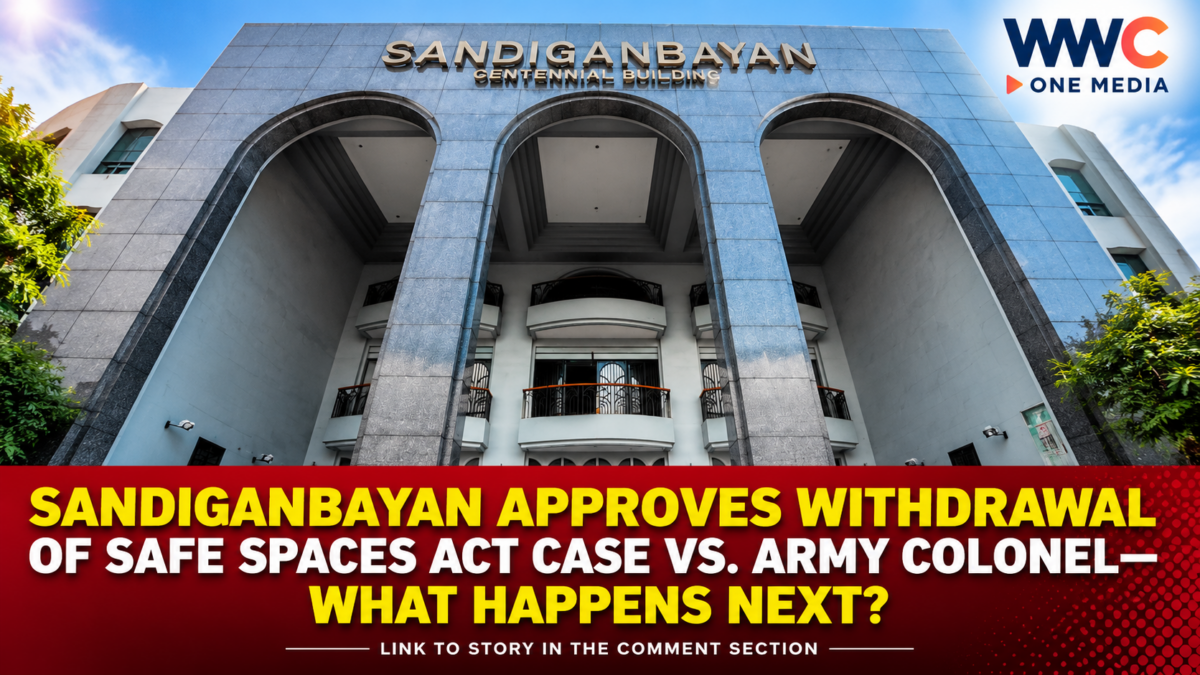
The Sandiganbayan has reportedly approved the withdrawal of a case under the Safe Spaces Act involving an Army colonel, bringing a significant procedural development to a case involving allegations of misconduct and the application of Philippine law.
The development raises questions about the circumstances behind the withdrawal, the legal implications of the court’s action, and whether any related proceedings remain pending.
What does the court’s decision mean?
Approval of a request to withdraw a case does not, by itself, establish that the allegations were true or false. Its legal effect depends on the specific motion, the grounds presented, and the terms of the court’s resolution.
The distinction matters because a withdrawal, dismissal, acquittal, and conviction are different legal outcomes. Without examining the full resolution, it would be premature to conclude that the officer was cleared of all possible liability.
Understanding the Safe Spaces Act
Republic Act No. 11313, or the Safe Spaces Act, is a Philippine law addressing gender-based sexual harassment in public spaces, online spaces, workplaces, and educational or training institutions.
The law establishes protections against covered forms of harassment and provides mechanisms for accountability. Its application depends on the alleged conduct and the circumstances of each case.
Cases involving military personnel can also raise questions about the relationship between civilian legal proceedings and applicable military rules. The existence and status of any separate administrative or military proceedings must be verified independently.
Why the court’s action matters
The Sandiganbayan is a Philippine anti-graft court with jurisdiction over cases assigned to it by law. Its involvement in a particular case does not automatically mean that every allegation is a graft offense; jurisdiction depends on the applicable legal provisions and the facts of the case.
For the public, the important questions are what legal grounds supported the withdrawal, whether the court imposed any conditions, and whether the action affects other proceedings involving the same allegations.
These details are necessary to understand the ruling accurately rather than relying solely on the fact that the withdrawal was approved.
What happens next?
The next steps depend on the actual resolution and whether other complaints or proceedings remain active. The court’s order, any related filings, and statements from the parties or relevant authorities would help establish the case’s final status.
For now, the court’s reported approval of the withdrawal should be distinguished from a finding on the truth of the underlying allegations.
The key question is not simply whether the case was withdrawn, but what the court’s order legally means for the officer and any remaining proceedings.