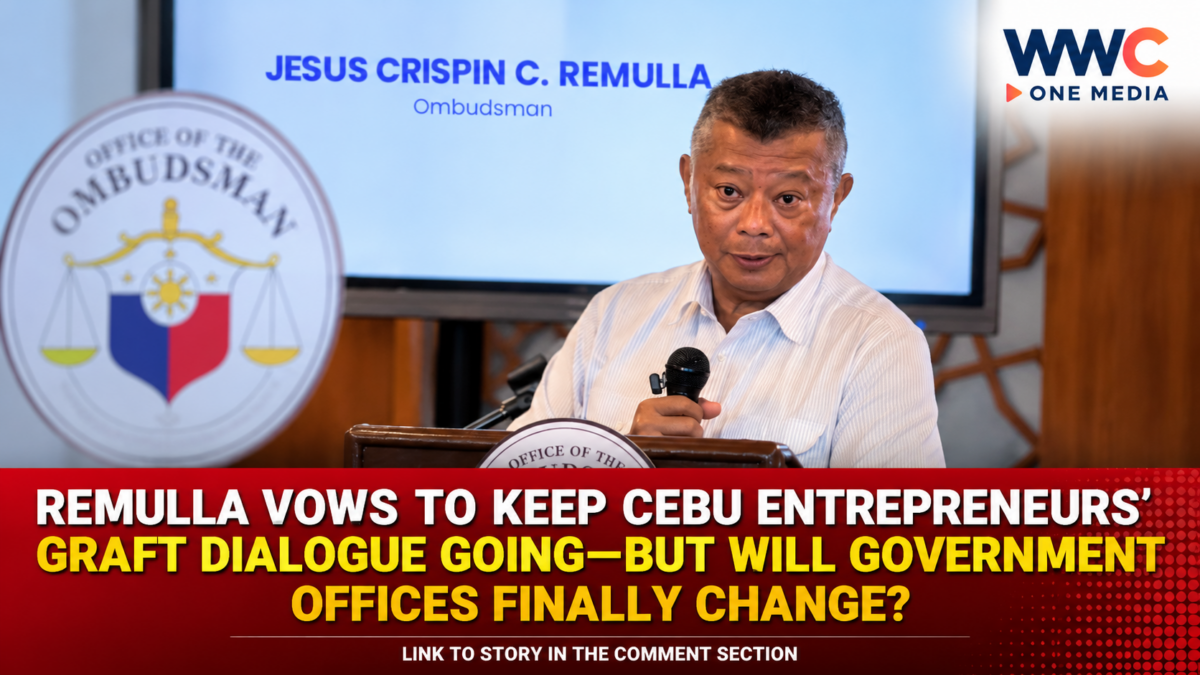
CEBU CITY, Philippines — Ombudsman Jesus Crispin “Boying” Remulla has pledged to continue engaging Cebu’s business community on corruption and government inefficiencies, as entrepreneurs call for more transparent transactions, simpler permit requirements and stronger accountability from public officials.
The commitment followed a town hall dialogue with Cebu business leaders on Thursday, October 22, 2026, where participants raised concerns about regulatory bottlenecks, delays in securing permits and difficulties in dealing with government agencies.
Remulla said the consultations would continue as the Office of the Ombudsman seeks to understand the challenges businesses face and identify ways to improve public service delivery.
The discussions are part of a broader push to make government transactions more efficient while addressing corruption risks that can discourage investments and hinder business operations.
Digital government transactions seen as a way to curb corruption
One of the key proposals discussed was expanding digital government services to reduce unnecessary face-to-face transactions and limit opportunities for fixers and unofficial payments.
Remulla argued that allowing businesses to complete more transactions online could make government processes more transparent and accessible.
The initiative could be particularly relevant to entrepreneurs dealing with business permits, licensing requirements and regulatory clearances.
According to reports from MYTV Cebu and InsiderPH, participants highlighted the need to improve procedures involving business permitting and the Bureau of Fire Protection, among other government offices.
The challenge is not simply digitizing paperwork. Government agencies must also coordinate their requirements, apply rules consistently and ensure that online systems actually reduce delays rather than create additional obstacles.
Business leaders want action on permit delays
Cebu Chamber of Commerce and Industry president Regan Rex King welcomed the Ombudsman’s outreach to the private sector, saying the dialogue could help rebuild confidence in government institutions.
Permit processing emerged as a major concern, with business leaders pointing to business permits, building permits and fire safety requirements as areas where delays can disrupt operations.
For businesses, prolonged processing can mean postponed openings, higher operating costs and missed opportunities. Smaller enterprises may be especially vulnerable when they cannot begin operations until required approvals are secured.
King also expressed support for closer coordination between the Office of the Ombudsman and the Anti-Red Tape Authority, which works to address excessive bureaucratic requirements and improve government service delivery.
Leaders from other Cebu business organizations likewise welcomed the consultation, while emphasizing the need for sustained engagement and concrete results.
Ombudsman signals stronger action against abuses
Remulla stressed that the Ombudsman’s responsibilities should extend beyond investigating and prosecuting allegedly corrupt officials. He said government systems must also be improved to prevent inefficiency and abuse from recurring.
Reports from MYTV Cebu and InsiderPH said Remulla discussed concerns involving regulatory processes and indicated that further cases could be pursued against personnel suspected of wrongdoing.
Any administrative or criminal allegations, however, must be evaluated through the appropriate procedures and supported by evidence.
The broader objective is to address both individual misconduct and systemic weaknesses that create opportunities for corruption.
Regulatory summit planned for 2027
Another significant development is the planned Philippine Regulatory Summit in 2027, which Remulla said would bring government regulatory agencies together to discuss transparency, overlapping requirements and the wider adoption of online services.
The proposed gathering could provide an avenue to identify unnecessary procedures and improve coordination between offices responsible for business regulation.
The initiative also follows Remulla’s earlier public discussion of reviving an investment ombudsman mechanism to give business leaders a channel for raising complaints about government transactions. GMA News reported in September 2026 that Remulla was considering such an initiative to address business concerns and reduce obstacles to investment.
However, the specific implementation arrangements and results of these proposals will need to be established and communicated by the relevant authorities.
The bigger question: Will entrepreneurs see real changes?
The continued dialogue offers Cebu’s business community an opportunity to raise concerns directly with the country’s anti-graft watchdog. But the real test will be whether those discussions lead to measurable improvements.
Business owners will be watching for faster permit processing, clearer requirements, more predictable government decisions and effective action on substantiated complaints.
For the public, the issue extends beyond the business sector. More transparent and efficient government transactions could also benefit ordinary citizens who regularly deal with public offices.
Remulla’s commitment to continue the conversations signals that the engagement is intended to be an ongoing process rather than a one-time meeting.
The next challenge is turning promises into results. Whether the initiative can reduce red tape and strengthen trust in public institutions will depend on the actions taken by the Ombudsman and the government agencies involved.