
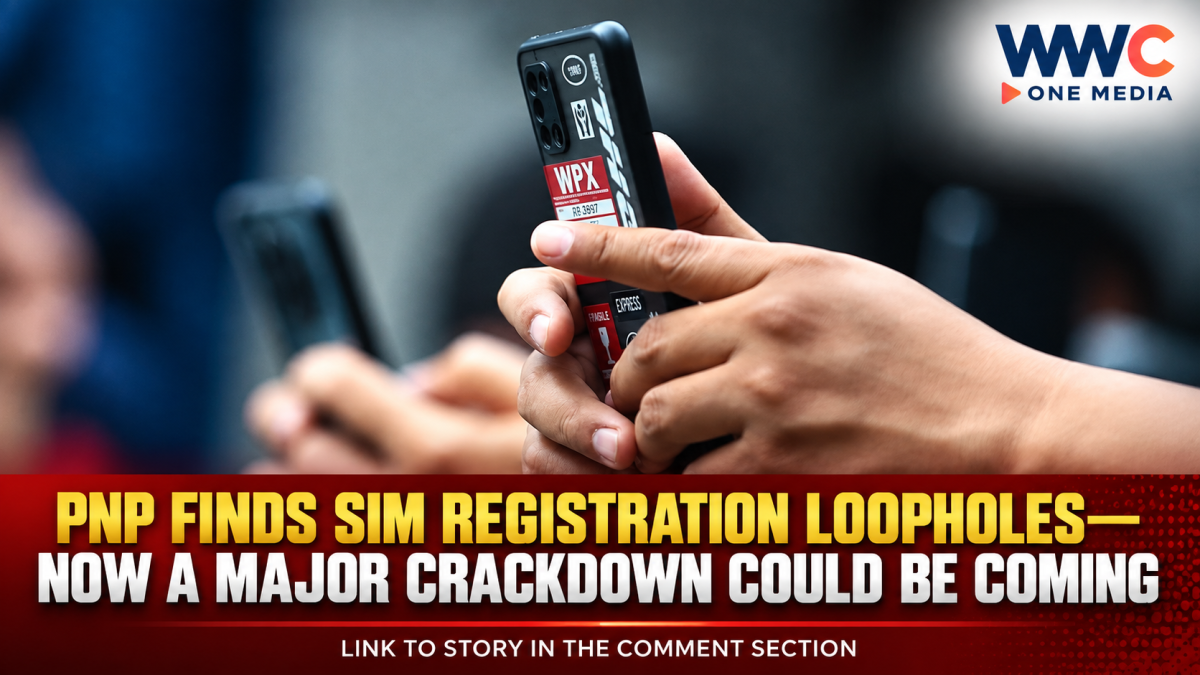
MANILA, Philippines — The Philippine National Police is pushing for a review of the country’s SIM Registration Act after its Anti-Cybercrime Group identified loopholes that authorities say are being exploited in scams, identity-related crimes and other illegal online activities.
PNP chief Gen. Jose Melencio Nartatez Jr. has directed the police legal team to examine Republic Act No. 11934, or the Subscriber Identity Module (SIM) Registration Act, and recommend possible amendments.
The move comes as law enforcement agencies continue to encounter pre-registered SIM cards being sold and allegedly used in criminal operations.
Nartatez said the PNP is prepared to work with lawmakers and other government agencies to provide operational data and recommendations aimed at making the law more effective against cybercrime.
“Innovations in digital technology are fast evolving,” Nartatez said, emphasizing the need for law enforcement measures to keep pace with rapidly changing criminal tactics.
PNP wants tougher identity verification
The PNP Anti-Cybercrime Group has called for stronger safeguards in the registration and transfer of SIM cards.
Among the proposals is the use of the Philippine National ID as the primary means of verifying a subscriber’s identity, with biometric authentication providing an additional layer of protection.
ACG director Maj. Gen. Wilson Casil Asueta has also proposed limiting SIM ownership to five cards per person, requiring proper documentation when a registered SIM is transferred, and closely monitoring the distribution and redistribution of SIM cards.
The proposals are aimed at closing gaps that police believe allow criminal groups to acquire mobile numbers that are registered under other people’s identities.
The PNP’s position was echoed in reports by Inquirer.net, Philippine Star, PNA and GMA News, which documented the agency’s push for amendments following several operations involving allegedly illegal sales of registered or pre-registered SIM cards.
400 registered SIM cards seized in Bulacan
One case that highlighted the problem involved the arrest of a 26-year-old man in Obando, Bulacan, during an August 24 entrapment operation.
According to the PNP-ACG, approximately 400 registered SIM cards were seized after the suspect was allegedly found selling registered SIM cards online.
Police said the operation stemmed from cyber-patrolling activities that monitored social media accounts allegedly involved in the sale of registered SIM cards and other accounts used in financial transactions.
The suspect allegedly admitted registering some SIM cards using other people’s identities, while other cards had already been registered before they came into his possession.
The seized SIM cards are being subjected to further investigation as authorities work to determine their registration history and possible connection to criminal activities.
Cybercrime cases remain a major concern
The PNP’s proposed changes come as its Anti-Cybercrime Group reports continuing operations against online criminals.
From January through July 2026, the PNP-ACG said it arrested 766 individuals, rescued 149 victims and secured 81 convictions in cybercrime-related cases. Online selling scams were identified as among the most prevalent offenses encountered during the period.
Philstar also reported that of 818 PNP-ACG operations conducted from January to July 31, 359 involved financial crimes, online swindling or estafa, and the illegal sale of registered SIM cards.
These figures underscore why police officials are pushing for changes to a law originally designed to make mobile communications more traceable and accountable.
What the current law already requires
Republic Act No. 11934 was enacted in 2022 to require SIM registration and help law enforcement identify people behind crimes committed through mobile communications.
Under the law, SIM cards must be registered before activation, while users are required to provide identifying information and present government-issued identification.
The law also prohibits the sale or transfer of a registered SIM without complying with registration requirements.
Importantly, the existing law already contains penalties for providing false information or using fictitious identities or fraudulent identification documents to register a SIM. It also penalizes the unauthorized sale or transfer of registered SIM cards.
This means the PNP’s current push is not simply about creating a registration requirement from scratch. Rather, police officials want Congress and regulators to strengthen the safeguards surrounding identity verification, SIM transfers, ownership limits and distribution channels.
NBI cases show the problem extends beyond individual sellers
The issue has also surfaced in separate National Bureau of Investigation operations.
In July, the NBI announced the arrest of three Filipinos allegedly involved in selling pre-registered SIM cards. Authorities said the SIM cards were being supplied to operators of scam hubs, illegal online lending operations and other cybercriminal networks.
The NBI said investigators seized hundreds of pre-registered SIM cards during a series of operations in Pasay, Parañaque and Manila.
One foreign suspect arrested in the operation was also investigated for alleged computer-related fraud and identity theft connected to an online “love scam” operation, according to the NBI.
The cases illustrate the concern confronting investigators: registering a SIM is only one part of the problem if criminals can subsequently obtain, transfer or use SIM cards registered under someone else’s identity.
The proposed changes could affect ordinary mobile users
If Congress eventually adopts the PNP’s recommendations, ordinary subscribers could face tighter requirements when buying, activating or transferring SIM cards.
A five-SIM limit, for example, could affect individuals who legitimately maintain multiple numbers for work, business, personal use or other purposes.
Likewise, requiring stronger identity authentication could improve accountability but would also raise practical questions about accessibility, privacy, registration convenience and what happens to users who cannot immediately complete biometric verification.
Those issues would have to be addressed during the legislative and regulatory process.
The existing law itself requires telecommunications companies to protect subscriber information and imposes confidentiality obligations, reflecting the need to balance law enforcement access with privacy protections.
PNP prepares for the next phase
For now, there is no new nationwide five-SIM limit or replacement of all existing SIM registrations resulting from the PNP announcement. Those measures remain proposals being considered as authorities review possible amendments.
Nartatez has ordered the PNP legal team to study the gaps and formulate recommendations, while the police force continues operations against cybercrime, illegal SIM sales and the use of unregistered or improperly registered SIM cards.
The bigger question now is whether lawmakers will turn the police recommendations into actual amendments to RA 11934—and how far the government will go in tightening the rules without creating new burdens for legitimate mobile users.
For millions of Filipinos who rely on their phones for banking, e-wallets, social media and everyday transactions, that review could ultimately determine how much harder it becomes for criminals to hide behind someone else’s mobile identity.
WWC ONE MEDIA J.M.S

Leave a Reply