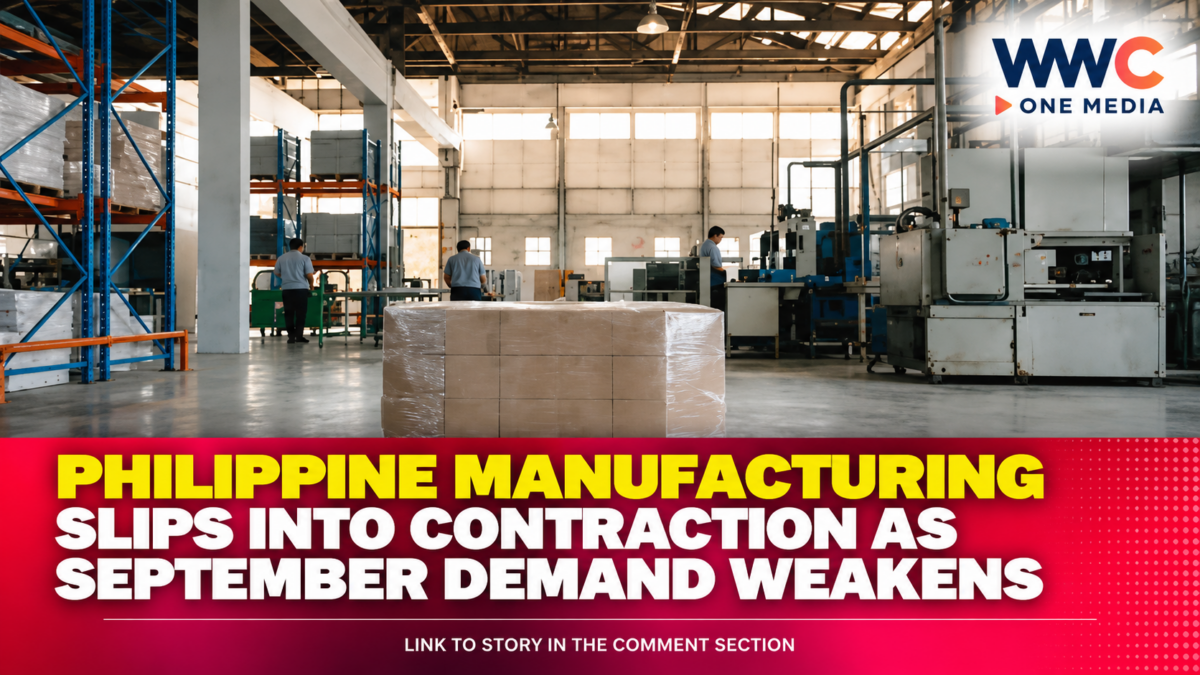
The Philippine manufacturing sector returned to contraction territory in September as weaker demand, higher costs and stronger international competition weighed on factory activity.
The S&P Global Philippines Manufacturing Purchasing Managers’ Index fell to 49.6 in September from 54.9 in August. A reading below 50 signals a contraction, marking the sector’s first decline in five months and its weakest performance since April.
The slowdown was reflected in both production and new orders. Factory output declined for the first time in nine months, with the pace of contraction becoming the sharpest since November 2025. Survey respondents pointed to weaker demand and reduced new-order inflows, while higher prices also discouraged some customers from making purchases.
Manufacturers also faced growing pressure from international competition. Companies reported that the combination of softer demand and difficulty passing higher costs on to customers was affecting their outlook for the months ahead.
Input costs increased during the month, with manufacturers citing higher oil prices and the depreciation of the Philippine peso against the US dollar. The peso remained around the ₱62-per-dollar level throughout September and reached a record low of ₱62.86 on September 14, adding to the cost pressure faced by businesses that rely on imported materials and other inputs.
Higher global energy prices also added to the strain. Philippine fuel retailers implemented significant pump-price increases during September as international oil markets were affected by geopolitical tensions in the Middle East. Rising fuel and transportation costs can feed into manufacturing expenses by making production and logistics more expensive.
Manufacturers responded by cutting back on input purchases and running down inventories. Backlogs of work also declined, recording their largest reduction since April, another indication that factories were operating with less incoming demand.
The weaker manufacturing reading also stood out against a mixed regional picture. While several major Asian manufacturing economies benefited from strong technology and artificial-intelligence-related demand, the Philippines and Malaysia were among the economies where factory activity contracted in September.
The September results highlight the pressure facing Philippine manufacturers as businesses balance weaker customer demand against elevated operating costs. With international competition remaining strong and energy prices vulnerable to geopolitical developments, manufacturers are also becoming more cautious about the outlook for the year ahead.
The latest survey suggests that restoring demand while keeping production costs manageable will remain important challenges for Philippine factories as the economy enters the final months of 2026.