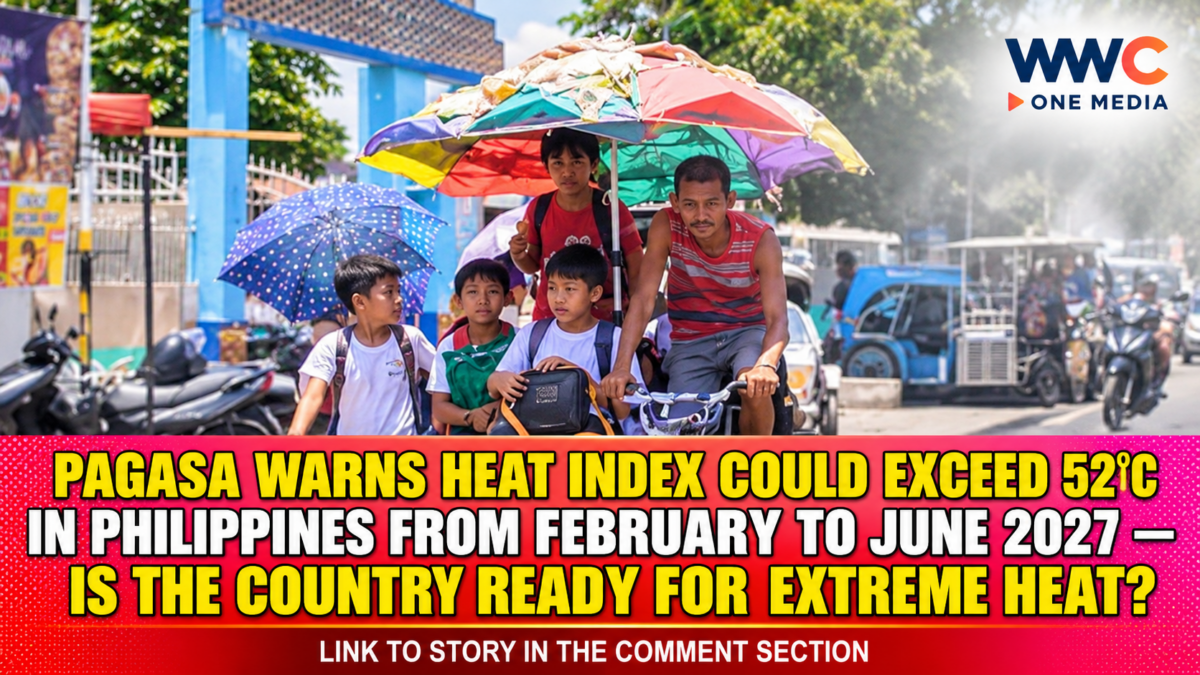
MANILA, Philippines — Filipinos may face another dangerous stretch of extreme heat in 2027, with the Philippine Atmospheric, Geophysical and Astronomical Services Administration (PAGASA) warning that the heat index could exceed 52 degrees Celsius between the last week of February and June.
The warning comes as a strong El Niño continues to develop over the tropical Pacific, raising concerns about hotter conditions, reduced rainfall and possible drought in parts of the country.
PAGASA weather forecaster Glaiza Esculiar said temperatures and humidity are expected to intensify during the country’s traditionally hot months. She warned that heat index readings could approach the danger category, with the possibility of reaching the extreme danger level.
The forecast is particularly concerning because a heat index of 52°C or higher falls under PAGASA’s most severe heat classification.
However, the figure needs to be understood correctly: 52°C is a possible feels-like temperature, not a forecast that the actual air temperature will reach 52°C. Heat index combines air temperature and relative humidity to estimate how hot conditions feel to the human body.
The warning does not mean every province will experience the same readings. Actual conditions will vary by location, weather patterns and humidity.
PAGASA: Extreme danger heat index possible from late February
In a radio interview reported on November 4, Esculiar said the most intense increases in heat index are expected from the end of February through June 2027.
This period normally brings hotter and more humid conditions across many parts of the Philippines.
PAGASA expects heat index values to approach the danger range, with some areas potentially reaching extreme danger levels.
The warning follows the agency’s existing heat classifications:
- Caution: 27°C to 32°C
- Extreme caution: 33°C to 41°C
- Danger: 42°C to 51°C
- Extreme danger: 52°C and above
The highest category signals a serious risk of heat-related illness, including heatstroke, particularly for people who remain outdoors or perform strenuous physical activities.
The agency has therefore urged residents to take heat warnings seriously rather than relying only on the temperature displayed by ordinary thermometers.
Nine areas already facing danger-level heat conditions
The warning is not limited to next year’s summer season.
PAGASA’s November 4 outlook identified at least nine areas that could experience heat index readings within the danger category, between 42°C and 51°C.
Separate reporting by the Philippine News Agency also cited readings of 42°C to 43°C recorded in Dumangas, Iloilo; Hinatuan, Surigao del Sur; La Carlota, Negros; Cuyo, Palawan; and San Jose, Occidental Mindoro.
These readings demonstrate that dangerous heat conditions can occur even before the hottest months of the year.
They also highlight why people should monitor location-specific advisories instead of assuming that weather conditions are identical nationwide.
Strong El Niño could make the heat problem worse
One major factor behind the warning is the ongoing El Niño phenomenon.
In its September 23 climate advisory, PAGASA said a strong El Niño was already active in the tropical Pacific and could intensify into a very strong event between September and December 2026.
The agency expected the phenomenon to persist through the first half of 2027.
El Niño is a climate pattern associated with warmer-than-average sea surface temperatures in parts of the central and eastern tropical Pacific. In the Philippines, it generally increases the likelihood of below-normal rainfall, dry spells and drought.
Reduced rainfall can worsen water shortages, affect agricultural production and contribute to difficult conditions for communities already experiencing high temperatures.
PAGASA has emphasized that El Niño does not mean every part of the country will remain completely dry. Localized heavy rainfall and tropical cyclone-related weather can still occur even during an El Niño event.
Nevertheless, the possibility of prolonged rainfall shortages makes early preparation particularly important.
Christmas may be cooler, but temperatures may not drop as much as expected
Filipinos hoping for cooler weather during the Christmas season may still experience some relief.
Esculiar said cooler conditions associated with the northeast monsoon, or amihan, may continue during the coming months.
However, she cautioned that minimum temperatures may not fall as low as they did during the previous year because of El Niño.
This means evenings and early mornings could remain relatively warm in some areas, even during the traditional cooler season.
The distinction matters because heat exposure is not limited to the hottest hours of the afternoon. Warm nighttime conditions can also make it harder for the body to recover after a hot day.
What happens to the body when the heat index reaches 52°C?
Extreme heat places additional stress on the body’s ability to regulate its temperature.
When humidity is high, sweat evaporates less efficiently. This makes it harder for the body to cool itself, increasing the risk of heat-related illness.
People exposed to prolonged extreme heat may experience:
- Heavy sweating and dehydration
- Muscle cramps and heat exhaustion
- Dizziness, weakness and headaches
- Nausea and rapid heartbeat
- Heatstroke, a potentially life-threatening medical emergency
Heatstroke requires immediate medical attention. Warning signs can include confusion, fainting, seizures or a very high body temperature.
The danger is not restricted to outdoor workers. People exercising, doing strenuous household chores or working in poorly ventilated indoor spaces can also be affected.
Children, older adults and people with existing health vulnerabilities may require additional protection during periods of extreme heat.
Schools, workers and outdoor communities could face additional risks
The projected heat conditions could affect more than people’s comfort.
Students attending face-to-face classes, construction workers, delivery riders, street vendors, farmers, traffic enforcers and other outdoor workers may face increased exposure.
Schools and employers may need to review their heat-safety arrangements as the hot season approaches.
Possible measures include providing drinking water, improving ventilation, adjusting strenuous activities to cooler hours and ensuring access to shaded or cooler rest areas.
Local governments may also need to strengthen public information campaigns and prepare health facilities for heat-related emergencies.
The Department of Health has previously been directed to strengthen public awareness efforts in preparation for potentially severe heat conditions.
However, the exact school and workplace measures for 2027 will depend on official advisories and decisions by the relevant authorities.
El Niño could also threaten water supplies and food production
The heat warning is only one part of a broader climate concern.
Prolonged below-normal rainfall could affect reservoirs, irrigation systems, farms and household water supplies.
In September, WWC One Media reported that up to 85 Philippine provinces could face dry conditions, dry spells or drought through March 2027 as El Niño strengthens.
The possible consequences extend to agricultural production, food availability and household expenses.
Cebu City has also been preparing for possible water shortages and agricultural losses, as discussed in our report on its El Niño preparations.
Meanwhile, Maynilad has announced nearly ₱10 billion in rehabilitation and modernization projects at its La Mesa facilities as Metro Manila prepares for potentially difficult dry conditions.
These developments show why extreme heat and El Niño should not be treated as separate concerns. They can create overlapping pressures on public health, water security, agriculture and the economy.
What Filipinos should do before the hottest months arrive
Although the forecast covers a period several months away, preparation can begin before temperatures reach dangerous levels.
PAGASA and public-health guidance recommend practical precautions, including:
- Drink water regularly. Do not wait until you feel thirsty, especially when working or exercising in hot conditions.
- Limit prolonged outdoor exposure. Avoid strenuous activities during the hottest hours whenever possible.
- Wear lightweight clothing. Choose loose-fitting and breathable clothes.
- Use shade and ventilation. Take regular breaks in cooler areas and improve airflow indoors.
- Check on vulnerable people. Children, older adults and people with health vulnerabilities may need additional assistance.
- Watch for heatstroke symptoms. Confusion, fainting or seizures require emergency medical attention.
- Monitor official advisories. Check PAGASA’s latest heat-index information instead of relying on old forecasts or social-media posts.
PAGASA also operates an online heat-index monitoring resource that allows the public to check reported conditions in different locations.
The public can access the agency’s official heat-index monitoring page for updated readings.
The bigger question: Is the Philippines ready for 2027?
The possibility of heat index readings exceeding 52°C is a serious warning for a country where millions of people work, study and travel in hot and humid conditions.
The challenge will not simply be surviving a few unusually hot afternoons.
Authorities may need to prepare for prolonged periods of heat that could affect health services, schools, workplaces, agriculture and water distribution.
The developing El Niño also means that some communities may face both extreme heat and reduced water availability, making preparation more difficult.
PAGASA’s forecast remains a projection, and conditions can change as the climate phenomenon develops. Not every location will necessarily reach the extreme danger category.
But the warning gives national and local authorities time to prepare before the hottest months arrive.
With the possibility of a 52°C heat index looming between February and June 2027, the biggest question is no longer just how hot the country could become — but whether communities, schools, hospitals and workplaces will be ready when the extreme heat arrives.