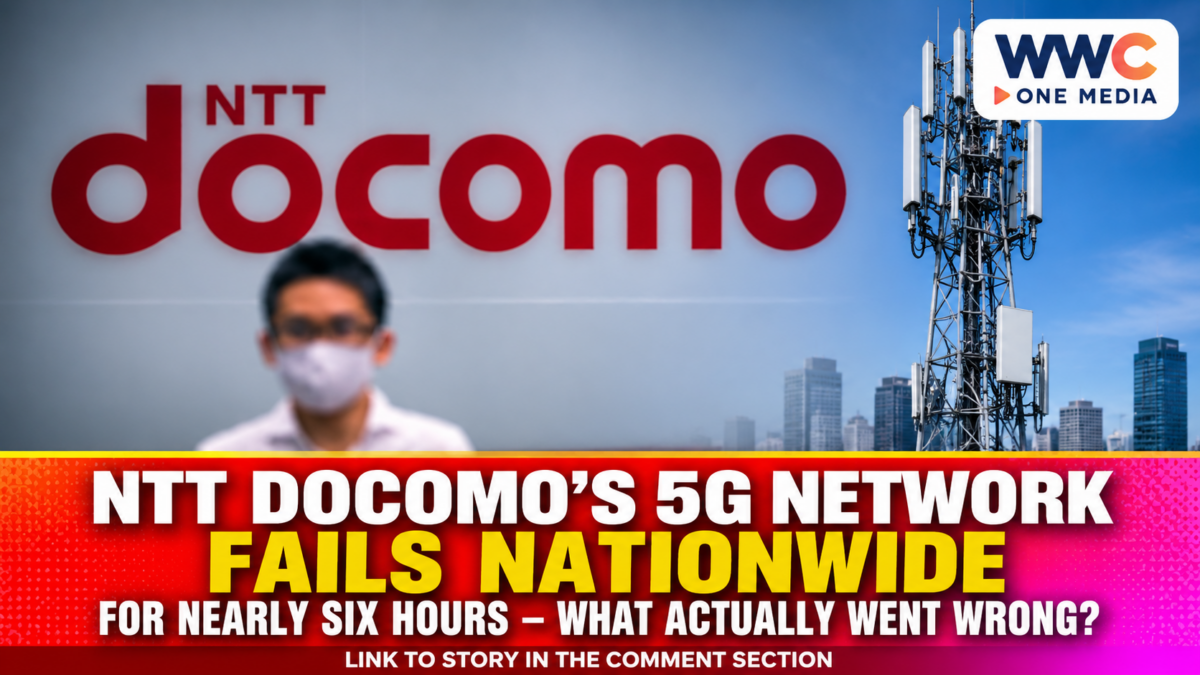
NTT Docomo restored its 5G Standalone (5G SA) mobile service on Nov. 16 after a nationwide disruption affected voice calls, mobile data and SMS for subscribers using the technology. The interruption lasted from 10:02 a.m. to 3:58 p.m., with the Japanese telecommunications company identifying concentrated traffic reaching equipment responsible for handling 5G SA subscribers as the cause. NTTドコモ+1
The incident did not affect every Docomo customer. The company said subscribers using ordinary 4G and 5G services outside the 5G SA plan were unaffected, as were mobile virtual network operators using Docomo lines. Emergency calls were also not affected. NTTドコモ
That distinction is important because the disruption was nationwide in geographic scope but limited to a particular service. It highlights a growing challenge for telecommunications companies: as networks introduce more advanced technology, reliability depends not only on radio coverage but also on the systems that manage traffic behind the scenes.
What happened to NTT Docomo’s 5G SA network?
Docomo’s initial notice on Nov. 16 described difficulties with mobile phone services, including voice calls, data communications and SMS. The company later clarified that the affected customers were subscribers to its 5G SA service.
The disruption began at 10:02 a.m. and continued until 3:58 p.m., when Docomo confirmed full restoration. That means the service problem lasted approximately five hours and 56 minutes. NTTドコモ
The company identified the affected area as nationwide. However, its final notice did not provide a precise number of affected subscribers or a breakdown by prefecture.
It also warned that some affected devices might display an out-of-service indicator during the incident. That could make the problem appear similar to a loss of local mobile coverage, even though Docomo’s explanation pointed to congestion involving network equipment serving 5G SA subscribers.
The company identified concentrated traffic as the cause
Docomo’s final service notice attributed the disruption to concentrated communications reaching the switching equipment that accommodates 5G SA subscribers.
In practical terms, switching equipment helps manage and direct communications within a mobile network. When traffic reaching a critical component becomes difficult to process normally, customers can experience problems even when the surrounding radio network remains available.
This is why mobile connectivity involves more than the number of cell towers or the advertised speed of a connection. A functioning service depends on several interconnected systems, including radio access, transmission links, switching equipment and network management.
Docomo’s published notice identified the concentration of communications at the relevant switching equipment, but did not provide a detailed technical account of the precise sequence that caused the disruption. It would therefore be premature to attribute the incident to a particular software defect, hardware failure or capacity-planning decision.
The company also said its investigation had found no evidence of unauthorised access or activity indicating a cyberattack at the time of its final notice. NTTドコモ
That statement is relevant because a network outage can prompt questions about cybersecurity. But the available company notice supports a traffic-concentration explanation, not a claim that hackers were responsible.
Why most other Docomo customers were unaffected
The incident exposed an important difference between 5G SA and other mobile services.
5G Standalone uses a 5G core network rather than relying on the 4G core infrastructure used in non-standalone 5G arrangements. This architecture is designed to support capabilities associated with advanced 5G services, including more flexible network management and lower-latency applications.
However, Docomo’s notice made clear that the Nov. 16 disruption was specific to subscribers using its 5G SA service.
Customers using other 5G services and 4G were not affected. Docomo also stated that mobile virtual network operators using its lines were unaffected, and that emergency calls remained available. NTTドコモ
The incident should therefore not be described as a complete shutdown of Japan’s mobile network. Nor does the company notice establish that every Docomo subscriber experienced an interruption.
For customers, the practical lesson is that network labels alone do not tell the whole story. Two people using the same carrier in the same location can have different experiences depending on their subscription, device settings and the network technology handling their connection.
What customers were told to do during the disruption
During the restoration process, Docomo advised affected subscribers that switching their network setting to 4G could help restore access. It also recommended restarting the phone or turning airplane mode on and off.
At 2:30 p.m., the company reported that approximately 60% of affected customers had recovered service through restoration measures. By 3:30 p.m., it said service had returned for more than approximately 95% of affected customers. Full restoration was confirmed at 3:58 p.m. NTTドコモ+2
After restoration, Docomo advised customers who had temporarily changed their network setting to 4G to return it to their previous setting. Those still experiencing difficulties were advised to restart their devices or toggle airplane mode. NTTドコモ
The company apologised for the inconvenience and provided customer support channels, including its online assistance service and telephone support numbers.
Why the outage matters beyond Japan
The incident is relevant to telecommunications operators elsewhere because it demonstrates how a problem affecting one part of a network can disrupt a specific service across a wide geographic area.
For the Philippines, where mobile connectivity supports digital payments, online work, transport services and business operations, network reliability is an important part of the country’s digital infrastructure.
The National Telecommunications Commission has been pressing local operators to address mobile broadband performance concerns. WWC ONE MEDIA previously examined the regulator’s enforcement actions involving mobile broadband service quality.
Telecommunications companies have also raised questions about the testing standards and procedures used in regulatory enforcement, as discussed in the industry’s challenge to NTC penalties.
These Philippine developments are separate from Docomo’s incident. However, they point to the same broad issue: consumers judge network performance not only by advertised speeds but also by whether services remain dependable when they need them.
Resilience also depends on having alternative routes and systems when infrastructure is disrupted. WWC’s coverage of Globe’s use of backup international internet routes after a subsea cable disruption illustrates another part of that challenge.
The technical causes differ, but both cases show why operators need to plan for failures beyond the loss of a single connection.
What happens next?
Docomo’s final notice confirmed that service had been fully restored, but its public explanation did not provide a detailed engineering report or a specific account of how the traffic concentration developed.
The company said no evidence of unauthorised access or a cyberattack had been found during its investigation up to that point. It did not publish a precise subscriber impact count in the final notice.
The next useful information would be a more detailed technical explanation of the network condition and any measures introduced to reduce the risk of a similar disruption.
For customers, the immediate issue has been resolved. For the wider telecommunications industry, the incident is a reminder that introducing advanced network technology must go hand in hand with the capacity, monitoring and resilience needed to keep it working.
Frequently asked questions
Was NTT Docomo’s entire mobile network down?
No. The disruption affected subscribers using the company’s 5G SA service. Docomo said other 5G and 4G customers were unaffected.
How long did the Docomo outage last?
The disruption ran from 10:02 a.m. until 3:58 p.m. on Nov. 16, 2026, lasting approximately five hours and 56 minutes.
What caused the NTT Docomo network disruption?
Docomo attributed the incident to concentrated communications reaching switching equipment serving 5G SA subscribers.
Were emergency calls affected?
No. Docomo explicitly stated that emergency calls were not affected.
Was the outage caused by a cyberattack?
Docomo said its investigation had found no evidence of unauthorised access or activity indicating a cyberattack at the time of its final notice.