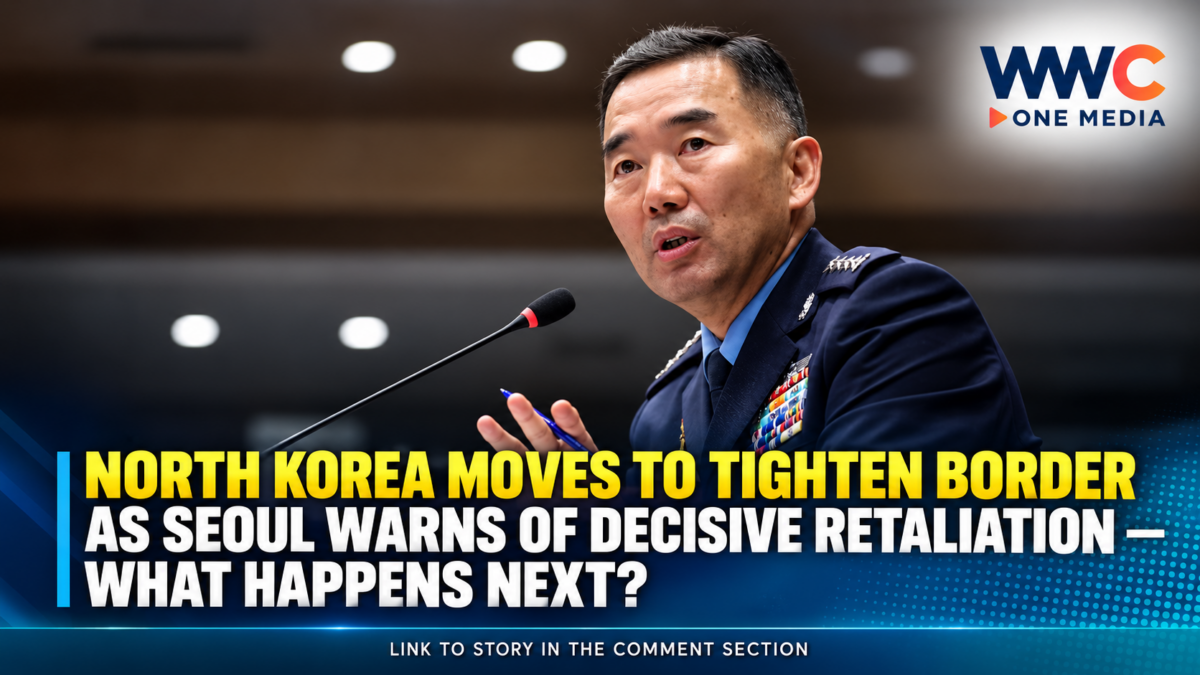
SEOUL, South Korea — October 20, 2026 — Tensions along the heavily fortified border between North and South Korea are intensifying after Pyongyang threatened to deploy additional military assets near the frontier and consider resuming propaganda loudspeaker broadcasts, prompting Seoul to promise a firm response to further provocations.
The latest exchange of warnings has raised concerns about renewed confrontation along the Korean Demilitarized Zone (DMZ), where military activities, landmines and repeated troop crossings have contributed to an increasingly volatile situation.
According to reports by Yonhap News Agency and Reuters, North Korean leader Kim Jong Un’s sister, Kim Yo Jong, issued the latest warning on October 19, criticizing South Korea’s military operations near the border and describing the situation as unstable.
In response, South Korea’s Defense Ministry said its warning broadcasts and warning shots were legitimate defensive measures intended to prevent North Korean troops from crossing the Military Demarcation Line (MDL).
North Korea threatens additional weapons and propaganda broadcasts
Kim Yo Jong said North Korea was considering deploying more tactical strike weapons along its southern border and potentially restarting loudspeaker broadcasts directed toward South Korea.
Her remarks followed South Korea’s use of warning shots and loudspeaker announcements in response to North Korean soldiers repeatedly crossing the Military Demarcation Line during border fortification activities.
North Korea has criticized Seoul’s actions, claiming they have heightened instability in the border area. South Korea, however, maintains that its forces are acting defensively and in accordance with procedures governing the armistice.
The threatened return of propaganda broadcasts is particularly significant because both countries have previously used loudspeakers to transmit political messages across the border, turning information warfare into another source of tension.
Seoul warns against further provocations
South Korea’s Defense Ministry expressed serious concern over Pyongyang’s threats and defended the military’s actions near the frontier.
South Korean Joint Chiefs of Staff Chairman General Jin Yong-sung also visited a frontline military unit on October 20 and instructed troops to respond decisively to any North Korean provocations, according to Yonhap.
Seoul’s position is that warning shots and broadcasts are intended to prevent border violations rather than initiate a confrontation. Its military leadership has emphasized readiness as North Korea continues to criticize the South’s response.
South Korea’s Unification Ministry has also called on Pyongyang to avoid escalating tensions and engage in efforts to resolve disputes involving the Military Demarcation Line.
Landmine blast adds to the growing crisis
The latest confrontation follows a September 21 landmine explosion near the inter-Korean border that injured three South Korean soldiers.
South Korea’s military subsequently concluded that North Korean mines were responsible for the blast and demanded an apology and measures to prevent further incidents. North Korea has denied responsibility, according to reporting by Yonhap and The Associated Press.
The incident has become another flashpoint in the dispute, with Seoul arguing that the North’s border activities pose a direct threat to its troops.
The two sides also disagree over the circumstances surrounding military movements near the demarcation line, making it more difficult to prevent incidents from escalating.
North Korea’s border fortification campaign
North Korea has intensified efforts to reinforce its side of the border, including the construction of barriers and other defensive infrastructure.
Reuters reported in May that Kim Jong Un had called for stronger frontline units and an increasingly fortified border, describing the effort as a way to deter war.
However, military fortification can also increase the risk of miscalculation when troops operate near a sensitive boundary and each side interprets the other’s movements as a potential threat.
The Korean Peninsula remains technically in a state of war because the 1950–1953 Korean War ended with an armistice rather than a formal peace treaty. The United Nations Command oversees implementation of the armistice arrangements in the DMZ.
Could the border standoff escalate further?
For now, the latest statements amount to warnings and threats rather than confirmation that North Korea has deployed the additional weapons it mentioned or restarted its loudspeaker campaign.
Nevertheless, the combination of border construction, disputed troop movements, the landmine incident and increasingly hostile rhetoric presents a serious challenge for both governments.
Any further exchange of warning shots, accidental crossing or military response could heighten tensions in an area where forces operate in close proximity.
South Korea says it will maintain military readiness and respond to provocations, while its government has also called for dialogue to prevent further clashes.
The critical question now is whether both sides can contain the confrontation through military discipline and communication—or whether another incident along the heavily fortified border will trigger a more dangerous cycle of retaliation.