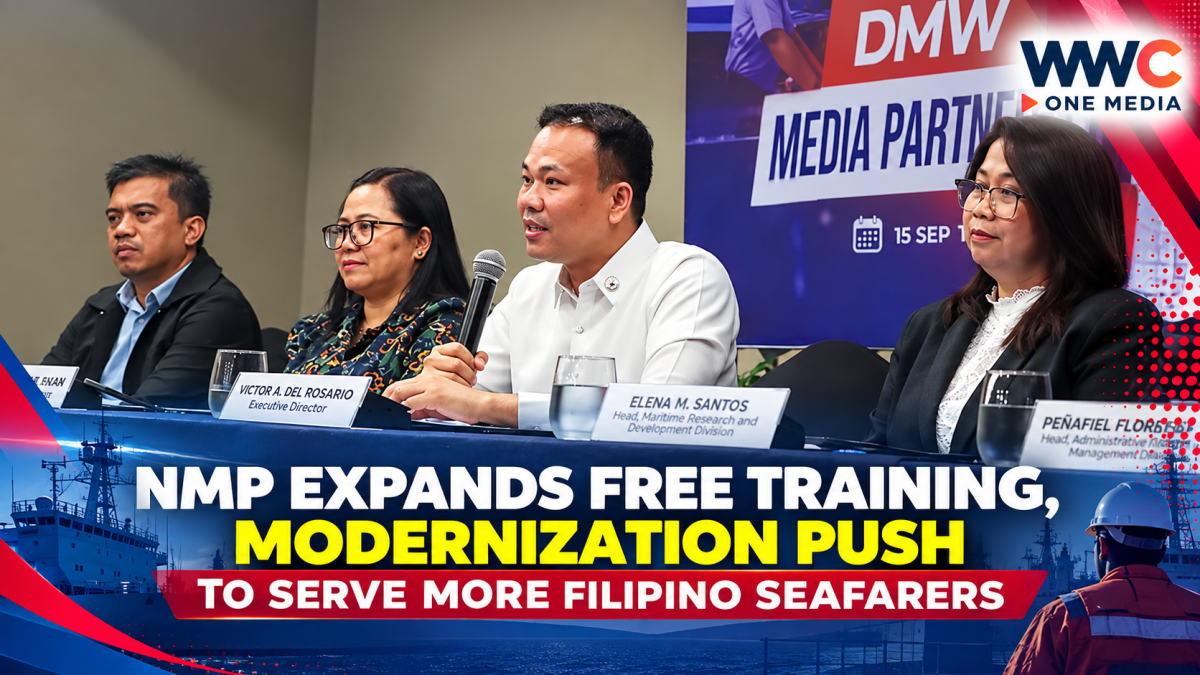
The National Maritime Polytechnic (NMP) is expanding its training capacity and modernizing its facilities as it works to make maritime education and skills training more accessible to Filipino seafarers and aspiring maritime workers.
The state-run maritime institution in Tacloban City is pursuing the establishment of Regional Training Centers in Tanza, Cavite, for Luzon and Davao City for Mindanao. The initiative is being undertaken with the Development Academy of the Philippines, which has conducted feasibility studies for the proposed centers.
According to NMP Executive Director Victor Del Rosario, the regional centers are intended to bring NMP training programs closer to maritime workers, increase training capacity and provide access to modern facilities outside the agency’s main complex in Tacloban.
The expansion comes as NMP continues to increase its free training offerings. Following a June 18, 2026 memorandum from the Department of Migrant Workers, NMP waived training fees for its remaining regular courses, bringing its regular free training offerings to 55.
The courses cover programs mandated under the Standards of Training, Certification and Watchkeeping for Seafarers, including deck, engine, specialized, safety, security and medical training. The program also includes non-STCW and other value-adding courses.
As of September 14, NMP said 5,556 trainees had already benefited from the expanded free-training program.
The agency has also reported a significant increase in its training output. As of August 2026, NMP had issued 22,009 training certificates, already approaching its full-year 2025 total of 22,972. NMP said the 2026 figure represents its highest annual training output since it began operations in 1983.
At the same time, NMP is upgrading advanced maritime simulators, specialized training systems and other facilities at its Tacloban training complex.
The modernization program is aimed at providing more technology-driven and industry-relevant training while keeping NMP facilities aligned with evolving international maritime standards and the changing requirements of the shipping industry.
The planned regional centers, expanded free courses and upgraded facilities form part of NMP’s broader effort to increase access to maritime training and strengthen the skills of Filipino seafarers, who remain an important part of the country’s overseas workforce.
With thousands already benefiting from free training and regional expansion being explored, NMP’s modernization drive could significantly widen access to specialized maritime education beyond its traditional base in Tacloban.