
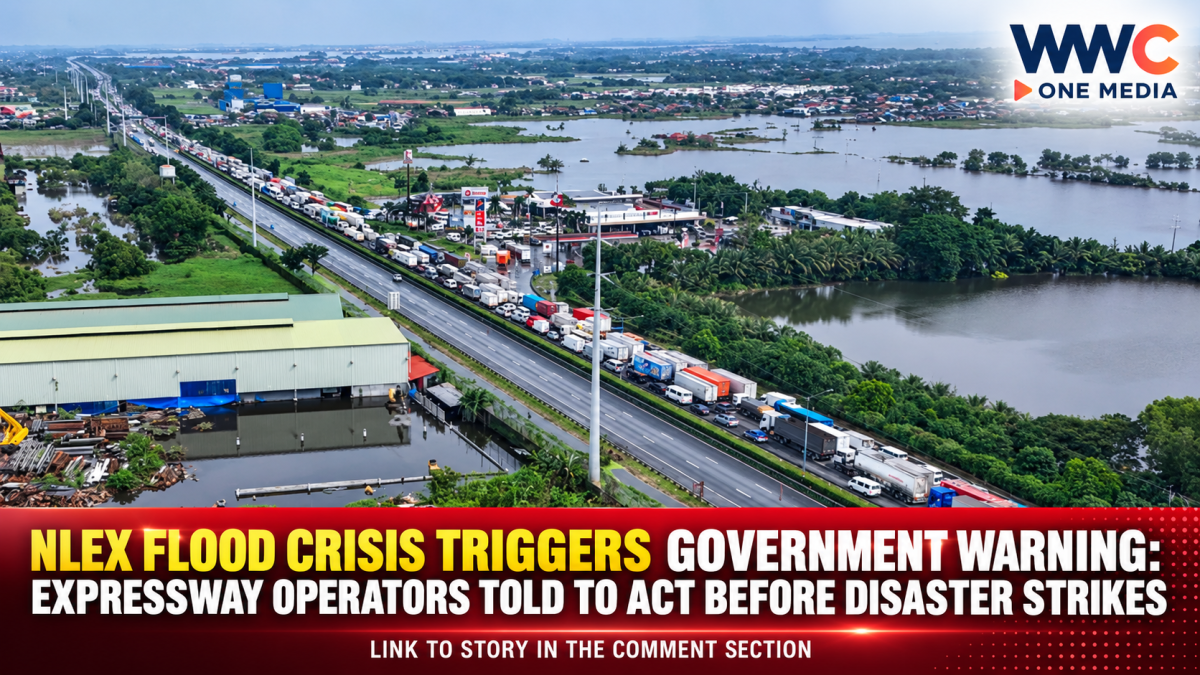
MANILA, Philippines — The government is demanding a more proactive approach from expressway operators after severe flooding in Pampanga triggered massive traffic disruptions on the North Luzon Expressway (NLEX), leaving motorists stranded for hours and exposing weaknesses in emergency traffic management.
Land Transportation Franchising and Regulatory Board (LTFRB) Acting Chairman Greg Pua Jr. has ordered regional offices to strengthen coordination with expressway operators and ensure that motorists receive timely information whenever major disruptions threaten traffic flow.
The directive covers major expressways in Luzon, including the Tarlac-Pangasinan-La Union Expressway (TPLEX), Subic-Clark-Tarlac Expressway (SCTEX), NLEX, South Luzon Expressway (SLEX), Southern Tagalog Arterial Road (STAR Tollway), and Cavite-Laguna Expressway (CALAX).
The move follows the severe flooding that hit portions of NLEX in San Simon, Pampanga, particularly around the Tulaoc Bridge, where floodwaters from the overflowing Pampanga River contributed to major traffic congestion.
NLEX crisis becomes wake-up call
The San Simon flooding became one of the country’s most serious recent expressway disruptions.
Thousands of motorists were caught in prolonged traffic after floodwaters made portions of NLEX difficult or impossible to pass. Reports said some motorists were stranded for many hours, while traffic queues stretched for several kilometers.
The Toll Regulatory Board (TRB) subsequently issued a Notice to Explain to NLEX Corp., requiring the operator to account for the flooding-related congestion and present measures to mitigate the problem and prevent a recurrence.
The TRB also directed NLEX Corp. to consider reimbursing toll fees paid by Class 1 motorists who were forced to make U-turns because of the flooding.
The government also ordered stronger warnings for motorists, including the use of SMS/text messages, variable message signs and other communication platforms when flooding threatens road accessibility.
Authorities said motorists should be warned ahead of time so they can avoid affected portions and choose alternative routes rather than becoming trapped in traffic.
Government wants warnings before motorists get trapped
Transportation officials have emphasized that expressway operators cannot simply react after flooding has already paralyzed traffic.
Instead, operators are being urged to identify vulnerable areas, monitor conditions during periods of heavy rainfall and issue warnings early enough for motorists to change their travel plans.
The government specifically cited the need to monitor the Pampanga River and Tulaoc Bridge during periods of anticipated heavy rainfall.
If water levels reach critical thresholds, authorities expect motorists to receive advance warnings and information about possible closures or alternative routes.
This approach is intended to shift emergency management from reaction to prevention.
Alternative routes are part of the new strategy
The LTFRB’s latest directive also calls for closer coordination with local government units to identify alternative routes when expressways become impassable.
That means commuters and freight operators could receive information not only about a flooded expressway but also about where they can safely reroute.
The strategy is particularly important for major Luzon corridors because disruptions on expressways can quickly affect buses, delivery trucks, private vehicles and the movement of essential goods.
The LTFRB said its approach has two key components: stronger dissemination of information and advance planning for alternative routes during worst-case scenarios.
NLEX traffic has improved—but the problem isn’t completely over
The situation on NLEX has improved compared with the worst days of the flooding.
By September 5, reports indicated that traffic had eased considerably, although some portions of San Simon and Tulaoc still had water buildup and certain lanes remained impassable.
Inquirer reported that travel through the affected Pulilan-to-San Fernando stretch had improved, although travel time remained longer than normal. NLEX Corp. also continued flood-mitigation work, including the installation of flood barriers, sandbags and water-removal measures.
The Metropolitan Manila Development Authority also deployed mobile pumping equipment and barriers to help control floodwaters around the affected area.
NLEX has additionally provided toll rebates for motorists using the affected San Fernando-Pulilan stretch while the flood situation remains unresolved.
Long-term flood protection now under scrutiny
The latest crisis has also renewed questions about whether existing flood-control and road-elevation measures are sufficient to protect major expressways from increasingly disruptive rainfall events.
NLEX Corp. said it plans to raise pavement again in portions of Tulaoc as part of longer-term flood-resilience measures. The company had previously raised sections of the pavement by about 0.7 meters in 2023.
The Department of Public Works and Highways had also begun work in 2025 to elevate the Tulaoc Overpass Bridge.
These measures highlight a broader issue: keeping a major expressway open during extreme weather requires more than pumping water after flooding occurs. Drainage, river capacity, road elevation, flood barriers, traffic diversions and real-time communication all have to work together.
The bigger issue: preparedness
The NLEX incident has become a test of how Philippine transport authorities and tollway operators respond when extreme weather collides with critical transportation infrastructure.
For motorists, the government’s latest directive could mean earlier alerts, clearer closure announcements and more practical rerouting information before they enter a dangerous or heavily congested stretch.
But the real test will come the next time heavy rain threatens the same vulnerable corridors.
The question now is no longer simply whether authorities can clear a flooded expressway.
It is whether they can warn motorists early enough that thousands of vehicles never get trapped there in the first place.
WWC ONE MEDIA J.M.S

Leave a Reply