
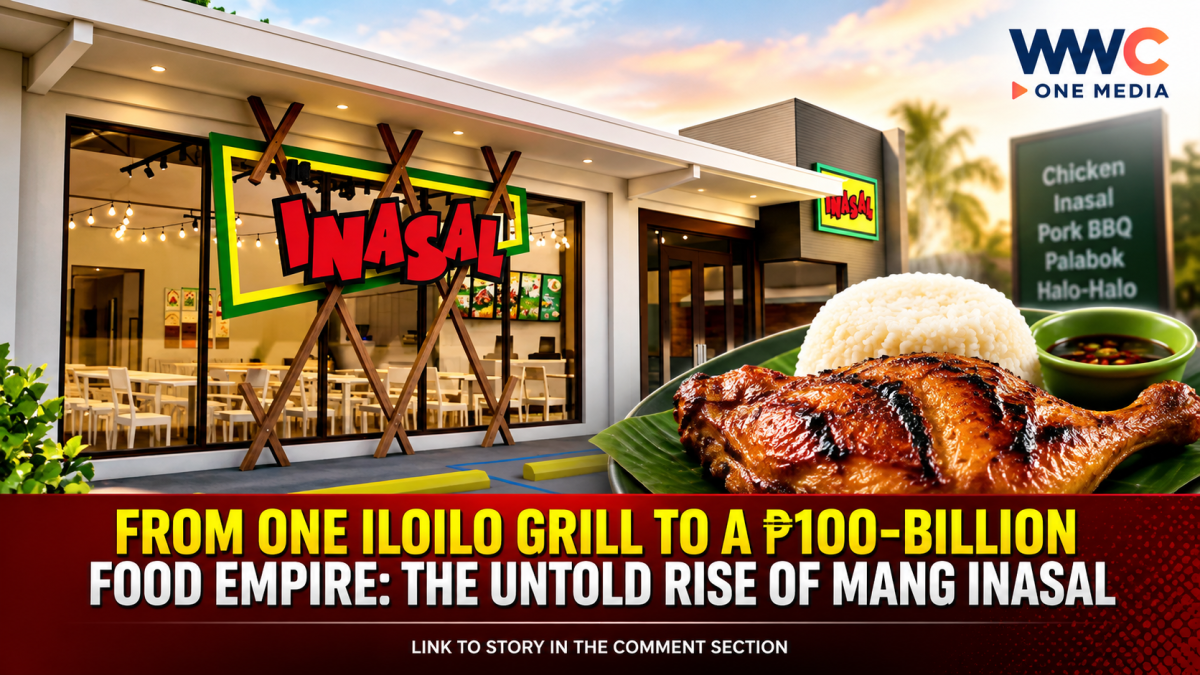
What started as a small grilled-chicken restaurant in Iloilo more than two decades ago has grown into one of the Philippines’ most recognizable homegrown fast-food brands.
The story of Mang Inasal is not simply about chicken, unlimited rice, or a successful acquisition by Jollibee Foods Corp. It is a story about spotting an underserved market, understanding Filipino tastes and building a provincial concept into a nationwide powerhouse.
Founded by entrepreneur Edgar “Injap” Sia II, Mang Inasal opened its first branch at Robinsons Place Iloilo on December 12, 2003. Sia was only 26 at the time.
The concept was straightforward but distinctive: Filipino-style grilled chicken served in a fast-food setting, paired with rice and designed around the flavors familiar to Filipino diners.
According to Mang Inasal, the brand introduced the combination of its signature Chicken Inasal and unlimited rice, helping establish a formula that would become central to its identity.
The risky bet that started it all
Sia did not begin with the resources of a major restaurant corporation.
Earlier accounts of his entrepreneurial journey describe how he secured capital from his father and studied everything from pricing and store design to expansion before opening the first restaurant.
The early days were far from perfect. Reports have recalled problems with the restaurant’s grill exhaust during its opening, forcing Sia and his employees to improvise while serving customers.
Yet the concept caught on.
Sia’s bet was that Filipinos would embrace a fast-food restaurant built around a food they already loved: grilled chicken with distinctly Filipino flavors.
That proved to be a powerful differentiator.
Forbes previously reported that Sia saw an opportunity for Filipino-style street food in a restaurant environment rather than simply copying the American fast-food model.
Unlimited rice became a game changer
Mang Inasal’s growth accelerated as it expanded beyond Iloilo and into other parts of the Philippines.
One of its most memorable innovations was its unlimited-rice offering.
When the brand entered Metro Manila, it was competing in an intensely crowded fast-food market. Instead of trying to out-Jollibee Jollibee or out-KFC KFC, Mang Inasal leaned heavily into its Filipino identity.
The combination of grilled chicken, affordable meals and unlimited rice resonated with price-conscious Filipino consumers.
Forbes reported that the unlimited-rice concept, initially positioned as a promotional offering, became a permanent part of the menu after gaining traction.
That formula helped Mang Inasal create something larger than another chicken restaurant: a recognizable Filipino fast-food category of its own.
From provincial newcomer to national chain
The expansion was rapid.
Mang Inasal began franchising in 2005, helping the brand accelerate its store network. By 2009, it had surpassed 100 branches.
By the end of 2010, Jollibee’s annual report recorded 345 Mang Inasal stores, including 34 company-operated and 311 franchised outlets.
The growth attracted the attention of Jollibee Foods Corp., which was already the country’s dominant homegrown fast-food player.
Then came the deal that transformed Mang Inasal’s future.
The ₱3-billion Jollibee deal
In 2010, Jollibee Foods Corp. agreed to acquire a 70-percent stake in Mang Inasal for about ₱3 billion.
At the time, Mang Inasal was already one of the country’s fastest-growing restaurant concepts.
The transaction gave Jollibee control of the rapidly expanding grilled-chicken chain while giving Sia the resources and infrastructure of one of Asia’s major food-service groups.
The partnership proved enormously consequential.
A 2015 Business Inquirer report noted that Mang Inasal’s sales had increased about 2.5 times since Jollibee’s acquisition, even though its store count had increased by only around 30 percent during that period.
Jollibee eventually took full control
The partnership eventually became a complete acquisition.
In 2016, Jollibee Foods Corp. purchased the remaining 30-percent stake in Mang Inasal for approximately ₱2 billion, making JFC the 100-percent owner of the brand.
At the time, Mang Inasal already had 458 restaurants nationwide, according to Business Inquirer.
What began as a single Iloilo restaurant had become an important pillar of Jollibee’s Philippine portfolio.
More than just chicken and rice
Under Jollibee ownership, Mang Inasal continued expanding its menu and operating model.
Today, its offerings extend beyond its signature Chicken Inasal to include products such as pork barbecue, palabok and halo-halo, while the brand operates through dine-in, takeout and delivery channels.
The company has also modernized its stores and digital presence.
In 2022, Mang Inasal launched Mang Inasal Nation, a brand-managed social community designed to strengthen its relationship with customers.
The numbers show just how far it has come
The latest publicly disclosed full-year store figures show just how dramatically the chain has expanded.
As of December 31, 2024, Mang Inasal had 575 stores in the Philippines—14 company-operated and 561 franchised.
And the brand’s momentum has continued.
In 2025, Mang Inasal recorded 15.6% growth in domestic systemwide sales, making it the fastest-growing major Jollibee Group homegrown brand that year based on the company’s reported figures.
The momentum continued into 2026. In the second quarter, Jollibee Group reported 10.7% year-on-year growth in Mang Inasal’s systemwide sales, contributing to the Philippine business’s overall performance.
Mang Inasal is now one of the country’s strongest brands
The brand’s rise isn’t limited to store numbers and sales.
In Brand Finance’s Philippines 50 2026 report, Mang Inasal’s brand value increased 28% to US$482 million.
Even more strikingly, it rose to No. 2 in overall brand strength among Philippine brands, according to the Jollibee Group’s report of the ranking.
That is a remarkable transformation for a restaurant that began in a relatively small space in Iloilo.
The secret behind the success
Mang Inasal’s journey offers a useful lesson in Philippine consumer business.
Sia didn’t attempt to build another version of an American fast-food chain. Instead, he built around something deeply familiar to Filipino consumers: ihaw, rice, affordability and communal dining.
Jollibee, meanwhile, brought the systems, capital, supply chain and operational expertise necessary to scale the concept.
The result was a powerful combination:
A distinctly Filipino product + a mass-market price proposition + franchising + nationwide infrastructure.
That formula turned Mang Inasal from an Iloilo experiment into a national fast-food institution.
And perhaps the most remarkable part of the story is where it began.
Before the hundreds of branches, the billions in sales and the massive Jollibee Group infrastructure, there was simply one young entrepreneur, one small restaurant in Iloilo—and a bet that Filipinos would line up for chicken grilled the Filipino way.
They did. And more than 20 years later, the line is still growing.
WWC ONE MEDIA J.M.S


Leave a Reply