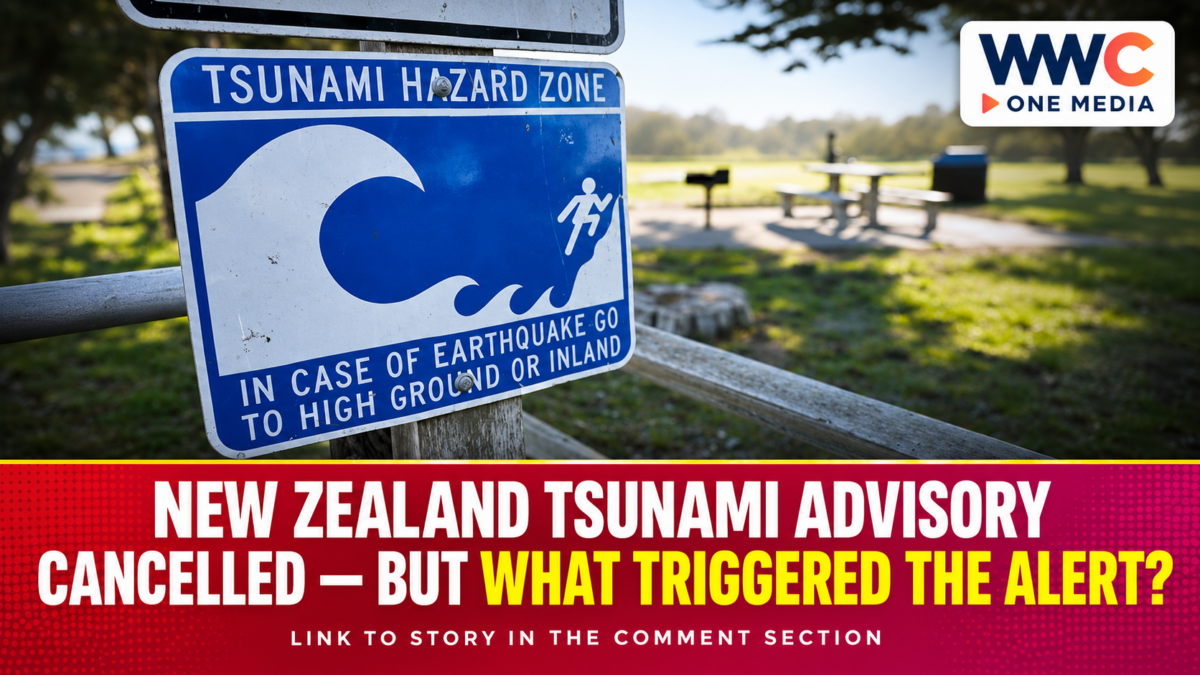
New Zealand’s National Emergency Management Agency cancelled a tsunami activity advisory on Nov. 18, 2026, after scientific advice indicated that the threat to the east coast of the North Island had passed. The New Zealand tsunami advisory followed unusual activity registered by tidal gauges at Napier and Gisborne, with the precise source of the disturbance still unidentified in the agency’s cancellation announcement.
The brief warning highlights a vital distinction in coastal safety: an advisory about dangerous water movements is not the same as a forecast that seawater will flood homes and streets. Officials can take precautions based on observed conditions even while the underlying cause remains under investigation.
New Zealand tsunami advisory: What officials observed
The original advisory was issued at 5:38 p.m. New Zealand time on Nov. 18. In its public notice, the emergency agency identified activity on tidal gauges at Napier and Gisborne, along the eastern side of the North Island.
Those instruments measure changes in water level. An unusual reading can justify closer assessment because hazardous currents or surges can occur near the coast without the dramatic wave often associated with the word tsunami.
The agency warned of strong, unusual currents and unpredictable surges around affected shores. The advice was directed at people using coastal waters, beaches, river mouths and nearby marine areas.
Crucially, the initial notice did not establish the cause of the activity. It raised an underwater landslide as a possibility, not a confirmed explanation. That distinction matters: a possible mechanism should never be promoted into a definitive finding before scientific analysis supports it.
Why the advisory was cancelled
A cancellation announcement issued that evening stated that the Nov. 18 advisory had ended because current scientific advice indicated the threat had passed. The release was published at 6:10 p.m., after the original notice at 5:38 p.m.
The agency made two points that should be kept separate. First, the immediate coastal threat no longer justified the advisory. Second, the source of the earlier gauge activity remained unknown at the time of the announcement.
Earth Sciences New Zealand and the emergency agency said they would continue monitoring. The available official announcement did not identify a confirmed triggering earthquake, landslide or volcanic event, and this report does not assign one.
An advisory does not automatically mean flooding
New Zealand’s official tsunami guidance distinguishes between an activity advisory and a warning covering land and marine areas. An activity advisory means unusual currents and surges are expected, while flooding of land close to shore is not expected under the assessment at that time.
That distinction does not make an advisory trivial. Strong currents can endanger swimmers, surfers, people fishing, small boats and people standing close to the water. Harbours and marinas can experience challenging water movements even where streets are not forecast to flood.
During an active advisory, national guidance tells people to stay out of the water and off exposed beaches and shore areas, and to follow local emergency instructions. A land-threat warning is different: it can require evacuations from areas expected to flood.
WWC ONE MEDIA previously examined why an offshore earthquake near Japan did not produce a tsunami alert, showing why readers should distinguish earthquake measurements from coastal threat assessments.
How scientists and emergency officials assess the danger
New Zealand operates a tsunami monitoring system that includes deep-ocean instruments known as DART stations. These detect small changes in ocean pressure and relay information for analysis by the country’s geohazards monitoring specialists.
The national monitoring framework connects scientific assessment with public communication. Scientists evaluate observations; the National Emergency Management Agency is responsible for issuing national tsunami warnings and advisories. Local emergency authorities can provide instructions tailored to their communities.
The Nov. 18 public release specifically identified tidal-gauge observations. It would be inaccurate to claim that a DART buoy detected this particular event without a matching official record. Different instruments can contribute to the wider warning system, but their involvement in a specific alert must be documented.
WWC ONE MEDIA has also discussed why revised earthquake measurements matter in Papua New Guinea, a separate event that illustrates the broader need to distinguish early information from a confirmed assessment.
Why the episode matters for coastal communities
Analysis: The value of the Nov. 18 response lies not in whether the advisory lasted a long time, but in how uncertainty was communicated. The official statements identified an observed marine signal, described a precautionary coastal hazard, then withdrew that alert when scientific advice changed.
The relevance extends to other Pacific communities managing earthquake and tsunami exposure. WWC ONE MEDIA’s coverage of earthquake preparedness in Davao Occidental likewise emphasised the value of verified hazard information rather than speculation.
What happens next
The immediate advisory was cancelled on Nov. 18. The official cancellation notice said scientific and emergency-management teams were continuing to monitor conditions, but did not provide a final determination of the source of the unusual water-level activity.
Any subsequent explanation should be checked against a later official scientific statement rather than inferred from the short duration of the alert. The cancellation should also not be presented as a guarantee about all future coastal hazards.
For people near the coast, New Zealand’s standing advice remains relevant: heed official warnings, recognise natural warning signs, and move to higher ground or inland after a long or strong earthquake without waiting for an electronic alert. The enduring lesson is to act on verified hazard guidance, and to update conclusions as evidence improves.
Frequently asked questions
Why did New Zealand issue a tsunami advisory on Nov. 18, 2026?
Tidal gauges at Napier and Gisborne detected unusual activity. Officials warned about possible dangerous currents and unpredictable surges near the east coast of the North Island.
Why was the advisory cancelled?
The emergency agency cancelled it after current scientific advice indicated that the coastal tsunami threat had passed.
What caused the unusual water activity?
The agency’s cancellation announcement did not identify a confirmed source. An underwater landslide was mentioned as a possibility in the initial notice, not as a proven cause.
Did the advisory mean coastal towns would flood?
No. An activity advisory concerns hazardous water movements near shore; it is distinct from a land-and-marine warning issued when coastal flooding is expected.
What should people do during a future tsunami advisory?
Stay away from the sea and exposed shore areas, follow official instructions and check national or local emergency updates. After a long or strong earthquake near the coast, evacuate to safer ground without waiting for a formal warning.