
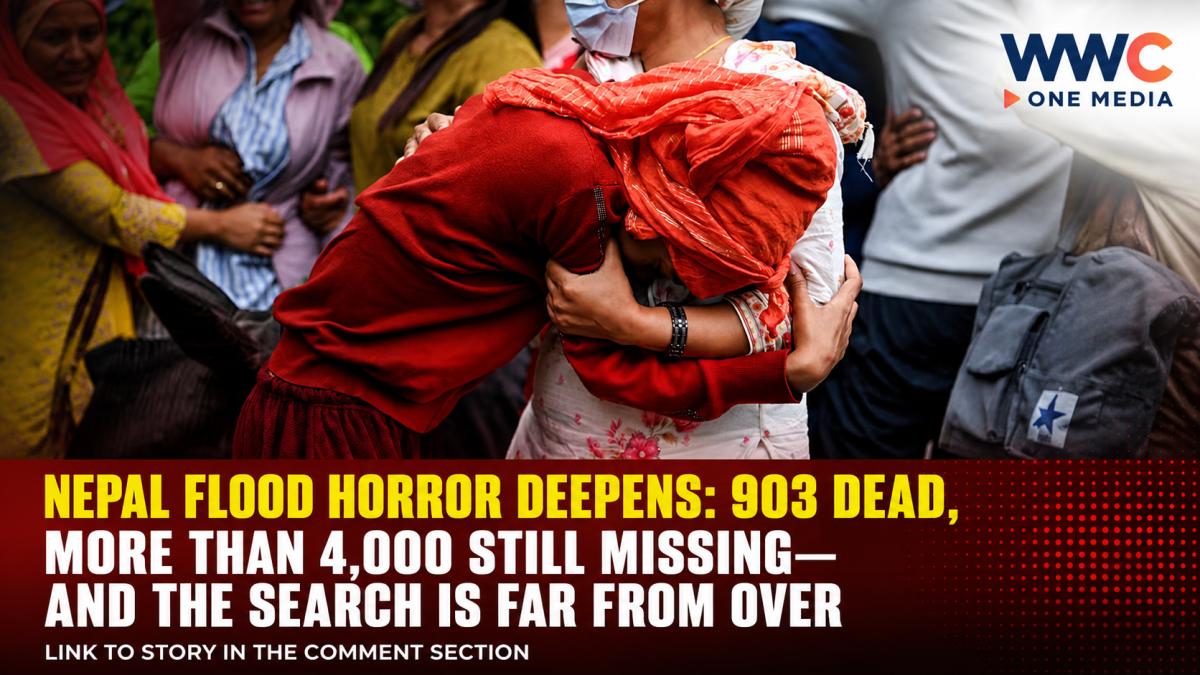
KATHMANDU, Nepal — Nepal is facing an unfolding humanitarian catastrophe after devastating flash floods swept through communities near its border with China, leaving at least 903 people dead and 4,247 others missing, according to the country’s disaster management authority.
The scale of the disaster continues to grow as search and recovery teams enter a critical phase, with officials warning that the final toll could change as rescuers reach isolated areas and account for thousands who remain unaccounted for.
The catastrophic flooding struck after a massive collapse involving ice and rock in the Himalayan region, unleashing torrents of water, mud and debris through river valleys. Entire communities were devastated, while roads, bridges, homes and other vital infrastructure were swept away or buried under debris.
A Disaster Spreading Far Beyond the First Impact Zone
The destruction has extended far downstream, making the search for victims increasingly difficult. Bodies have been recovered across multiple districts, while authorities struggle to identify many of the dead.
The disaster has also overwhelmed hospitals and morgues in affected areas. In some locations, authorities have begun temporary burials of unidentified victims while collecting DNA samples and other information that could help families identify their loved ones later.
For thousands of families, however, the nightmare is far from over.
The number of missing people includes residents, workers and foreign nationals, with rescue teams continuing to search dangerous terrain and flood-ravaged communities for possible survivors.
Race Against Time to Reach Trapped Workers
One of the most urgent rescue operations is focused on hydropower facilities in the disaster zone, where workers were reportedly trapped after tunnels and surrounding areas were inundated or blocked by debris.
Rescue teams have faced treacherous conditions, including unstable ground, continuing rain and damaged access routes. Authorities have deployed security personnel, engineers and emergency responders as the window for finding survivors grows increasingly narrow.
Nepal has also received technical assistance and support from neighboring countries as the enormous scale of the emergency stretches local rescue and recovery capabilities.
Fresh Flood Fears Add to the Crisis
Even as Nepal searches for the missing, authorities have warned survivors in vulnerable areas to remain alert for possible additional flooding.
Rising river levels and unstable conditions in the Himalayan region have added another layer of danger for communities already devastated by the initial disaster. The possibility of further flooding has complicated evacuation and relief efforts, forcing some survivors to remain on edge days after losing their homes and loved ones.
The tragedy has once again drawn attention to the growing dangers facing communities in the Himalayas, where scientists have warned that warming temperatures and changing conditions can increase the risk of glacier-related disasters and unstable mountain environments.
A Nation Searching for Answers — and Survivors
The disaster is now among the most devastating humanitarian emergencies to hit Nepal in recent years, with the country’s recovery likely to take years.
But for families gathered at hospitals, identification centers and disaster sites, the focus remains painfully immediate: finding those who are still missing.
With 4,247 people yet to be accounted for, every new recovery operation brings both hope and heartbreak.
As rescuers continue digging through mud and debris and searching remote river valleys, one question hangs over Nepal’s devastated communities:
How many more victims are still waiting to be found?




Leave a Reply