
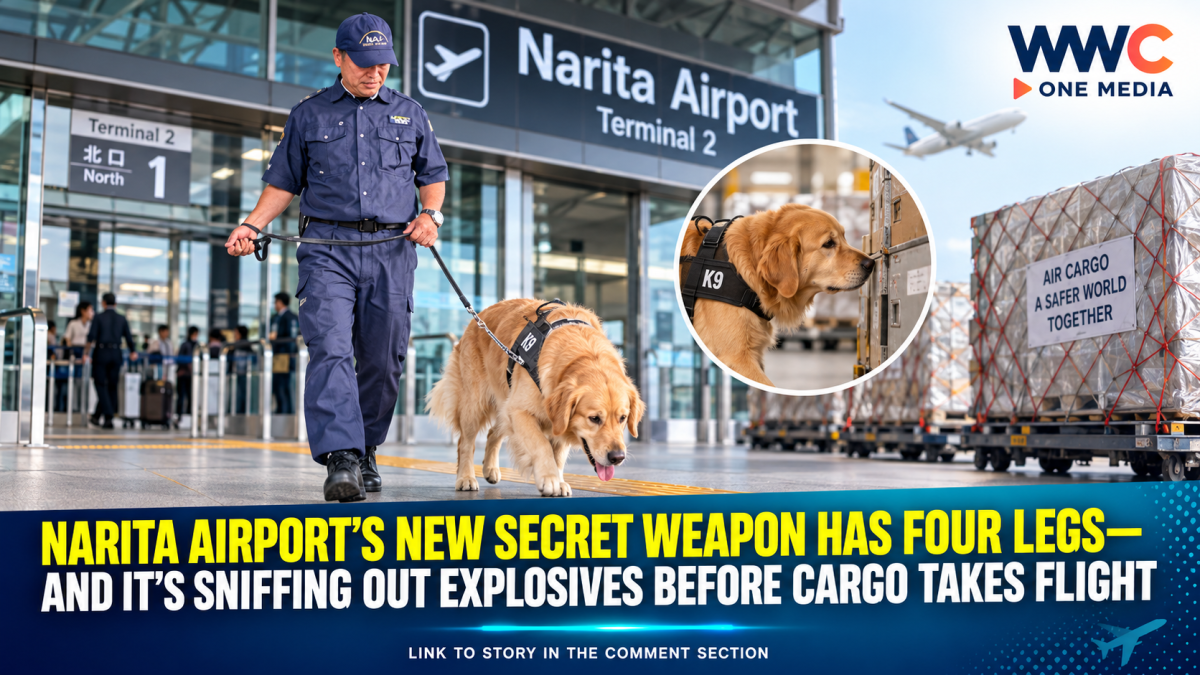
TOKYO — Narita International Airport is adding a new line of defense to protect air cargo and strengthen aviation security—and this time, it comes with four legs and an extraordinary sense of smell.
Explosive Detection Dogs, or EDDs, have begun operations at cargo facilities linked to Narita Airport as Japan moves to strengthen security checks amid increasingly strict aviation safety requirements.
Nippon Express announced that it started introducing specially trained explosive detection dogs in June 2026 at its second and third logistics centers in the NARITA Air Cargo City complex. The move is designed to enhance the screening of air cargo while improving the flexibility and efficiency of security operations.
The dogs are being deployed alongside existing X-ray screening systems, creating another layer of protection for cargo before it enters the aviation supply chain.
Why Narita Is Turning to Explosive-Sniffing Dogs
The introduction of explosive detection dogs comes after changes to Japan’s aviation security system increased the need for more advanced cargo screening.
According to Nippon Express, conventional X-ray equipment and explosive trace detection methods can face limitations depending on the shape and material of cargo. That has created demand for alternative screening techniques capable of handling a wider variety of shipments.
The company said the new canine screening method was recognized as an approved approach for air cargo explosive inspections, allowing trained dogs and their handlers to work alongside existing technology.
The explosive detection dogs deployed by Nippon Express were trained in the United States with handlers under standards based on those used by the US Transportation Security Administration, according to the company’s announcement.
The strategy is not to replace machines—but to combine the strengths of both technology and highly trained canine teams.
A New Layer of Security for One of Japan’s Biggest International Gateways
Narita Airport already operates extensive security systems for passengers, baggage and airport operations.
According to Narita International Airport, its checked-baggage security infrastructure includes an inline screening system that integrates explosive detection technology into the baggage handling process. The system uses advanced scanning techniques to inspect baggage for explosives and other dangerous goods.
Passengers and carry-on baggage also undergo X-ray screening, while body scanners or metal detectors are used at security checkpoints. Narita says aviation security screening is aimed at preventing dangerous goods, weapons, explosives, hijacking and other security threats from reaching aircraft.
The arrival of explosive detection dogs adds another dimension to that broader security network—particularly in the massive and complex world of international air cargo.
Why Dogs Still Matter in a High-Tech Airport
Even as airports increasingly invest in advanced scanners, automated screening and digital security systems, trained detection dogs remain valuable because of their mobility and ability to inspect environments that may present challenges for conventional equipment.
Japan already uses canine teams in border protection and customs operations. Japanese Customs says specially trained detector dogs work with handlers to identify hidden contraband in luggage, packages and shipments by detecting targeted scents.
The new Narita deployment applies the same principle to aviation cargo security, with explosive detection dogs providing an additional screening option for shipments that may be difficult to inspect using conventional methods alone.
Nippon Express said the dogs will work together with X-ray systems at its Narita cargo facilities, a combination aimed at strengthening security without sacrificing the efficiency needed to keep international cargo moving.
The Bigger Picture: Aviation Security Is Becoming More Layered
The move reflects a wider reality across global aviation: security is increasingly built around multiple layers rather than relying on a single screening tool.
From passenger checkpoints and body scanners to baggage screening, cargo inspections, surveillance and trained canine teams, airports are combining human expertise, technology and specialized detection capabilities to reduce security risks.
The importance of layered aviation security has been repeatedly underscored by major attacks and attempted attacks that transformed how airports screen passengers and baggage. Modern aviation security systems increasingly rely on overlapping defenses designed to identify threats before they can reach an aircraft.
For Narita, one of Japan’s most important international gateways, the addition of explosive-sniffing dogs signals that even in an era of sophisticated machines, a dog’s nose remains a powerful tool.
And as global air cargo continues to move huge volumes of goods through increasingly complex supply chains, the newest guardians of Japan’s aviation security may not be robots or artificial intelligence.
They may simply hear a command, follow a scent—and detect danger before anyone else does.
The question now is whether more airports and cargo hubs across Japan will follow Narita’s lead and put explosive detection dogs on the front line of aviation security.




Leave a Reply