
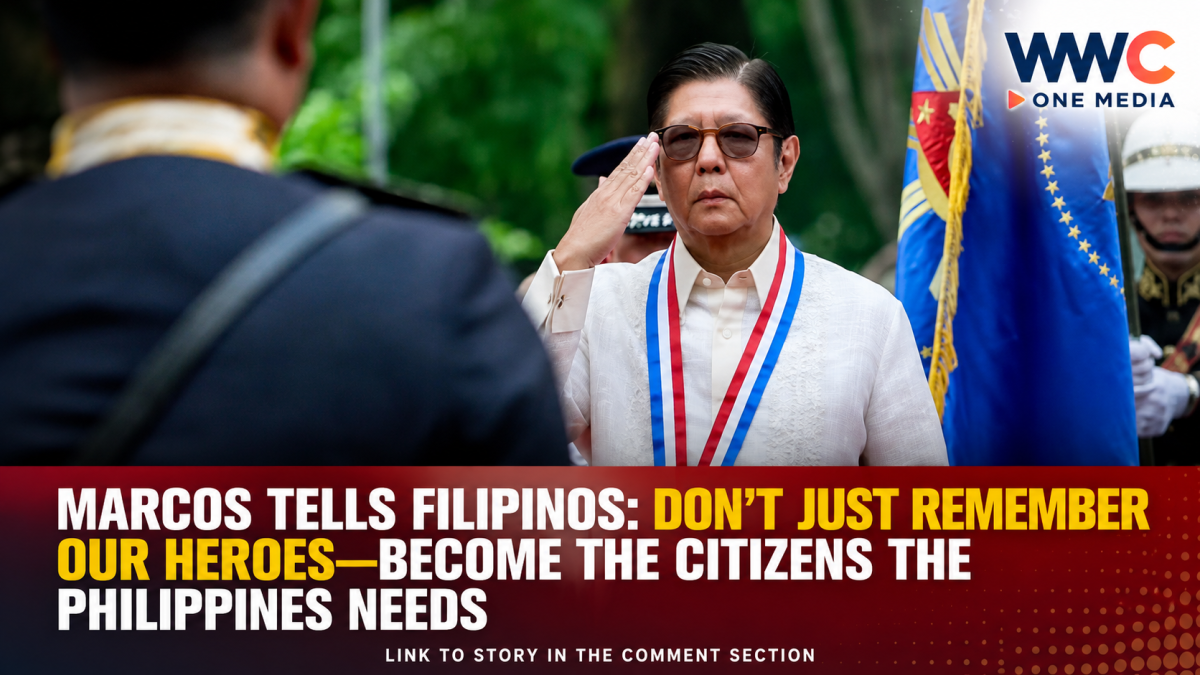
MANILA, Philippines — On National Heroes’ Day, President Ferdinand Marcos Jr. called on Filipinos to do more than remember the sacrifices of the country’s heroes, urging them instead to embody their courage, serve others, and help build the nation future generations will inherit with pride.
In his National Heroes’ Day message on Monday, August 31, 2026, Marcos said Filipinos have a continuing responsibility to carry forward the country that generations before them fought and sacrificed to build.
“Our forebears won our freedom, defended our dignity, and laid the foundations of the Republic we cherish,” the President said.
He stressed that the best way to honor the country’s heroes is not through remembrance alone, but through courage, patriotism, and responsible citizenship.
“We honor them best by embodying their courage, keeping the flame of patriotism alive, and becoming the citizens our country needs.”
Marcos’ message placed ordinary Filipinos at the heart of his definition of modern-day heroism. He said the spirit of the nation’s heroes continues to live in those who choose to serve, care for others, and contribute to something greater than themselves.
He cited soldiers and first responders who risk their lives to protect communities, as well as teachers, health workers, farmers, fisherfolk, and overseas Filipinos who help sustain families and communities.
But the President’s message also extended beyond those in uniform or public service.
Heroism, he said, can be found in every Filipino who helps a neighbor, protects vulnerable people, and works honestly for the common good.
A Call for Action, Not Just Remembrance
Reports from GMA News, Philippine News Agency, and the Philippine Information Agency similarly highlighted Marcos’ central message: National Heroes’ Day should serve as a call to nation-building, not simply a day to look back at history.
The President urged Filipinos to continually prove themselves worthy of the freedom won by previous generations and to build a country that future Filipinos can proudly inherit.
He also called for a Philippines that continues to honor the heroes of the past while recognizing the heroism that exists in the present—and may emerge in the future.
The message echoes Marcos’ previous National Heroes’ Day appeals, which have repeatedly emphasized that heroism is not limited to historical figures whose names appear in textbooks, monuments, or streets. In recent years, he has also recognized ordinary workers, public servants, and citizens who serve their communities as modern-day heroes.
Why National Heroes’ Day Matters
National Heroes’ Day is observed in the Philippines every last Monday of August and is a regular national holiday under Republic Act No. 9492.
The 2026 national commemoration was scheduled at the Libingan ng mga Bayani in Taguig City, with Marcos leading ceremonies at the Tomb of the Unknown Soldier, according to the National Historical Commission of the Philippines.
The observance honors not only the country’s most famous historical figures but also the countless Filipinos—known and unknown—whose sacrifices helped shape the nation.
And perhaps that is the message at the center of this year’s commemoration:
The heroes of Philippine history may belong to the past, but the courage to serve the country does not.
For Marcos, honoring heroes means asking what every Filipino can do today—whether through public service, honest work, compassion, or simply helping another person in need.
As the country pauses to remember those who fought for freedom, the challenge now shifts to the present generation:
If the heroes gave Filipinos a nation to inherit, what kind of nation will Filipinos leave behind?



Leave a Reply