
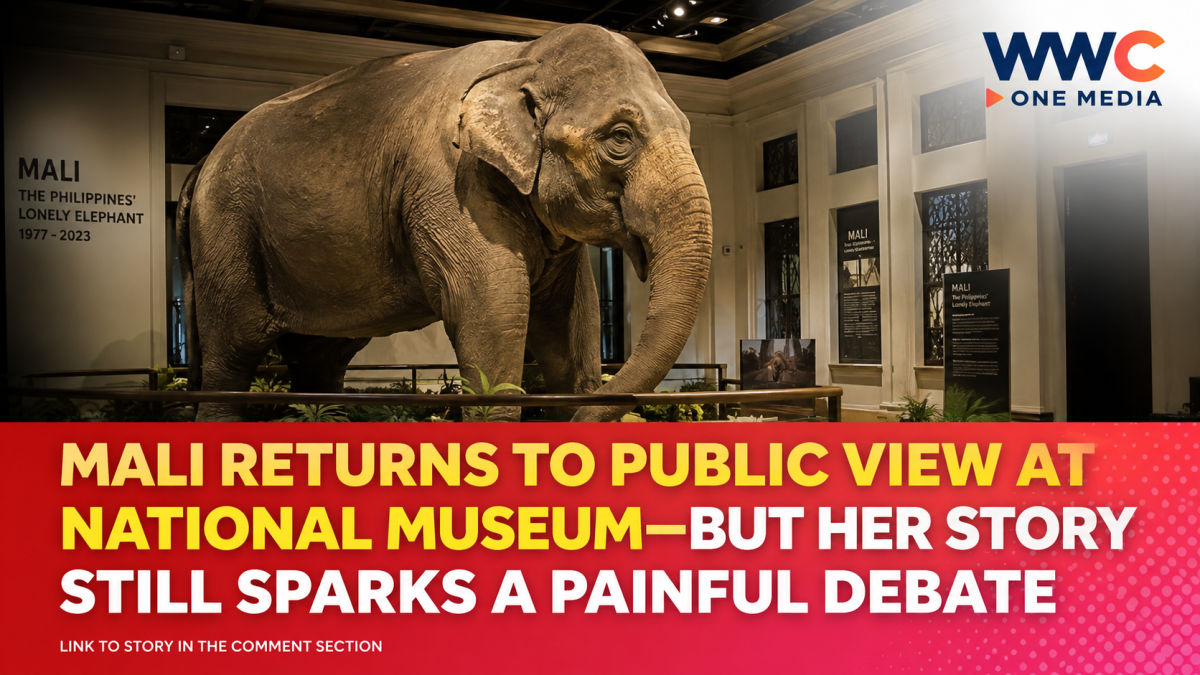
MANILA, Philippines — Nearly three years after her death, Mali, the beloved elephant who spent almost five decades at the Manila Zoo, is once again being seen by the public. But her return—this time as a preserved specimen at the National Museum of Natural History—is also reopening a long-running and emotional debate about animal welfare, captivity, and the legacy she left behind.
Mali, whose full name was Vishwa Ma’ali, was formally transferred to the National Museum, where her preserved remains are now part of a public exhibit. For generations of Filipinos, Mali was more than a zoo attraction. She was the country’s only elephant and one of Manila’s most recognizable animal residents.
But while city officials and museum representatives see the exhibit as a way to preserve her memory for future generations, animal rights advocates say Mali’s story should also serve as a reminder of the consequences of keeping highly social wild animals in captivity.
From Sri Lanka to Manila: The Life of the Philippines’ Only Elephant
Mali arrived in the Philippines from Sri Lanka in 1977, when she was about three years old. She would go on to spend nearly her entire life at the Manila Zoo, becoming one of its most famous and enduring attractions.
According to earlier reports, Mali’s welfare became the subject of international attention decades later. In 2012 and 2013, animal rights group PETA and other advocates campaigned for her transfer to an elephant sanctuary, arguing that she was living in isolation and experiencing health problems.
International elephant expert Dr. Henry Richardson had raised concerns about Mali’s physical condition, including foot-related issues. Advocates also emphasized that elephants are highly social animals that typically live in family groups in the wild.
However, Manila Zoo officials maintained that transferring Mali at her age and after decades in captivity could pose serious risks to her health and survival. The disagreement would continue for years, making Mali one of the most recognizable figures in the Philippines’ wider debate over zoo animal welfare.
Mali Died in 2023—But Her Story Didn’t End There
Mali died on November 28, 2023, at an estimated age of 48 to 49. Veterinarians later said she died from congestive heart failure, while a necropsy also found other medical issues, including tumors and inflammation.
Following her death, the City of Manila decided to preserve her remains through taxidermy. The process was challenging and took months, according to reports about the preservation work. Mali’s taxidermied specimen was returned to Manila Zoo in late 2024 before plans were eventually finalized for her transfer to the National Museum of Natural History.
A New Home Beside Another Philippine Icon
Mali’s preserved remains are now housed at the National Museum of Natural History, where visitors can once again see the elephant many Filipinos remember from childhood. She joins another famous preserved animal specimen at the museum: Lolong, the giant saltwater crocodile once recognized by Guinness World Records as the largest crocodile in captivity.
Manila officials have said the museum provides a more controlled environment for preserving Mali’s remains and allows future generations to learn about her story. Manila Mayor Isko Moreno also invited Filipinos who have memories of Mali to visit her in what he described as her new home.
But Not Everyone Is Celebrating the Exhibit
For animal welfare advocates, Mali’s new museum display carries a more complicated meaning.
PETA Asia has criticized the exhibit, arguing that Mali’s preserved body should remind the public of the years she spent in solitary captivity and the unsuccessful efforts to move her to a sanctuary while she was still alive.
The group maintains that Mali could have spent her final years with other elephants in a more appropriate environment. Manila Zoo officials had previously disputed that position, saying a transfer could have endangered her because of her age, condition, and long history in captivity.
That disagreement remains at the heart of Mali’s legacy—and perhaps explains why her story continues to resonate years after her death.
More Than a Museum Display
For some Filipinos, seeing Mali again may bring back memories of childhood trips to the Manila Zoo. For others, it may bring sadness—and difficult questions about whether her life could have been different.
Mali is back in public view, but the conversation surrounding her may be far from over.
Her preserved remains now tell two stories at once: one about an elephant who became a beloved part of Philippine childhood memories, and another about the growing global conversation over how animals should be treated, cared for, and remembered.
And as visitors stand before Mali at her new home in the National Museum, one question may be impossible to ignore:
Is this simply a tribute to a beloved Philippine icon—or a lasting reminder of a life that sparked a debate the country has yet to settle?

Leave a Reply