
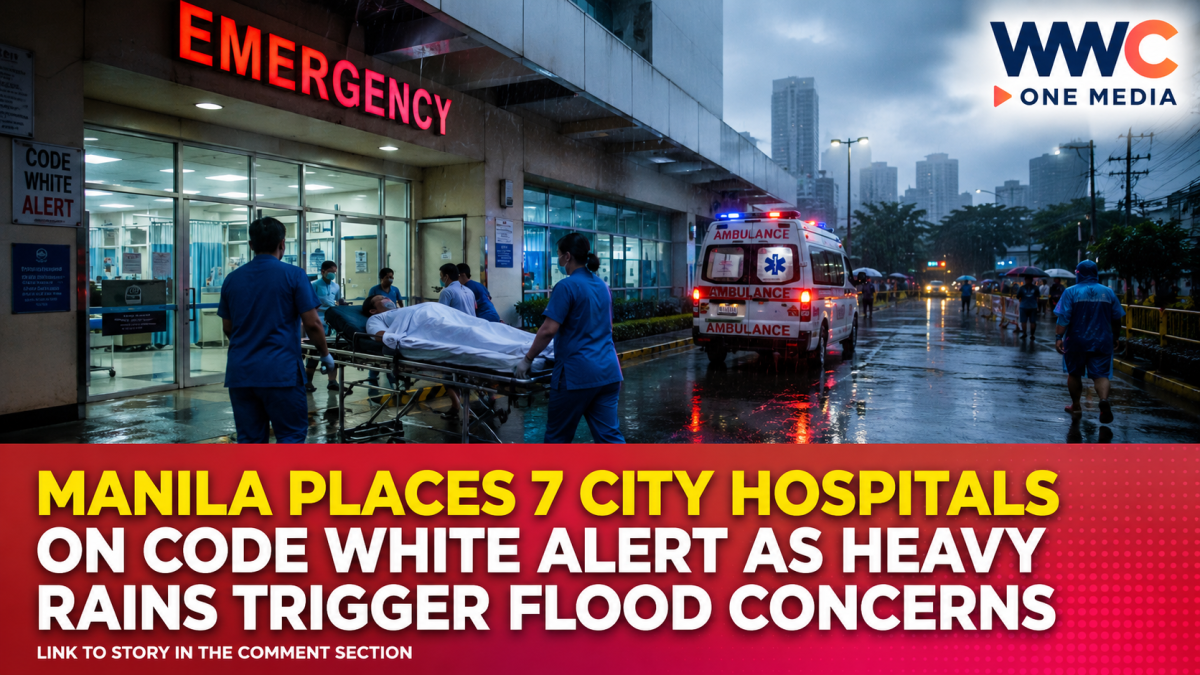
MANILA, Philippines — Seven hospitals operated by the Manila City government have been placed under Code White Alert as heavy rains linked to the Southwest Monsoon, or Habagat, continue to batter Metro Manila, putting emergency medical teams and response personnel on heightened readiness.
The move comes as authorities confront another round of intense rainfall and flooding across parts of the capital region, raising concerns not only about immediate weather-related emergencies but also about the health risks that can follow prolonged exposure to floodwaters.
According to the Manila Public Information Office, Manila Officer-in-Charge City Health Officer Dr. Grace Padilla reported to Mayor Francisco “Isko” Moreno Domagoso that all hospitals owned and operated by the city government had been placed under Code White Alert.
Under the alert, medical personnel, emergency response teams and operations centers are placed on 24/7 standby, allowing them to respond quickly should emergencies arise.
Which Manila Hospitals Are Under Code White?
The following seven Manila City government hospitals are under the heightened alert status:
- Gat Andres Bonifacio Medical Center
- Ospital ng Tondo
- Justice Jose Abad Santos General Hospital
- Mayor Ramon Bagatsing General Hospital, formerly known as Ospital ng Sampaloc
- Ospital ng Maynila Medical Center
- Sta. Ana Hospital
Manila’s evacuation centers, district welfare offices and health centers have also been placed on high alert as the city deals with the continuing downpour.
The heightened preparedness was announced as Metro Manila and several nearby provinces faced severe weather conditions. As of Saturday afternoon, Metro Manila was under a red rainfall warning, along with Zambales, Bataan, Pampanga, Tarlac, Bulacan, Cavite, Rizal and parts of Batangas, while flooding was reported in several areas, according to the Metropolitan Manila Development Authority.
Why the Hospital Alert Matters
The Code White declaration does not mean that the hospitals have stopped normal operations or that a specific mass-casualty event has occurred. Instead, it is a preparedness measure designed to ensure that health workers and emergency resources can be mobilized rapidly if conditions worsen.
Similar alerts have been used by health authorities during major weather disturbances and other events where there is a heightened possibility of emergencies requiring an immediate medical response.
But Manila’s latest alert comes at a particularly challenging time for Metro Manila’s healthcare system.
Floodwaters Bring Another Health Concern
Recent flooding across the country has also prompted health authorities to watch closely for a possible rise in leptospirosis, a bacterial disease associated with exposure to water or soil contaminated by the urine of infected animals.
The Department of Health has previously placed affected areas under Code White and warned that continuous rains and flooding could contribute to increased health risks. Reports this week also showed that Metro Manila hospitals were preparing additional capacity as health facilities dealt with increased patient demand.
The situation has already put pressure on some major hospitals. The National Kidney and Transplant Institute, for example, recently limited walk-in admissions while operating at full-bed capacity amid a surge in leptospirosis cases and a high volume of patients.
While nationwide leptospirosis figures reported in recent weeks remained lower than the comparable period last year, health officials have warned of a recent increase in cases and have urged people exposed to floodwaters to seek medical advice rather than self-medicate.
Manila Braces for Emergencies as Rains Continue
For residents, the message behind the Code White alert is simple: Manila’s emergency health system is preparing before a larger crisis develops.
With flood-prone roads, evacuation centers and public health facilities all under closer watch, authorities are urging the public to remain alert, avoid unnecessary exposure to floodwaters and follow official weather and emergency advisories.
As the Habagat continues to bring heavy rains across parts of Luzon, the coming hours could prove crucial—not just for commuters navigating flooded streets, but for hospitals and emergency teams preparing for whatever the weather brings next.
The rain may be falling now, but Manila’s health workers are already preparing for what could come after it.




Leave a Reply