Kim Jong Un’s Daughter Is Emerging as North Korea’s Next Leader — But Could the Country’s Male-Dominated System Stand in Her Way?
SEO headline: Kim Jong Un’s Daughter Kim Ju Ae Seen as Possible North Korea Successor
SEOUL, South Korea — North Korea may be preparing for another historic transfer of power within the Kim family, and this time the potential successor is a teenage girl.
Kim Jong Un’s daughter, widely identified by South Korean intelligence and international media as Kim Ju Ae, is increasingly viewed as the leading candidate to inherit the leadership of the nuclear-armed country.
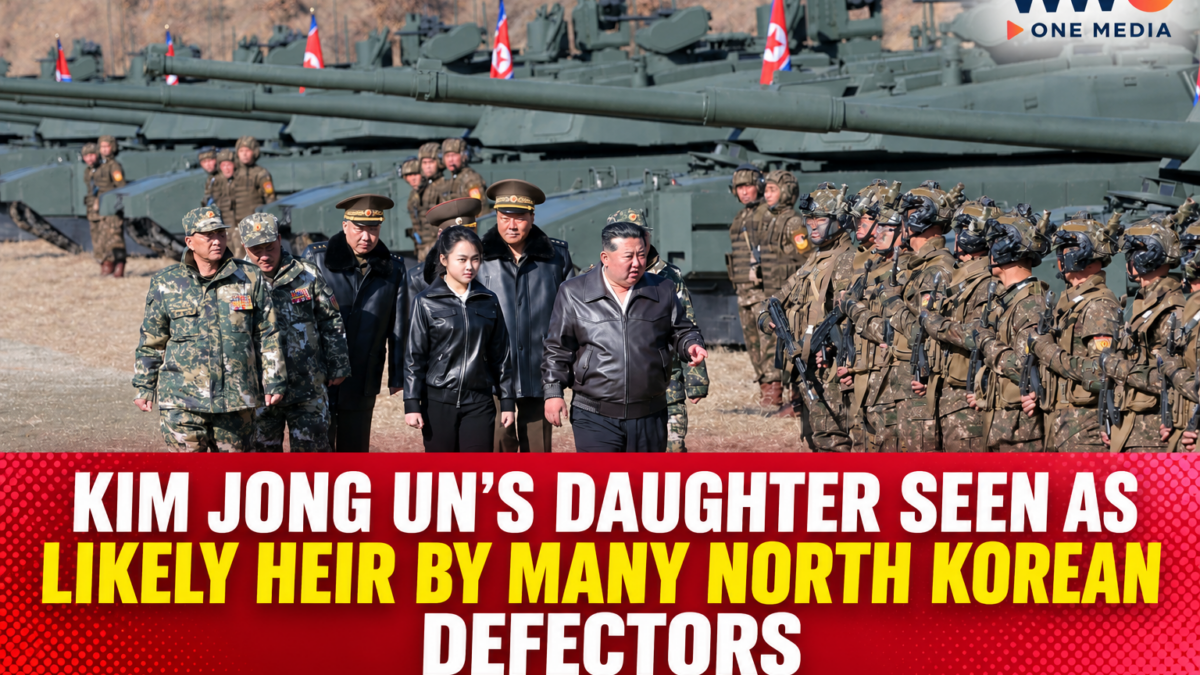
Her growing presence beside her father at military inspections, weapons demonstrations and major state events has fueled speculation that she is being introduced to the political and military establishment as North Korea’s next leader.
A new Associated Press report adds another important perspective: eight of 11 North Korean defectors interviewed by AP believe Ju Ae is being positioned to succeed her father.
South Korea’s National Intelligence Service (NIS) has also assessed that she is the likely successor.
But there is a major obstacle to the succession narrative. North Korea has been governed exclusively by men from the Kim family since its founding, and women remain significantly underrepresented in the country’s highest political and military positions.
The question is no longer simply whether Ju Ae is receiving unusual attention. It is whether North Korea’s ruling establishment will ultimately accept a woman as the next person to inherit the country’s extraordinary concentration of power.
Why Kim Ju Ae is attracting attention as a possible successor
Ju Ae first appeared in North Korean state media in November 2022, when she accompanied her father to a long-range missile test.
Since then, she has appeared with Kim Jong Un at numerous high-profile events, including military parades, weapons demonstrations, factory visits and other official ceremonies.
Her public treatment has also attracted attention.
North Korean state media have described her using expressions translated as “most beloved” and “respected” child. Images distributed by the government have shown senior military officials standing or kneeling around her, while she sometimes appears prominently beside her father.
For North Korea watchers, these appearances are more than family photographs.
They may be part of a carefully managed effort to familiarize the country’s powerful political and military circles with a potential future leader.
Former North Korean diplomat Tae Yongho, who defected in 2016 and later served in South Korea’s parliament, told AP that the protocols surrounding Ju Ae resemble the treatment previously given to Kim Jong Un when he was being prepared to succeed his father.
The comparison matters because North Korea’s leadership transition is not simply a matter of family inheritance. A future leader must also secure the loyalty of the country’s powerful ruling party, military and security institutions.
Eight of 11 defectors believe she could inherit power
The AP interviews provide an unusual look at how people who escaped North Korea interpret Ju Ae’s rising public profile.
Eight of the 11 defectors interviewed by the news agency said they believe she is likely to become her father’s successor.
Some cited the growing prominence of her appearances and the way senior officials behave around her.
Others said people inside North Korea may eventually accept her position because the Kim family has been elevated through decades of state propaganda and a powerful personality cult.
One defector, Lee Si-young, who leads the Seoul-based Free North Korea Radio station, argued that the family’s extraordinary status could make gender less important than it might be in another political system.
She described members of the Kim family as being treated like gods by the country’s political culture.
However, not all defectors agree that a female successor would be accepted.
Some believe North Korea’s deeply patriarchal society could make it difficult for a woman to command the military and ruling elite.
The interviews also come with an important limitation: defectors cannot directly establish what the entire population currently thinks. North Korea tightly restricts information, punishes dissent and makes it dangerous for ordinary citizens to openly discuss the ruling family.
South Korea’s intelligence agency has strengthened its assessment
South Korea’s National Intelligence Service has repeatedly updated its assessment of Ju Ae’s political position.
In April 2026, lawmakers said the agency had obtained what it described as credible intelligence indicating that she had been positioned as her father’s successor.
The assessment followed the publication of images showing Ju Ae operating a tank alongside Kim Jong Un. Earlier North Korean state media images had also shown her handling firearms during military-related activities.
According to Reuters, South Korean lawmakers said the NIS viewed these displays as an effort to emphasize her military credentials and address doubts about a female successor.
The agency’s assessment became stronger in September, when South Korean broadcaster KBS reported that intelligence officials considered her effectively chosen as successor.
That does not mean North Korea has publicly announced her appointment.
Pyongyang has not officially confirmed that Ju Ae will inherit the leadership, and much of the information about her identity and family background remains uncertain.
The distinction is important: intelligence assessments and visible political signals are not the same as a formal succession announcement.
The mystery surrounding Kim Jong Un’s other children
Another complication is that the world still knows very little about Kim Jong Un’s family.
Ju Ae is widely believed to have been born around 2013. Her name became known internationally after former NBA basketball star Dennis Rodman said he had held Kim’s baby daughter during a visit to Pyongyang.
North Korean state media, however, have never publicly confirmed her name or age.
South Korean intelligence has also investigated reports that Kim Jong Un may have an older son and a younger child whose gender has not been confirmed.
In September 2026, South Korea’s intelligence service said it was still trying to verify whether an older son exists. Officials also indicated that, even if he does, he was not currently considered to be in a position to succeed his father.
That uncertainty raises a significant question: is Ju Ae being prepared because she is Kim’s preferred successor, or because the regime wants to establish a succession narrative before the next generation of the ruling family is fully understood?
For now, outside observers cannot answer that with certainty.
Could North Korea really accept a woman as its supreme leader?
The biggest challenge to Ju Ae’s potential succession may be North Korea’s political culture.
Since the country’s establishment in 1948, leadership has passed through three male members of the Kim family:
- Kim Il Sung: North Korea’s founder and first leader.
- Kim Jong Il: His son, who took power after his father’s death in 1994.
- Kim Jong Un: Kim Jong Il’s son, who inherited leadership after his father’s death in 2011.
A fourth-generation succession would extend one of the world’s most unusual hereditary political systems.
But a woman taking the position would represent a major departure from the country’s established leadership tradition.
According to South Korea’s Unification Ministry, only one of the 17 department directors in North Korea’s ruling Workers’ Party is a woman: Kim Jong Un’s influential younger sister, Kim Yo Jong.
That illustrates how limited women’s representation remains at the highest levels of the political system.
Nevertheless, analysts caution that North Korea’s ruling elite may not apply ordinary assumptions about gender when deciding who inherits power.
If Kim Jong Un formally designates Ju Ae and powerful officials support the decision, the political establishment could rally behind her regardless of traditional expectations.
In a system where political loyalty is closely tied to the ruling family, elite support may prove more decisive than public debate.
Kim Yo Jong and the question of who will protect the next generation
Another important figure in the succession discussion is Kim Yo Jong, Kim Jong Un’s younger sister.
She has held influential positions within the ruling party and has become one of the most recognizable members of the country’s leadership.
Her presence raises questions about whether she could play a major role in guiding or protecting Ju Ae if the teenage girl eventually inherits power.
However, there is no confirmed public succession arrangement assigning Kim Yo Jong that responsibility.
The possibility remains an analytical question rather than an established plan.
For now, Kim Yo Jong’s political influence and Ju Ae’s growing visibility illustrate how central the Kim family remains to North Korea’s political structure.
Why another Kim family succession matters beyond North Korea
The identity of North Korea’s next leader is not merely a domestic political question.
The country possesses nuclear weapons and ballistic missile capabilities, making any future leadership transition important to regional security.
South Korea, Japan and the United States closely monitor developments in Pyongyang because decisions made by the North Korean leadership can affect military planning, diplomatic negotiations and regional stability.
A smooth transfer of power could preserve the existing political and military direction.
A disputed succession, however, could create uncertainty among senior officials and military leaders, potentially affecting decision-making inside the country.
Ju Ae’s potential rise also comes as North Korea continues to insist that its nuclear status is permanent and rejects international pressure to abandon its weapons program.
That makes the question of who eventually controls the country’s nuclear arsenal especially important.
For further context, see WWC One Media’s coverage of North Korea’s declaration that its nuclear status is irreversible and its report on Pyongyang’s growing nuclear infrastructure.
A succession plan that remains unfinished
Kim Ju Ae’s increasingly prominent appearances have made her the strongest publicly visible candidate to inherit North Korea’s leadership.
South Korean intelligence assessments, the treatment she receives at official events and the views of many North Korean defectors all point toward the possibility that Kim Jong Un is preparing her for a future role.
But important questions remain unanswered.
Her exact age and name have not been officially confirmed by Pyongyang. The existence and position of her possible siblings remain uncertain. And no public announcement has formally declared her the next leader.
The country’s male-dominated political culture also presents a challenge that cannot be dismissed.
Still, the Kim family has maintained its grip on North Korea through three generations of hereditary rule. If Ju Ae eventually takes power, the country could witness its first female leader while extending the same ruling dynasty into a fourth generation.
For now, the world is watching the signals coming from Pyongyang.
The biggest question is whether Kim Jong Un is simply bringing his daughter into the public spotlight—or quietly preparing the next person who could control North Korea’s military, nuclear arsenal and political future.