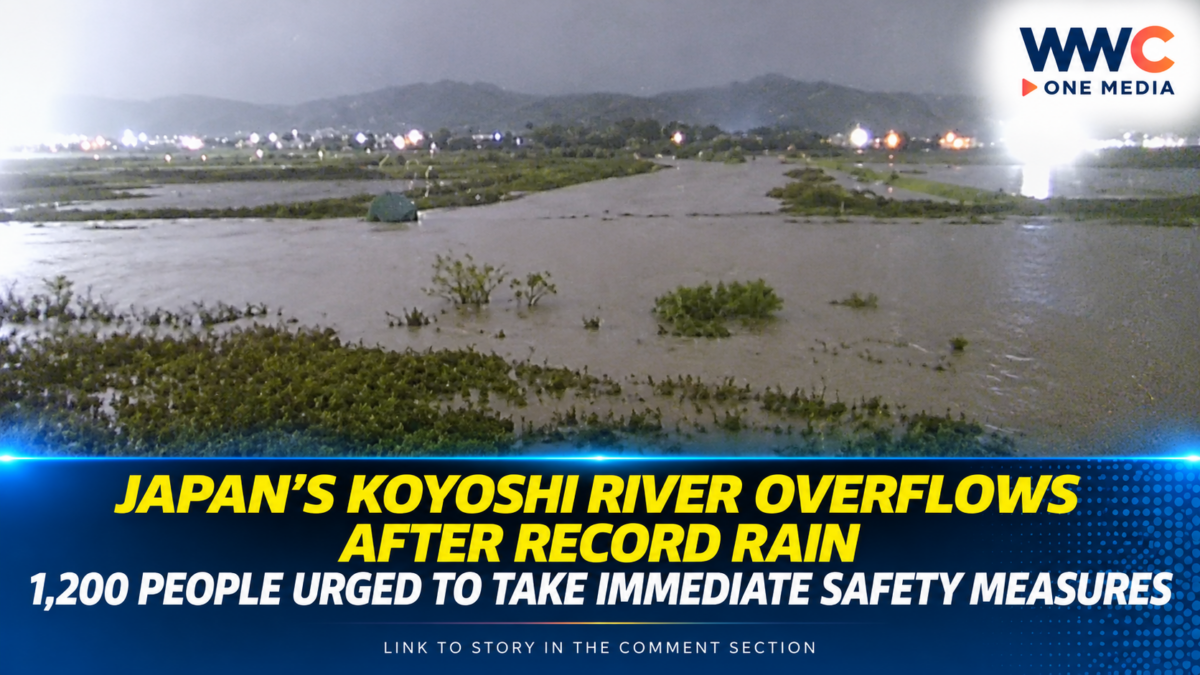
YURIHONJO, Akita, Japan — Authorities in northeastern Japan issued the country’s highest-level flood emergency warning after the Koyoshi River overflowed in parts of Akita Prefecture on Wednesday, October 21, prompting officials to urge residents to take immediate steps to protect their lives.
The Japan Meteorological Agency (JMA) and the Ministry of Land, Infrastructure, Transport and Tourism issued a Level 5 special flood warning for the Koyoshi River in Yurihonjo City at 7:45 p.m. local time.
The warning came as persistent heavy rainfall pushed river levels beyond critical thresholds, raising fears that flooding could spread into nearby residential areas.
According to Jiji Press reporting published by Nippon.com, local authorities issued emergency safety measures covering approximately 1,200 people from 450 households, urging them to take immediate action.
The emergency highlighted the dangers of rapidly rising rivers during periods of intense rainfall, particularly after dark, when traveling through flooded streets or attempting to reach evacuation centers can become hazardous.
Koyoshi River Overflows as Rainfall Intensifies
The flooding occurred as a low-pressure system and an associated weather front brought persistent rain to parts of Japan’s Hokuriku and Tohoku regions.
In Yurihonjo, the Koyoshi River overflowed near Moriko, prompting the highest-level flood warning from the JMA and the land ministry.
Authorities warned that flooding was already occurring or was considered extremely likely in affected areas. Residents were urged to follow local emergency instructions and immediately seek the safest available location.
The warning did not simply indicate a possibility of future flooding. It reflected a situation in which river overflow had been confirmed in parts of the affected area.
Record October Rainfall Raises Flood Concerns
Rainfall totals in parts of Akita reached unusually high levels for October.
The Jinego area of Yurihonjo recorded 129 millimeters of rain over the 24 hours through 8:40 p.m. Wednesday, according to Jiji Press reporting carried by Nippon.com. The amount set a record for that observation area.
The sustained rainfall increased pressure on river channels and surrounding flood-control infrastructure, creating conditions in which water could spill beyond riverbanks.
Officials continued to warn of heavy rain and flooding risks as the weather system moved northward.
What Japan’s Level 5 Warning Means
Japan’s Level 5 emergency warning is the highest stage of its five-level disaster alert system. It indicates an imminent or ongoing threat to life and the need for immediate safety measures.
At this stage, people should not assume that traveling to a designated evacuation center is always the safest option.
Authorities advised residents to assess their surroundings and, where evacuation routes were dangerous or already inundated, move to a higher floor or another safer location in a sturdy building.
They also warned people to stay away from rivers, drainage channels and low-lying areas, and not to drive onto flooded roads.
The guidance is especially important during nighttime flooding, when water depth, submerged hazards and road conditions may be difficult to judge.
Emergency Measures Cover Hundreds of Households
The emergency safety measures affected approximately 450 households, or around 1,200 people, in Yurihonjo.
Authorities urged residents in the affected areas to act immediately rather than wait for water to enter their homes.
The situation also underscored the importance of following official municipal alerts, because flood conditions can vary significantly from one neighborhood to another.
As water levels rise, roads and evacuation routes can become impassable with little warning, making early action and awareness of local instructions essential.
Flood Warning Later Downgraded, but Caution Remains Necessary
By the early hours of Thursday, October 22, the JMA had downgraded the Koyoshi River alert from Level 5 to Level 2, after water levels fell sufficiently.
The change was reported at approximately 2:20 a.m. local time. Authorities nevertheless warned that river levels could remain elevated and urged people to continue avoiding flooded roads, rivers and low-lying areas.
The downgrade meant the highest-level warning had been lifted; it did not mean that all flood risks had disappeared.
Residents were advised to continue monitoring official weather and river updates and to follow local emergency guidance.
A Reminder of the Dangers of Extreme Rainfall
The incident demonstrates how persistent rainfall can quickly turn into a life-threatening flood emergency, even without a major tropical cyclone directly affecting an area.
For communities near rivers, the combination of saturated ground, rising water levels and limited visibility can leave little time for safe movement once overflow begins.
Japan’s warning system provides escalating alerts, but authorities emphasize that residents must respond to local instructions and avoid dangerous attempts to cross flooded areas.
The immediate emergency warning has been downgraded, but the key question remains: will river levels continue to fall safely, or could additional rainfall trigger renewed flooding in northeastern Japan?