The United States is facing a double storm threat, with the remnants of Hurricane Isaias bringing flooding risks to the Appalachians and mid-Atlantic while powerful waves from former Tropical Storm Rachel batter Southern California.
Residents in Florida and southern Alabama were cleaning up on Sunday, Oct 11, after Isaias made landfall near Destin, Florida, as a Category 2 hurricane on Friday. At least four deaths have been linked to the storm, which brought destructive winds, damaged buildings and widespread power outages.
Flooding risks spread north
Although Isaias weakened after making landfall, its remnants continued to threaten communities farther north with heavy rainfall and possible flash flooding.
In western North Carolina, rivers overflowed as downpours raised the risk of flooding in urban areas and along waterways. Emergency responders in McDowell County dealt with five landslides and voluntary evacuations as roads and streams flooded.
Rainfall totals in parts of the county reached as much as 24 centimetres over 24 hours, according to local weather stations.
Rescue teams also saved two people and their dog after floodwaters from the Catawba River caught them off guard while they were camping in Burke County. Separately, a woman trapped inside her car in floodwaters near Morganton was rescued.
Forecasters warned of possible tornadoes in parts of Virginia and North Carolina, along with dangerous surf and rip currents along sections of the Gulf Coast and southeastern Atlantic coastline.
Four deaths linked to Isaias
The storm caused fatalities in Florida and Alabama.
In Florida’s Escambia County, a woman died after a tree fell on her home, while a man died from carbon monoxide poisoning caused by a generator running inside his garage.
In Alabama, one person was killed when a tree fell on a house in Birmingham. Another storm-related death was reported following a vehicle crash involving a fallen tree in Barbour County.
Isaias also caused significant damage along Florida’s Gulf Coast. Hurricane-force winds tore the roof off a hotel in Pensacola, flattened a boathouse in Destin and ripped away part of a high-rise building’s facade in Panama City Beach.
Hundreds of thousands of customers across the Florida Panhandle and southern Alabama remained without electricity on Sunday evening, complicating cleanup efforts and raising concerns about food spoiling in homes without power.
Florida Governor Ron DeSantis said he expected electricity to be restored to nearly everyone affected by Tuesday night.
Rachel batters Southern California coastline
Meanwhile, Southern California was dealing with another storm-related threat as Rachel, which had weakened into a post-tropical cyclone, generated unusually large waves along the coast.
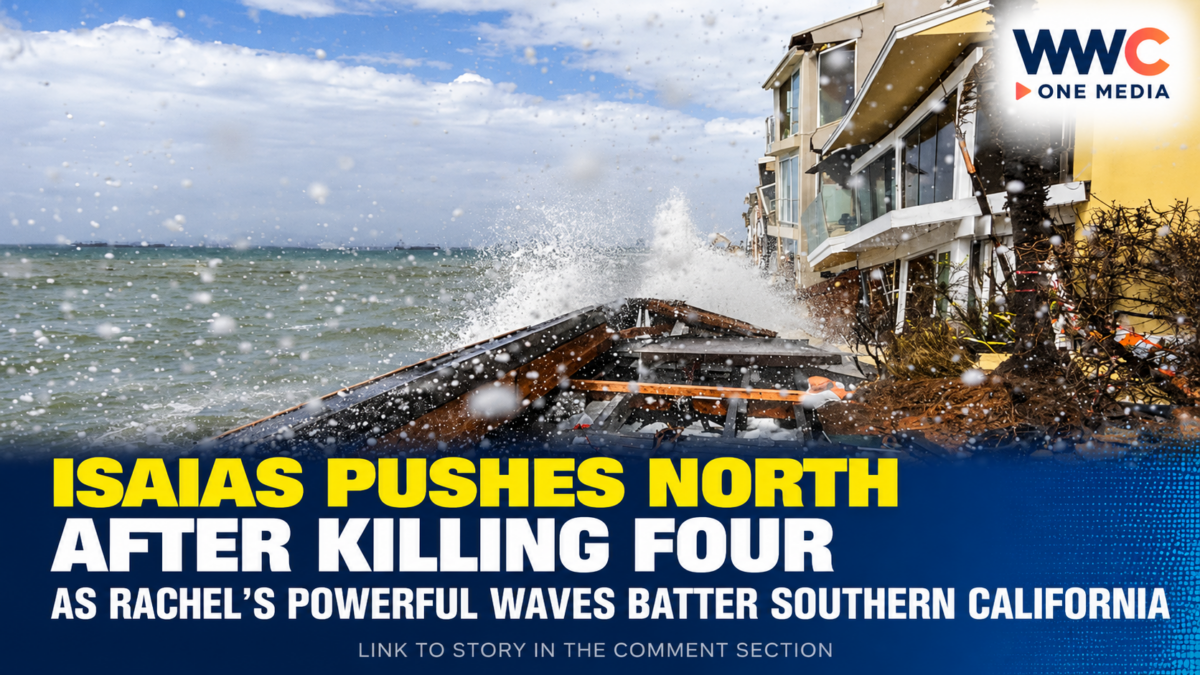
On the Long Beach peninsula, waves battered a century-old wooden boardwalk and damaged coastal properties, forcing some homeowners to evacuate.
The area was already recovering from Hurricane Marie in September, leaving residents and businesses particularly vulnerable to further coastal damage.
Long Beach officials placed dozens of heavy sandbags along exposed stretches of the peninsula to protect homes from waves and rising water.
Jack Gordon, a Long Beach real estate agent, described the area as “completely shattered and vulnerable”.
The unusually warm Pacific Ocean may be worsening the situation. Joe Sirard of the National Weather Service in Oxnard said water temperatures were around seven to eight degrees Fahrenheit above normal for this time of year, a condition associated with the El Niño weather pattern.
Warmer ocean water can contribute to higher sea levels, adding to the impact of Rachel’s waves and wind gusts during high tides.
Rachel later dissipated over Las Vegas, where heavy rainfall flooded streets and sent water rushing through parts of the city, including the Las Vegas Strip.
More dangerous weather ahead
The storms underscore the risks posed by heavy rainfall, coastal flooding and powerful winds across different parts of the United States.
While communities in the Southeast continued restoring power and clearing storm debris, residents along the Southern California coast faced renewed damage from waves and elevated water levels.
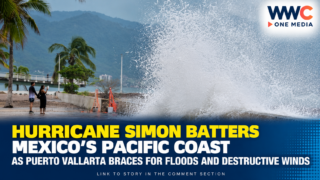
Meanwhile, Hurricane Simon was a Category 4 storm over the Pacific on Sunday, pounding Mexico’s Pacific coast with strong winds and heavy rain as it remained just offshore.
Authorities continued to warn of flooding and other dangerous conditions as recovery operations and severe-weather threats unfolded across the affected regions.