
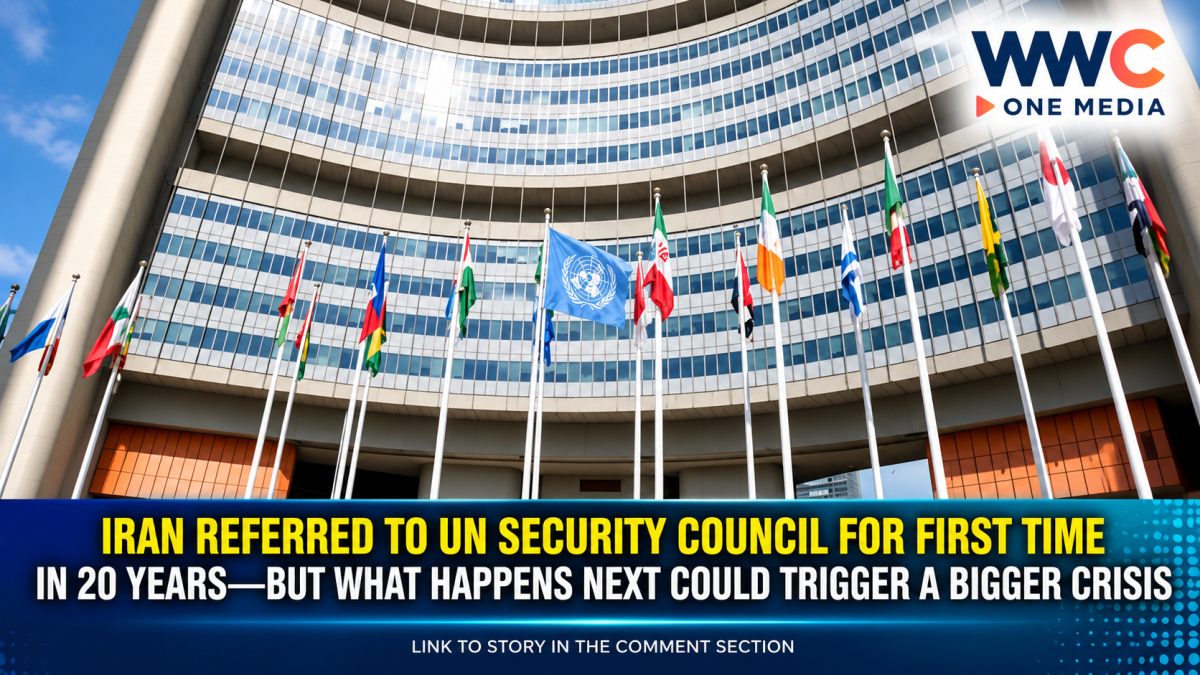
VIENNA, Austria — Iran is facing one of its biggest diplomatic setbacks in two decades after the United Nations nuclear watchdog voted to report Tehran to the UN Security Council over its nuclear obligations, intensifying an already dangerous standoff between Iran and Western powers.
The decision by the 35-member Board of Governors of the International Atomic Energy Agency marks the first time in 20 years that Iran has been referred to the UN Security Council over its nuclear activities.
But while the vote represents a major escalation, the biggest question may be what happens next—and whether Tehran will respond with further restrictions on international nuclear inspections.
Historic Vote Puts Iran Back Before the Security Council
The IAEA board voted on September 9 to report Iran to the UN Security Council, citing Tehran’s failure to fully cooperate with a long-running investigation into uranium traces discovered at undeclared locations.
According to Associated Press reporting, 23 countries voted in favor of the resolution, while Russia, China and Niger voted against it. Eight countries abstained and one board member did not vote. The resolution was backed by the United States, Britain, France and Germany.
The decision follows an earlier finding that Iran had breached its nuclear non-proliferation obligations. Reuters reported that a further resolution was required to formally bring the matter before the Security Council.
The development puts Iran’s nuclear programme back at the center of global diplomacy at a time when tensions between Tehran and Washington are already exceptionally high.
Why the Uranium Traces Matter
At the heart of the dispute is a years-long IAEA investigation into uranium particles detected at several sites in Iran that had not been declared to the agency.
Western officials believe the findings could shed light on Iran’s past nuclear activities and whether undeclared work was previously conducted. Iran, however, has consistently denied seeking nuclear weapons and maintains that its nuclear programme is for peaceful purposes.
It is important to note that the IAEA referral does not mean the agency has declared that Iran currently possesses a nuclear weapon.
Rather, the latest confrontation centers on Iran’s cooperation with safeguards obligations and the agency’s ability to verify nuclear activities and account for key aspects of Tehran’s programme.
Iran’s Enriched Uranium Stockpile Remains a Major Concern
The diplomatic showdown is also taking place against concerns over Iran’s stockpile of highly enriched uranium.
Before recent attacks on Iranian nuclear facilities, the IAEA estimated that Iran possessed 440.9 kilograms of uranium enriched to 60%, according to Reuters. That level is below the enrichment typically associated with weapons-grade material but is significantly closer to it than the levels generally required for civilian nuclear power generation.
The key concern for Western governments is not simply the amount of material Iran possesses, but whether international inspectors can verify its location and status.
Reuters reported that Iran has not provided inspectors with access to some bombed nuclear sites or sufficient information about parts of its enriched uranium stockpile following the military conflict.
That uncertainty is now becoming a central issue in the diplomatic crisis.
Tehran Calls the Move Politically Motivated
Iran has strongly rejected the resolution and dismissed the move as politically motivated.
Tehran argues that its ability to provide inspection access has been complicated by the ongoing conflict and damage to its nuclear infrastructure.
Iran also continues to insist that its nuclear programme is peaceful and has denied pursuing nuclear weapons.
Iran had previously warned that it could retaliate if the IAEA board approved the resolution, raising concerns that Tehran could further reduce cooperation with international inspectors. Reuters reported before the vote that Iran had warned Western powers against escalating the dispute.
What Can the UN Security Council Actually Do?
The referral is symbolically and diplomatically significant, but it does not automatically trigger new sanctions or military action.
Any major Security Council response would require further deliberations, and Russia and China—both permanent members with veto powers—could make it difficult for the council to adopt significant new measures against Iran.
That means the immediate impact of the referral could be more political than punitive.
Still, bringing Iran back before the Security Council increases international pressure and could influence future negotiations, sanctions discussions and diplomatic efforts surrounding Tehran’s nuclear programme.
The Vote Comes as Regional Tensions Continue to Rise
The IAEA’s decision comes amid a wider confrontation involving Iran, the United States and Israel.
Reuters reported on September 10 that President Donald Trump had raised concerns about activity observed near Iran’s heavily fortified Pickaxe Mountain site, close to the damaged Natanz uranium enrichment facility, while warning Tehran against further provocative actions.
At the same time, the broader regional conflict has raised concerns about shipping, energy supplies and oil prices.
Reuters reported that Brent crude remained above $100 a barrel amid fears of prolonged disruptions in the Persian Gulf and reduced traffic through the Strait of Hormuz, a critical global energy route.
The nuclear dispute is therefore no longer unfolding in isolation.
It is now part of a much wider geopolitical confrontation with consequences that could stretch from UN diplomacy to global energy markets.
A Diplomatic Warning—or the Start of Something Bigger?
The latest vote is the most serious diplomatic move against Iran’s nuclear programme in years.
For Western governments, the message is clear: Tehran must restore meaningful cooperation with international inspectors and address unanswered questions surrounding its nuclear activities.
For Iran, the referral represents another major point of confrontation with the United States and its European allies.
But the biggest uncertainty is what Tehran does now.
Will Iran restore broader access for IAEA inspectors?
Will it further restrict cooperation?
Or could the Security Council referral push both sides even further away from diplomacy?
With Iran once again formally before the UN Security Council for the first time in two decades, the nuclear standoff has entered a new and potentially more volatile phase.
And Tehran’s next move could determine just how far it goes.


Leave a Reply