
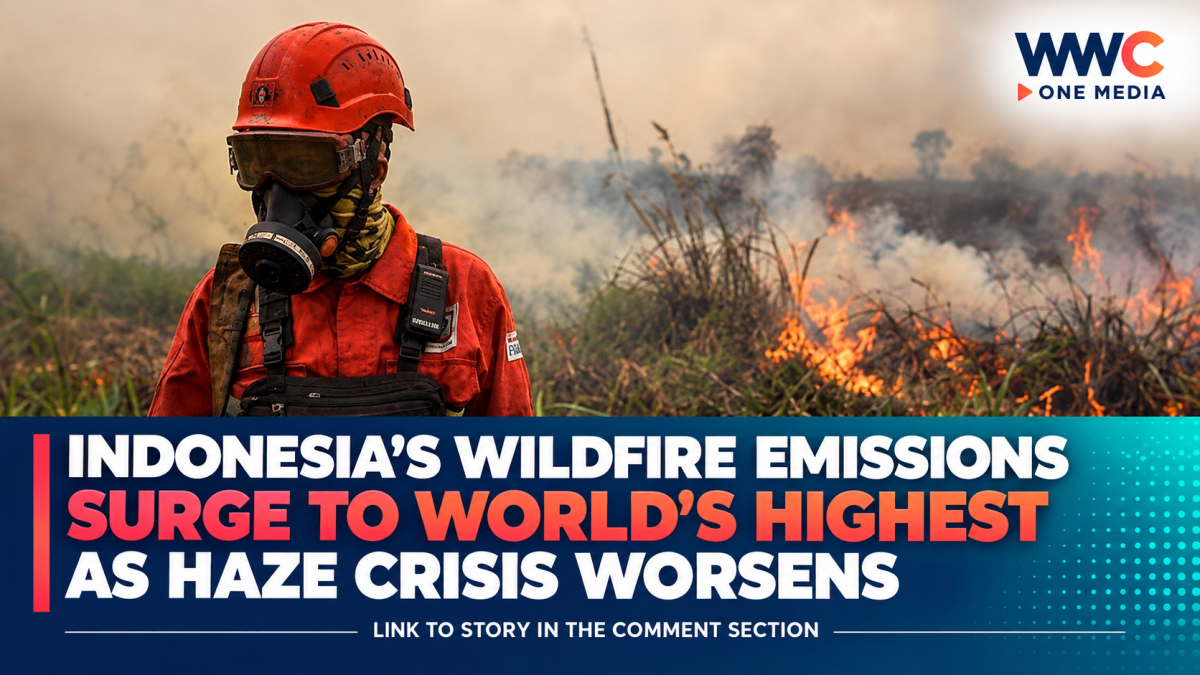
JAKARTA — Indonesia recorded the world’s highest wildfire emissions during the first week of September as devastating forest and peatland fires continued to spread across the country, worsening hazardous haze and raising fresh concerns across Southeast Asia.
Data showed Indonesia released an estimated 19.7 million tonnes of carbon dioxide from wildfires between Sept 1 and Sept 7, putting the country ahead of every other nation during the period.
The emissions were more than 10 times higher than Russia’s and stood 273 per cent above Indonesia’s seasonal average, according to wildfire monitoring data.
Fires rage across Sumatra and Kalimantan
The worst-hit areas include parts of Sumatra and Kalimantan on the island of Borneo, where prolonged dry weather and intense heat have created dangerous conditions for forest and peatland fires.
Indonesia is currently experiencing one of its most severe dry seasons in years, with the fires being intensified by a powerful El Niño weather pattern.
Satellite data recorded 13,443 hotspots between Aug 1 and Sept 8, exceeding the number seen during the same period in the devastating 2015 fire crisis.
Pontianak air quality reaches hazardous levels
The fire crisis has severely affected air quality in several parts of Indonesia.
In Pontianak, the capital of West Kalimantan, air pollution reached hazardous levels, with an air quality index reported at 394.
Thick smoke from the fires has also spread beyond Indonesia’s borders, affecting neighbouring countries and reviving fears of another major regional haze crisis.
Peat fires pose a major challenge
Environmental experts have warned that the actual scale of the fires and emissions could be even greater than current estimates suggest.
Peatland fires are particularly difficult to detect and extinguish because they can burn underground for extended periods.
Satellite monitoring may also struggle to fully capture these fires when thick smoke and cloud cover reduce visibility.
This means some of the most dangerous and carbon-intensive fires could be underrepresented in official estimates.
Burned area could rise sharply
Environmental groups have warned that estimates of the total area burned could increase significantly as assessments continue.
Early estimates suggest the affected area may eventually reach as much as 600,000 hectares, highlighting the rapidly worsening scale of the crisis.
More than 200,000 hectares have already been affected nationwide, according to recent reports on Indonesia’s forest and peatland fire emergency.
Schools forced to close
The worsening haze has also disrupted daily life for millions of people.
Schools in heavily affected areas have been forced to suspend in-person classes and shift to online learning to protect students from dangerous air pollution.
More than 1.4 million students across Indonesia have reportedly been affected by school closures and remote learning measures as authorities attempt to reduce exposure to hazardous smoke.
International firefighting support arrives
Indonesia has intensified its efforts to contain the fires through water bombing, cloud seeding and large-scale ground operations.
More than 50 aircraft have reportedly been deployed to support firefighting efforts.
Japan is also sending three CH-47 Chinook helicopters and about 180 personnel to assist Indonesia, with operations expected to focus on heavily affected areas of West Kalimantan.
Haze spreads across Southeast Asia
The crisis is increasingly becoming a regional concern.
Smoke from Indonesian fires has affected neighbouring Malaysia, Singapore and other parts of Southeast Asia.
Malaysia declared an emergency in the Sarawak district of Serian last week after air pollution reached critical levels, with authorities warning residents about the serious health risks posed by the haze.
Emissions could continue rising
Experts have warned that wildfire emissions may continue to increase through October if dry conditions persist.
Indonesia’s dry season typically creates heightened fire risks during this period, while peatland fires can continue burning beneath the surface even after visible flames have been reduced.
The situation has raised concerns that the current crisis could become one of Indonesia’s most serious wildfire and haze emergencies since 2015.
The bottom line
Indonesia recorded the world’s highest wildfire emissions during the first week of September, releasing an estimated 19.7 million tonnes of carbon dioxide as forest and peatland fires intensified across Sumatra and Kalimantan.
The fires have triggered hazardous air pollution, forced widespread school closures and sent haze across Southeast Asia.
With thousands of hotspots still detected and dry conditions expected to continue, authorities and environmental groups are warning that the crisis could worsen in the weeks ahead.
As Indonesia battles fires both above and below ground, the growing emissions and regional haze are turning the country’s wildfire emergency into a major environmental and public health crisis.
WWC ONE MEDIA J.M.D
Leave a Reply