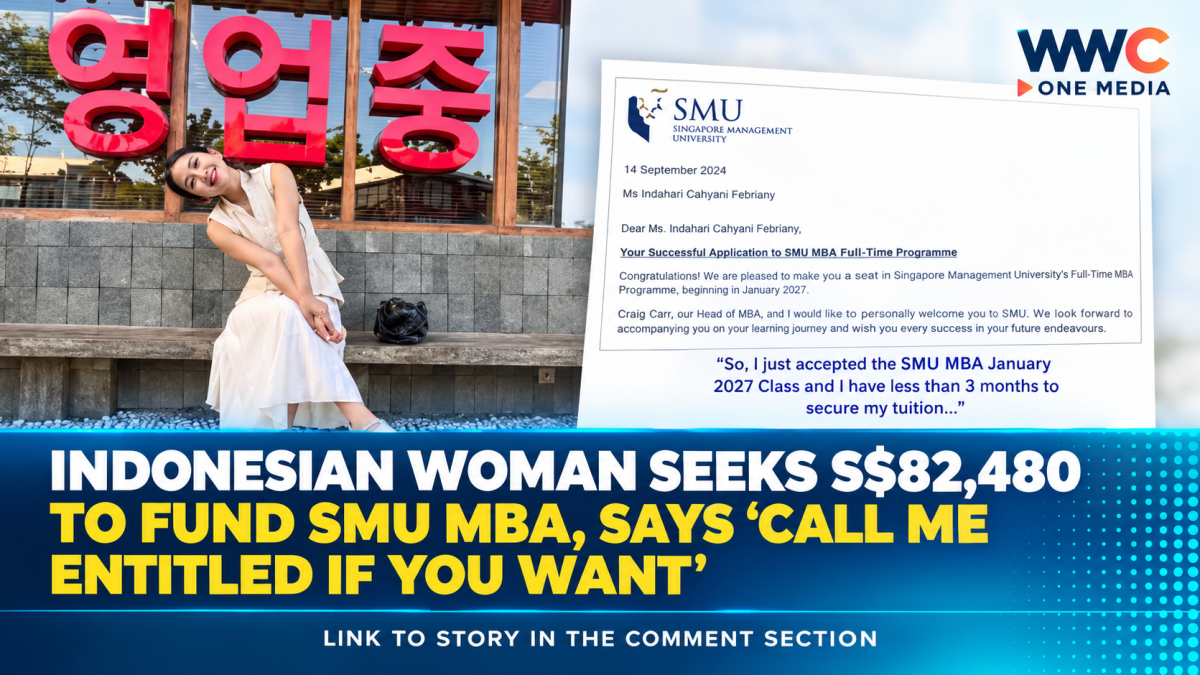
An Indonesian woman’s public appeal for financial help to pursue a Master of Business Administration at Singapore Management University (SMU) has sparked debate online after she asked potential sponsors to help cover her tuition and living expenses.
Evelyn Clarissa Siregar said she had been accepted into SMU’s full-time MBA programme for the January 2027 intake. In a Threads post on Sept. 19, she said she had less than three months to secure the money needed for her studies.
Siregar said she had already secured a S$3,000 reduction in tuition fees, but estimated that she still needed S$82,480 for tuition. She separately estimated her living expenses in Singapore at between S$2,000 and S$2,500 a month.
Rather than seeking a conventional student loan alone, she publicly asked for sponsors and said she would repay their support through the skills and experience she could offer.
She highlighted her professional background in selling IT products between businesses, connecting companies with Indonesian firms and creating content. She also described herself as someone who has worked with smaller companies during their early stages.
In her post, Siregar acknowledged that her request could attract criticism. She said she was 28, unmarried and had no children, describing funding as the main obstacle standing between her and her ambition to pursue the MBA.
The appeal drew mixed reactions online, with some users questioning whether an expensive overseas MBA should be funded through public appeals, while others focused on her willingness to openly seek support for an educational goal. AsiaOne reported that some commenters criticised her approach.
SMU’s MBA programme does offer scholarships and financial-aid options. Its published information says some scholarships can cover up to 30 per cent of tuition, while ASEAN scholarships are available to eligible nationals of ASEAN countries, including Indonesians. The university also lists financial-aid bursaries and education-loan options.
The episode has consequently opened a wider conversation about how international students finance expensive postgraduate education — and the increasingly public ways applicants are turning to social media when traditional funding options fall short.