
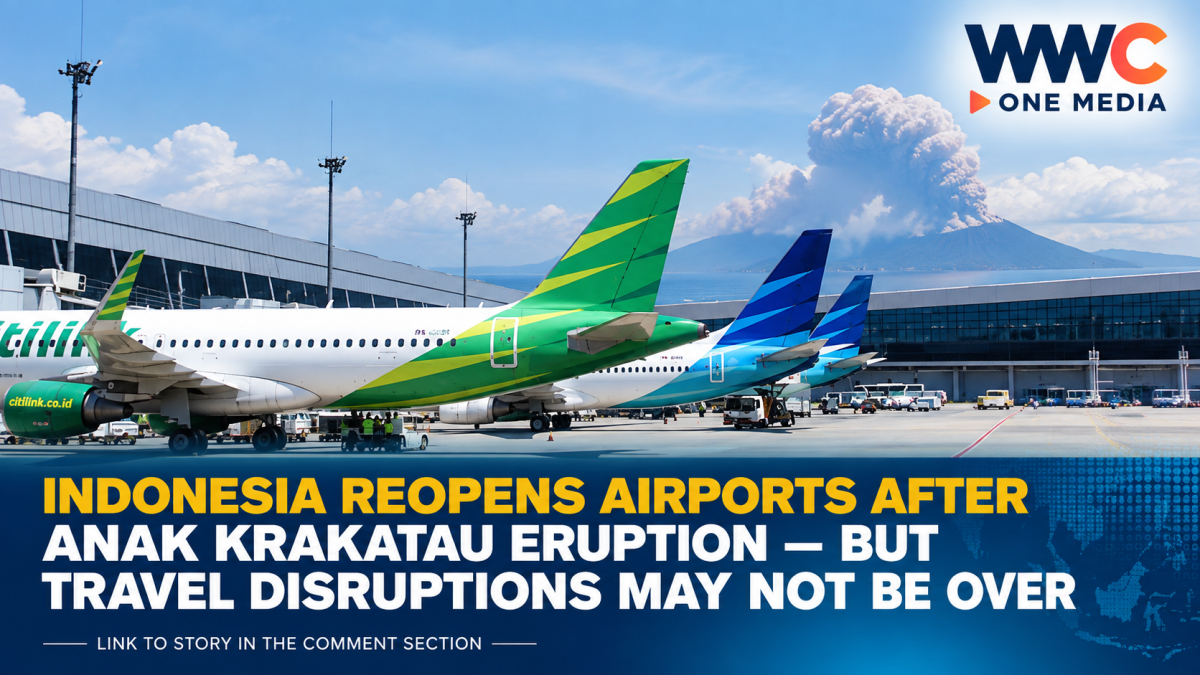
JAKARTA, Indonesia — Air travel across Indonesia began returning to normal after authorities reopened airports that had been temporarily shut because of volcanic ash from Mount Anak Krakatau, ending a major disruption that affected hundreds of thousands of passengers and thousands of flights.
Indonesia reopened airports including Soekarno-Hatta International Airport, Jakarta’s main international gateway, after changing wind conditions pushed volcanic ash away from key flight paths and airport areas. Authorities, however, continued safety inspections and warned that additional eruptions could still affect aviation.
The disruption followed a major eruption by Anak Krakatau that produced a substantial ash plume and forced authorities to suspend operations at several airports around Jakarta and nearby regions. According to Reuters, eight airports were affected and more than 340,000 travelers were caught up in the disruption, while AP reported that nearly 2,961 flights were affected.
Airlines Face a Difficult Recovery
Although airports have reopened, restarting flights does not immediately restore normal schedules.
Transportation Minister Dudy Purwagandhi said authorities needed to inspect aircraft that had been grounded during the shutdown. Reuters reported that 178 aircraft at Soekarno-Hatta were subject to airworthiness checks before returning to service. That means passengers could continue experiencing cancellations, rescheduling and delays even after airport operations resume.
The disruption has also created significant financial pressure for airlines. The Indonesia National Air Carriers Association estimated that carriers could lose as much as 19 billion rupiah, or roughly US$1 million, per day because of canceled flights, aircraft diversions, parking costs, additional fuel consumption and crew expenses.
Anak Krakatau Is Still Active
The reopening does not mean the volcanic threat has disappeared.
Indonesia’s geological authorities reported additional, smaller eruptions from Anak Krakatau after the major event. Scientists said the immediate impact was less severe than during the initial eruption, but ash could still interfere with aviation depending on the height of the eruption column and wind direction.
AP likewise reported that Anak Krakatau remains active, with intermittent Strombolian eruptions producing bursts of lava and ash. Authorities are therefore continuing to monitor the volcano and aviation conditions closely.
Why Volcanic Ash Is a Serious Aviation Threat
Volcanic ash is particularly dangerous for aircraft because it can enter engines and other critical systems. That is why aviation authorities can close airports or reroute flights even when an eruption is occurring some distance away.
The recent disruption also illustrates the vulnerability of Indonesia’s highly connected air network to volcanic activity. Indonesia sits along the Pacific Ring of Fire and has more than 100 active volcanoes, making volcanic monitoring and aviation preparedness a constant challenge.
Anak Krakatau is particularly well known because it emerged from the remains of the historic Krakatau volcanic system. The catastrophic 1883 Krakatau eruption caused enormous destruction and tsunamis, while an eruption of Anak Krakatau in 2018 triggered a deadly tsunami.
Passengers Told to Expect Continuing Delays
For travelers, the reopening of airports is an important step toward normality, but airlines may need time to reposition aircraft, crews and passengers after the disruption.
Travelers with flights from affected airports should therefore check directly with their airlines before heading to the airport, as schedules may remain fluid while aircraft inspections and operational recovery continue.
The bigger concern is what happens next: Anak Krakatau has not gone completely quiet. Another significant ash-producing eruption, combined with unfavorable winds, could quickly put pressure on Indonesia’s aviation network again.
THE BOTTOM LINE
Indonesia has reopened airports following one of its most disruptive recent volcanic-ash events, allowing air travel to resume after nearly 3,000 flights were affected and about 341,000 passengers were disrupted.
But the crisis is not necessarily finished. The volcano remains active, aircraft inspections are continuing, and another ash-producing eruption could once again disrupt flights.


Leave a Reply