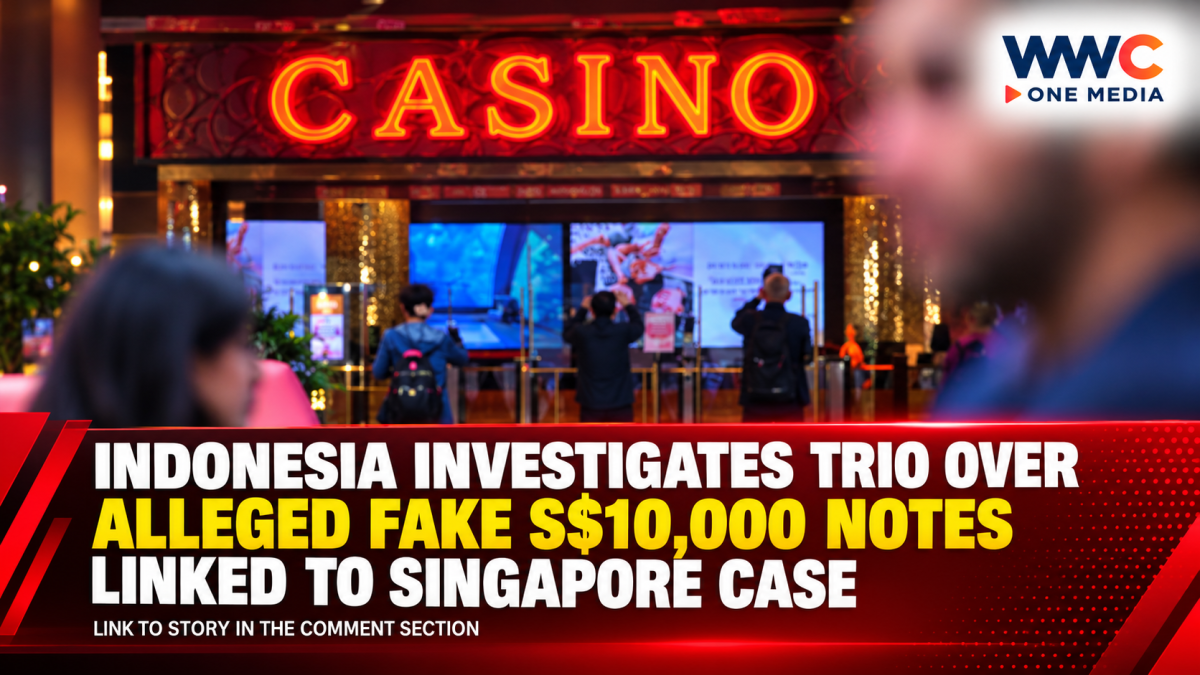
JAKARTA — Indonesian authorities are questioning three men as investigators work to trace the origins and movement of 34 allegedly counterfeit Singapore S$10,000 banknotes connected to a cross-border investigation involving Singapore.
The case centers on an Indonesian businessman identified as Steven, who allegedly used the high-denomination notes during visits to Resorts World Sentosa in Singapore in June. The notes were accepted before authorities later determined they were not genuine, according to The Straits Times.
South Tangerang police are now questioning three men identified in Indonesian police records as HD, AN and EAK. Investigators are also working with Singapore’s police force as they attempt to establish how the notes were obtained and distributed.
34 Counterfeit Notes at the Center of the Investigation
The investigation involves 34 S$10,000 notes with a combined face value of S$340,000.
Indonesian police previously said they were interviewing witnesses and coordinating with Singaporean authorities. A police meeting with Singapore’s authorities was held in September, with Indonesian investigators seeking confirmation that the seized notes were counterfeit.
Singapore Police Force confirmed that a report had been lodged and that investigations remained ongoing.
Businessman Says He Was Unaware the Notes Were Fake
Steven’s lawyer, Yosia Ginting, has maintained that his client was a victim of fraud and did not know the banknotes were allegedly counterfeit.
According to the lawyer, Steven received the first S$10,000 note from a man identified as Anthony and was subsequently given 33 additional notes. The lawyer said Steven had been told the notes were legitimate and had attempted to convert them into smaller denominations.
Lawyers representing another person under investigation have also disputed aspects of the allegations. One lawyer said his client was likewise a victim and rejected the account that his client had agreed to purchase Steven’s shophouse using the notes.
Those competing accounts remain subject to investigation.
Why Singapore’s S$10,000 Note Is Significant
The S$10,000 banknote was first issued in 1973 and Singapore stopped issuing the denomination in 2014 as a measure intended to reduce money-laundering and terrorism-financing risks associated with high-value notes.
Existing genuine S$10,000 notes, however, remain legal tender.
Singapore law provides severe penalties for convictions involving forged or counterfeit banknotes, with the maximum sentence reaching 20 years’ imprisonment.
A Cross-Border Investigation With More Questions Ahead
The case has now expanded beyond Singapore, with Indonesian investigators attempting to establish the source of the allegedly counterfeit currency and determine how it moved between individuals and across borders.
Investigators are also examining evidence that allegedly links the three men to the notes. Indonesian police said the wider investigation is intended to map the distribution chain and identify those potentially involved.
For now, the allegations against the individuals remain under investigation, and authorities have not announced a final determination of responsibility.
The case could ultimately depend on one crucial question: Where did the counterfeit S$10,000 notes come from, and how did they make their way into circulation?
WWC ONE MEDIA G,A