
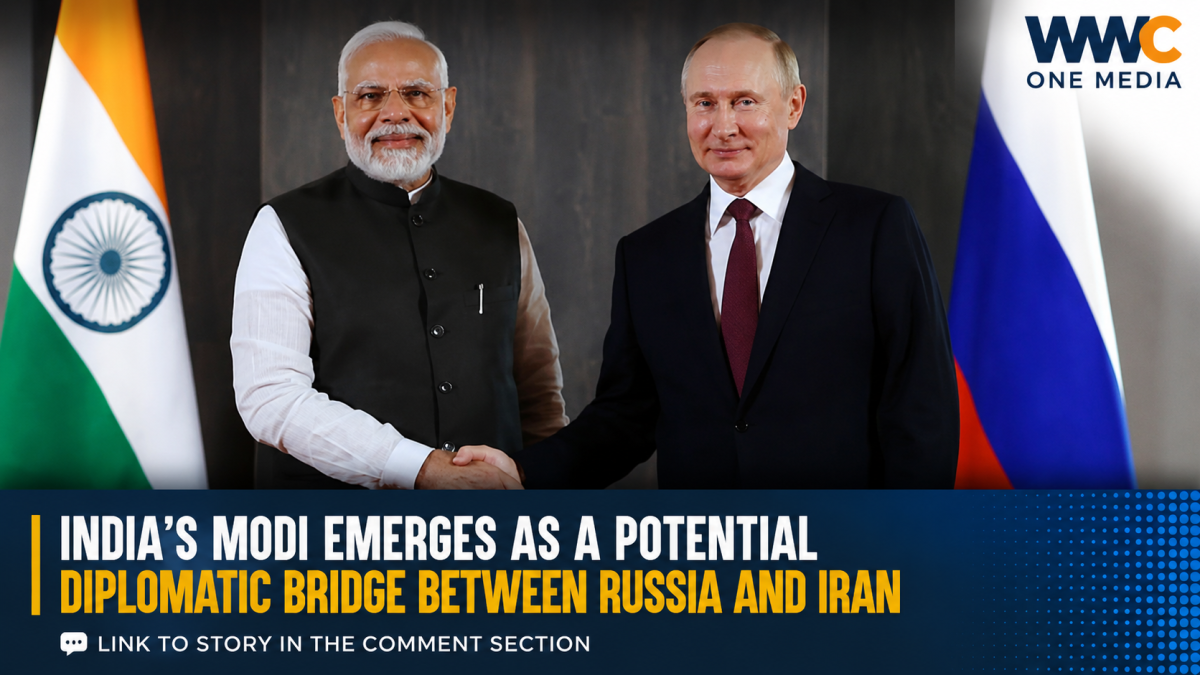
Indian Prime Minister Narendra Modi’s meetings with Russian President Vladimir Putin and Iranian President Masoud Pezeshkian at the Shanghai Cooperation Organisation summit in Bishkek have put a new question on the table: Could India become an important bridge between countries locked in major conflicts?
Modi’s position is unusual. India maintains a longstanding strategic relationship with Russia while also maintaining working ties with Iran and close relations with the United States and other Western powers. That gives New Delhi access to rival camps that do not always communicate directly.
Modi presses Putin on Ukraine
During his meeting with Putin, Modi urged Russia to move away from what he described as an “endless war” toward an end to the conflict in Ukraine.
He reiterated India’s support for peace efforts and said dialogue and diplomacy remain the way forward. Indian officials also said Modi offered to do what was feasible to help move the conflict toward a conclusion.
But access to Putin does not automatically give India the leverage needed to broker a settlement. That distinction is central to the debate over whether Modi can genuinely become a mediator.
Iran is also asking India to use its connections
Modi’s meeting with Pezeshkian focused on the escalating conflict in West Asia, freedom of navigation and the protection of civilians, commercial shipping and seafarers.
India again called for dialogue and diplomacy and expressed concern over the escalation.
According to Iranian readouts reported by Indian media, Pezeshkian encouraged Modi to use India’s extensive international contacts to help pull the parties involved away from further conflict.
That potentially puts India in an unusual position: New Delhi can speak to Moscow, Tehran and Washington without formally aligning itself with any one side.
But becoming a mediator is a different challenge
India has long promoted its policy of strategic autonomy, maintaining relationships across competing geopolitical blocs.
The opportunity is particularly significant as the Ukraine war continues and the US-Iran conflict threatens regional stability, shipping and energy markets.
Still, analysts caution that being able to communicate with conflicting parties is not the same as having enough influence to make them accept a deal.
India also has its own interests at stake—including energy supplies, trade routes and the safety of Indian citizens and seafarers—meaning New Delhi’s diplomacy is not entirely detached from its national interests.
The bigger geopolitical question
Modi’s diplomacy could give India greater influence as the world becomes increasingly divided between competing power centres.
But whether India can move from “trusted interlocutor” to actual mediator will depend on whether Russia, Iran, the United States and other parties believe New Delhi can deliver something concrete.
For now, Modi appears to be positioning India as a country that can talk across geopolitical fault lines—without necessarily taking on the formal role of peace broker.
WWC ONE MEDIA J.M.D

Leave a Reply