
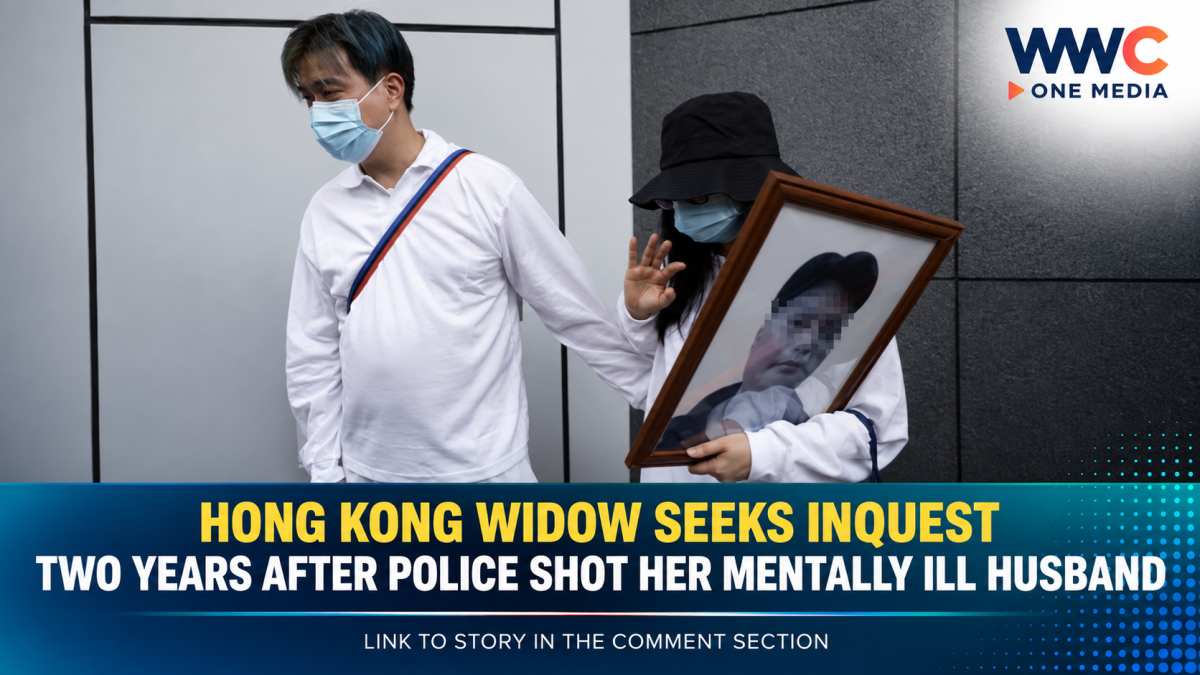
Two years after her husband was fatally shot by a Hong Kong police officer inside their North Point home, a grieving widow is still waiting for answers and wants a formal inquest into his death.
The woman, known publicly only as Mrs Li, said she continues to struggle with the circumstances surrounding her husband’s death and regrets calling the police for help on the day of the incident.
She has now renewed her call for an inquest, saying she wants to understand exactly what happened and hopes the case can help prevent a similar tragedy involving people with mental-health problems.
The incident happened on Sept 15, 2024, at Kam Ping Mansion in North Point.
Mrs Li called police after her 38-year-old husband, who had a history of mental illness, attacked both her and his elderly mother inside their home.
When officers arrived, they encountered the man holding a 30cm knife and a pair of scissors.
Police officers carrying shields confronted him during the incident.
The confrontation ended when an officer shot the man.
He was taken to hospital but later died from his injuries.
For Mrs Li, what began as a desperate attempt to protect herself and her family became a tragedy that she says continues to haunt her.
She has questioned whether the confrontation could have ended differently and whether more could have been done to manage a situation involving a person known to have mental-health problems.
The case has also raised broader questions about how police respond when people experiencing mental-health crises become violent or threaten others.
Such incidents can place officers in an extremely difficult position.
Police must protect victims and other members of the public while also trying to assess whether a person is experiencing a psychiatric crisis and determine whether there are alternatives to using lethal force.
The presence of a knife and scissors meant officers faced a potentially dangerous situation, but the circumstances surrounding the shooting remain a source of concern for the family.
Mrs Li has said she is not seeking sympathy or pity.
Her priority is to obtain a clear account of what happened and understand whether anything could have been done differently.
The absence of a completed inquest has prolonged that uncertainty.
A death inquest can examine the circumstances and causes surrounding a person’s death, allowing evidence from witnesses and relevant authorities to be considered in a formal setting.
For the family, such a process could provide a clearer picture of the sequence of events and the decisions made during the police response.
The case has also renewed discussion about whether police need more specialised procedures for dealing with people experiencing serious mental-health crises.
Mental illness can complicate police encounters because symptoms may affect a person’s behaviour, communication and response to instructions.
Officers may therefore need to balance immediate safety concerns with de-escalation strategies where circumstances allow.
However, every incident is different, and police may have only seconds to respond when a person is armed.
That tension is at the heart of debates surrounding the use of firearms in mental-health emergencies.
For Mrs Li, the personal consequences have been enormous.
She not only lost her husband but has been left questioning whether calling for emergency assistance ultimately contributed to his death.
The tragedy has also left her carrying the painful knowledge that the call was made because she believed police were the safest people to turn to.
Her campaign for an inquest is therefore driven by more than personal grief.
She wants the circumstances surrounding the shooting examined openly and hopes any lessons identified can improve future responses to people experiencing mental-health crises.
The case has already attracted wider attention in Hong Kong, where questions have been raised over police use of firearms when dealing with people suffering from mental illness.
As the second anniversary of the shooting passes, Mrs Li remains without the answers she has been seeking.
Her message is simple: she does not want pity.
She wants to know what happened, why the confrontation ended with her husband being shot and whether the tragedy could have been prevented.
For her, a formal inquest could provide the answers that have remained out of reach for two years — while potentially helping Hong Kong authorities ensure that another family does not face the same devastating choice between calling for help and fearing what might happen when help arrives.



Leave a Reply