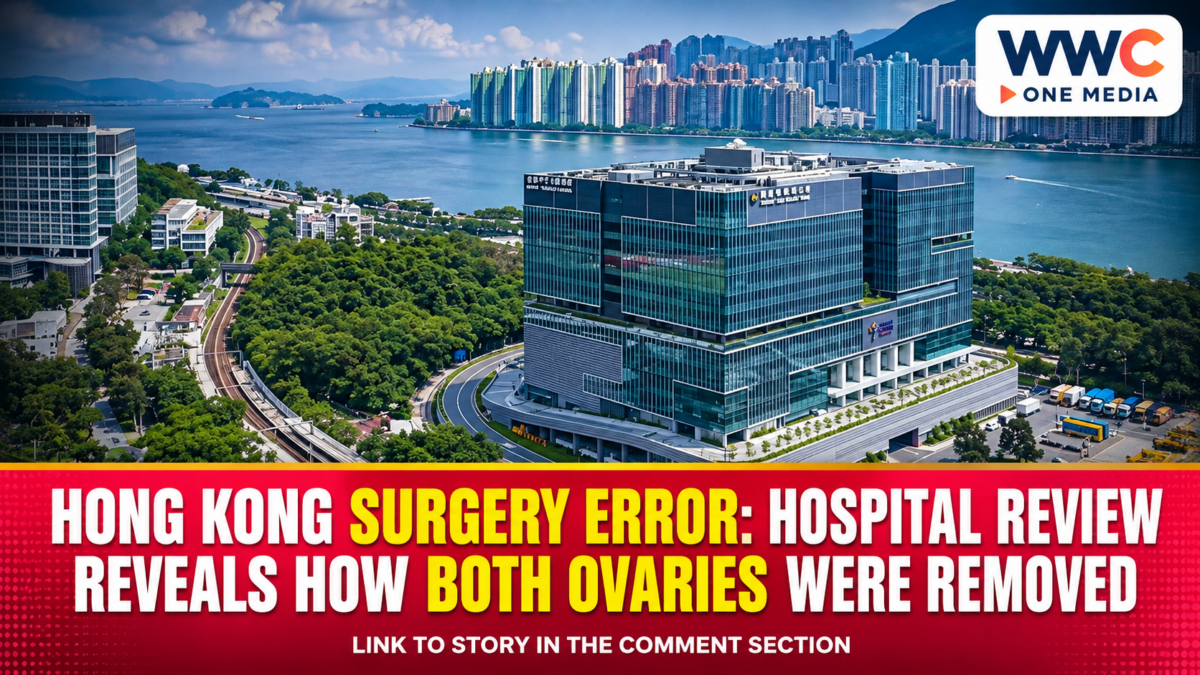
A 45-year-old woman had both ovaries inadvertently removed during an operation at Hong Kong’s CUHK Medical Centre on Sept. 12, 2026, even though her surgical consent form and the original treatment plan specified that they should be preserved. The hospital disclosed the incident on Nov. 17 and published findings from its internal investigation, including changes it says have since been introduced in operating theatres.
The case raises a serious question about how a surgical plan can be correctly documented and checked before an operation, yet not be followed during the procedure. The hospital’s account also identifies the point at which the discrepancy was detected: a nurse noticed that both ovaries were included during the routine verification of the removed surgical specimens.
Hong Kong surgery error: What the hospital confirmed
The patient had previously sought medical consultation at CUHK Medical Centre and was suspected of having endometrial lesions. The hospital said she underwent a laparoscopic hysterectomy and bilateral salpingectomy on Sept. 12.
The intended procedure was documented in both the surgical consent form and the original surgical plan. Both records clearly specified that the ovaries were to be preserved.
However, the hospital said both ovaries were inadvertently removed during the operation. It described the incident as a sentinel event and expressed regret, apologising to the patient, her family and the public.
The hospital’s statement did not disclose the patient’s identity or provide personal medical details beyond the information needed to explain the incident. Those details are not necessary to understand the central issue: the operation did not follow the documented plan concerning the ovaries.
A routine check revealed the discrepancy
One of the most significant details in the hospital’s account concerns the verification process after the surgical specimens were extracted.
CUHK Medical Centre said the surgical team had completed the relevant verification procedures before the operation and confirmed the scheduled procedures. The discrepancy was identified later, during routine checking of the specimens.
A nurse discovered that both ovaries were included and immediately informed the doctor because their removal did not match the original plan.
The hospital said it then disclosed the incident to the patient and her family and offered an apology.
This sequence matters because it distinguishes the checks conducted before surgery from the verification carried out after tissue removal. The hospital’s statement says the pre-operation processes were completed, but the final specimen check exposed a mismatch between what had been planned and what had been removed.
It does not provide a detailed account of every decision made in the operating theatre. The published findings should therefore not be stretched into conclusions about actions or failures that the hospital did not describe.
What the hospital’s investigation found
CUHK Medical Centre said it reported the incident to Hong Kong’s Department of Health within 24 hours, as required under the Private Healthcare Facilities Ordinance. It also established a Root Cause Analysis Panel to examine what happened.
The hospital’s published summary said the investigation found that the doctor had become highly focused on carrying out the immediate clinical steps. This, it said, led to a temporary collapse of situational awareness and the failure to follow the original plan to preserve the ovaries.
The hospital added that the doctor acknowledged the lapse and apologised to the patient and her family.
It also said it took the doctor’s individual responsibility seriously and would impose disciplinary action in accordance with its human resources policies. The statement did not identify the doctor or specify what disciplinary measure would be imposed.
That distinction is important. The hospital announced that disciplinary action would be taken under its internal policies; it did not publish a final disciplinary decision or identify a specific penalty.
New operating-room safeguards introduced
The hospital said it had completed a comprehensive review and implemented follow-up and improvement measures.
One specific change was the introduction of clear visual prompts during surgery. The stated purpose is to help the entire surgical team follow the planned procedure accurately and reduce the possibility of a similar incident happening again.
The hospital also said it would continue cooperating with the Department of Health and work on improving its clinical governance.
The measure is notable because the hospital’s own account describes a mismatch between the documented plan and the steps carried out during surgery. Visual prompts are intended to make the agreed plan more visible to the team while the procedure is under way.
However, the public statement does not explain exactly how the prompts work, where they are displayed, who is responsible for checking them or how their effectiveness will be assessed. Those details would help the public understand how the changes will operate in practice.
Why consent and verification matter
A surgical consent form records what a patient has agreed to undergo. In this case, the hospital specifically stated that the consent form and original surgical plan both called for preserving the ovaries.
The incident therefore places attention on more than the completion of paperwork. It highlights the importance of keeping the agreed plan visible and consistent throughout the different stages of a procedure.
The hospital’s account identifies three separate points in the process: the confirmation of the scheduled procedure before surgery, the actions performed during the operation, and the checking of specimens after removal. The final check detected the discrepancy, but it did so after the ovaries had already been removed.
For patients, the case also underlines the value of receiving clear explanations about the intended procedure and having a documented opportunity to ask questions before treatment. It does not mean that every operation carries the same risk or that the circumstances of this incident apply to other hospitals.
WWC has previously covered other healthcare safety and oversight cases, including a Thai hospital incident involving an injury during routine care, a Singapore investigation into an emergency-response failure at a care facility, and questions about hospital safety arrangements following a fire in Islamabad. The incidents are different, but each shows why healthcare safeguards need to work in practice, not simply exist in written procedures.
What happens next
CUHK Medical Centre said it would continue to cooperate with the Department of Health and maintain follow-up care and support for the patient. It also said the patient was in stable condition and continued receiving medical follow-up at the hospital when the statement was issued.
The hospital has announced that it intends to impose disciplinary action under its human resources policies, but it has not publicly specified the outcome. Its statement also does not provide a detailed timetable for assessing the effectiveness of the new visual prompts.
The next points to watch are whether the hospital provides further information about the safeguards, whether the regulator announces additional findings or follow-up measures, and whether the hospital publishes any further update on its corrective actions.
For now, the hospital’s own account establishes the central facts: the patient’s ovaries were meant to be preserved, both were removed during the operation, a nurse detected the discrepancy during specimen verification, and the hospital says it has introduced additional operating-room prompts.
Frequently asked questions
What happened at CUHK Medical Centre?
A 45-year-old woman had both ovaries inadvertently removed during a Sept. 12, 2026 operation that was intended to preserve them, according to the hospital’s statement.
Were the patient’s ovaries supposed to be removed?
No. CUHK Medical Centre said both the surgical consent form and original surgical plan specified that the ovaries should be preserved.
How was the mistake discovered?
The hospital said a nurse found both ovaries among the removed surgical specimens during routine verification and immediately informed the doctor.
What did the hospital’s investigation find?
The hospital said the doctor became highly focused on the immediate clinical steps, resulting in a temporary collapse of situational awareness and a failure to follow the original plan.
What changes has CUHK Medical Centre introduced?
The hospital said it had introduced clear visual prompts during surgery to help the surgical team follow the planned procedure. It also said disciplinary action would be imposed under its human resources policies.