MANILA, Philippines — November 3, 2026. A familiar Filipino pastime is becoming the centerpiece of an increasingly competitive digital entertainment business.
GameZone, the online card gaming platform under DigiPlus Interactive Corporation, is strengthening its connection with Filipino audiences by combining traditional games such as Tongits and Pusoy with competitive online tournaments, a library of more than 1,500 games, and a new musical collaboration with award-winning Filipino rapper Gloc-9.
The strategy is designed to transform games traditionally associated with family gatherings, neighborhood friendships, and social occasions into digital entertainment experiences accessible through connected devices.
But GameZone’s ambition goes beyond attracting players.
By bringing together familiar card games, Filipino music, celebrity personalities, and organized competitions, the company is attempting to create a distinct cultural identity in the country’s regulated online gaming industry.
The critical question is whether this strategy can generate lasting brand loyalty while Philippine regulators and consumer advocates continue scrutinizing online gambling.
GameZone Turns Traditional Filipino Card Games Into Digital Entertainment
Tongits and Pusoy have been part of Filipino social gatherings for generations.
Whether played during reunions, celebrations, or informal neighborhood gatherings, these card games have traditionally brought people together through competition, conversation, and shared experiences.
GameZone is using that cultural familiarity to differentiate itself in the digital gaming market.
Its platform offers real-time player-versus-player competitions featuring Filipino card games, alongside poker and other gaming products.
Unlike games played exclusively against computer-controlled opponents, the company’s player-versus-player format connects participants with other human players.
GameZone also organizes competitive gaming activities through GameZone Tour, turning traditional card games into structured tournaments.
According to a November 1 report by InsiderPH, the platform offers more than 1,500 games, giving it a broad entertainment library alongside its Filipino card-game offerings.
However, the number of available games alone does not establish the size of GameZone’s player base, its profitability, or the success of its latest marketing campaign.
Those outcomes would require additional company performance data.
Gloc-9 Enters the Picture as GameZone Launches ‘Tara G!’
GameZone’s latest brand initiative brings Filipino music into its digital entertainment strategy.
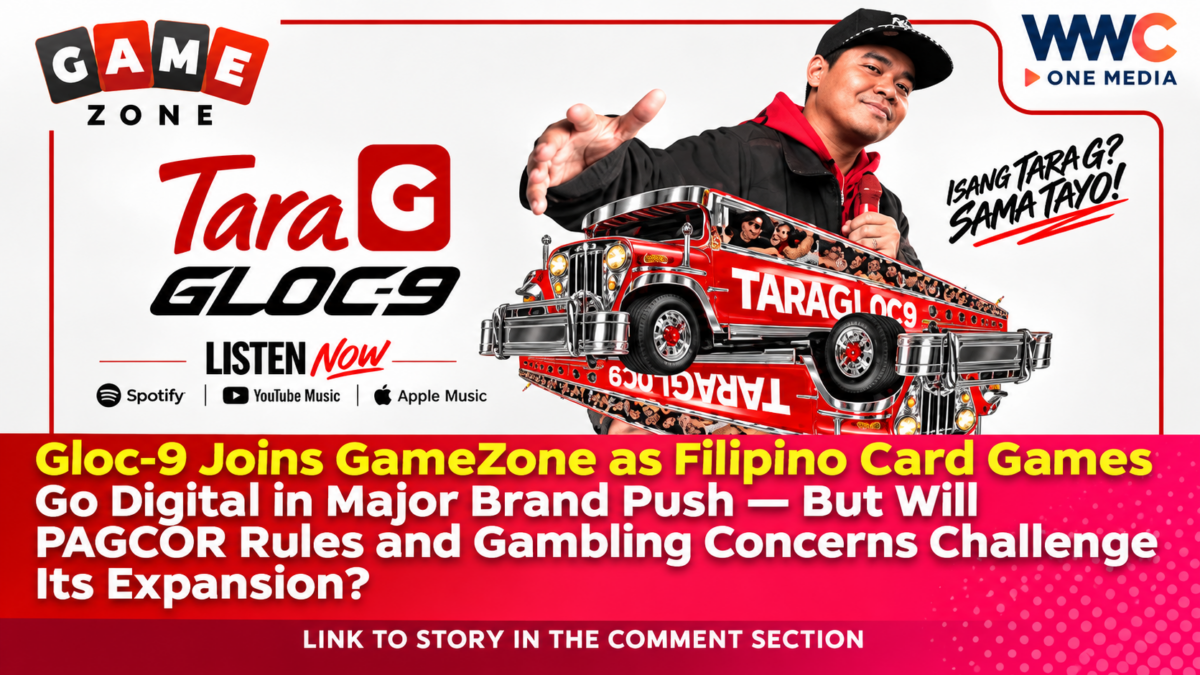
The company partnered with OPM rapper Gloc-9 for a song titled “Tara G!,” released worldwide on October 30, 2026.
The collaboration supports GameZone’s wider “Tara G! Sama Tayo.” campaign, which uses a familiar Filipino invitation to emphasize participation, friendship, and community.
Gloc-9 is widely recognized for his storytelling and songs addressing everyday Filipino experiences.
His participation gives GameZone an opportunity to connect its branding with audiences familiar with his music.
The song was made available through Spotify, Apple Music, YouTube Music, and Deezer, according to the company’s announcement reported by InsiderPH.
GameZone spokesperson Ava Castillo explained that the collaboration was intended to move the campaign beyond a conventional advertising message and make it more culturally recognizable.
The decision reflects a broader marketing strategy in which companies use entertainment personalities, music, and shared cultural experiences to build stronger associations with their brands.
But the effectiveness of this particular collaboration remains unproven.
No independently verified figures were identified showing how many new users the song attracted, how much additional revenue it generated, or whether it significantly improved player retention.
DigiPlus Is Building a Bigger Competitive Gaming Ecosystem
GameZone is part of DigiPlus Interactive Corporation’s portfolio of digital entertainment brands, which also includes BingoPlus and ArenaPlus.
The company’s 2025 integrated report identifies GameZone as a competitive card-gaming platform centered on real-time player-versus-player experiences.
Its offerings include Tongits, Pusoy, and Lucky 9, alongside tournament formats and other gaming products.
GameZone’s competitive strategy was already developing before the latest Gloc-9 campaign.
In 2025, its GameZone Tablegame Champions Cup expanded into a major tabletop competition series, with advertised prize pools reaching as high as ₱10 million.
DigiPlus also reported introducing additional tournament formats, free-entry competitive ladders, and ranked events.
The company identified Vice Ganda as a GameZone brand ambassador supporting its responsible gaming messaging.
These developments suggest that GameZone is pursuing a broader brand strategy that combines entertainment personalities, competitive participation, and familiar games.
The goal is to make GameZone recognizable beyond its individual gaming titles.
However, historical tournament prize pools should not be mistaken for guaranteed winnings available to every participant.
Likewise, celebrity endorsements do not independently establish that a gaming platform is safer or more profitable for users.
Philippine Digital Gaming Competition Is Intensifying
GameZone’s expansion comes as other Philippine gaming businesses pursue new technologies and stronger digital customer engagement.
Bloomberry Resorts Corporation, for example, has been expanding its digital gaming activities through platforms including OnlyFun.PH.
The company has placed greater emphasis on livestream entertainment, creator engagement, and consumer protection measures.
WWC ONE MEDIA examined the development in its report, Bloomberry’s OnlyFun.PH Tightens Player Safety as Livestream Betting Expands — But Can Age Checks Really Keep Minors Out?.
The comparison highlights two different approaches to attracting attention in the digital gaming market.
GameZone is emphasizing Filipino card-game culture, tournaments, and music, while OnlyFun.PH is using creator-driven entertainment and livestream engagement.
Both strategies raise questions about how companies can attract adult audiences without weakening safeguards against excessive gambling or unauthorized access.
Another industry player, PhilWeb Corporation, has been expanding its relationships with international gaming technology suppliers.
In October 2026, PhilWeb-linked JKS Tech Solutions announced an agreement involving MegaWin gaming content.
The partnership forms part of PhilWeb’s wider effort to strengthen its technology infrastructure and services for licensed operators.
WWC ONE MEDIA previously detailed the development in Gokongwei-Backed PhilWeb Expands Through MegaWin Gaming Technology Deal — But Its ₱4.23-Billion Investment Faces a Bigger Test.
These companies do not all operate identical business models. Nevertheless, their investments illustrate the competition developing around Philippine digital gaming, platform technology, and customer engagement.
For GameZone, cultural familiarity may be an important advantage, but the commercial results will depend on whether that familiarity translates into sustainable and compliant business operations.
Why PAGCOR Regulation Could Shape GameZone’s Future
As GameZone expands its visibility, oversight by the Philippine Amusement and Gaming Corporation remains an important part of the story.
GameZone operates within the PAGCOR-regulated online gaming sector.
That regulatory environment imposes requirements involving authorized operations, eligible customers, and responsible gaming.
Under PAGCOR’s responsible gaming framework, individuals younger than 21 are prohibited from participating in covered gambling activities.
Licensing does not eliminate the risks associated with wagering, including financial losses and problematic gambling behavior.
The challenge becomes more significant when gaming operators connect their platforms with widely recognized entertainment personalities and culturally familiar activities.
Marketing campaigns can make brands more recognizable, but they also raise questions about how promotional material reaches audiences and whether clear distinctions are maintained between traditional social games and real-money gambling.
A traditional card game played socially is not necessarily equivalent to wagering on a digital platform.
That distinction is especially important when discussing cultural heritage alongside gambling-related products.
For GameZone, long-term success may depend not only on brand recognition but also on demonstrating effective age verification, responsible marketing, and meaningful player safeguards.
Promotions and Prizes May Attract Attention, but Do They Build Loyalty?
Across the online gaming industry, operators have experimented with promotions and prize-driven campaigns to increase visibility.
Bloomberry, for example, introduced a FUNaloMAX campaign advertising prizes that included vehicles and electronic devices.
WWC ONE MEDIA covered the initiative in Bloomberry Launches ₱30-Million FUNaloMAX Campaign With Tesla and iPhone Prizes — But Can the Strategy Deliver Sustainable Growth?.
Although promotional campaigns may create publicity, they do not automatically demonstrate sustainable revenue or profitable customer retention.
GameZone’s music partnership represents a different branding approach.
Instead of relying solely on promotions or tournament rewards, the company is attempting to associate its platform with familiar Filipino experiences and cultural expression.
The distinction could become important as gaming brands compete for attention.
A recognizable song or celebrity collaboration may improve awareness, but awareness does not necessarily lead to sustained participation.
Independent information about campaign reach, customer acquisition, and long-term financial performance would be needed to judge the strategy’s commercial effectiveness.
The Hidden Risk Behind Online Gaming’s Cultural Appeal
Digital platforms have made gaming products accessible through smartphones and other connected devices.
That accessibility offers convenience for eligible adults, but it also increases the importance of measures intended to prevent unauthorized participation and reduce gambling-related harm.
International developments demonstrate why these safeguards matter.
In South Korea, official figures showed a 40.9% year-on-year increase in the number of young people receiving treatment or counseling for gambling-related problems in 2025.
WWC ONE MEDIA examined the figures in South Korea Reports 40.9% Jump in Teen Gambling Treatment and Counseling Cases.
The figures refer to South Korea and cannot be used to estimate gambling-related harm among Filipino minors or GameZone users.
Nevertheless, they demonstrate the importance of examining how online gambling products are accessed and promoted.
For operators, the challenge extends beyond enforcing minimum age requirements.
It also involves preventing misleading advertising, promoting informed decisions, supporting users experiencing gambling-related difficulties, and ensuring that entertainment campaigns do not obscure financial risks.
Can Filipino Culture Become GameZone’s Biggest Competitive Advantage?
GameZone’s approach reflects an interesting shift in digital entertainment marketing.
Rather than presenting traditional Filipino card games as outdated activities, the platform is using them as recognizable elements of its brand identity.
Tongits and Pusoy provide familiar starting points.
Competitive tournaments introduce organized participation.
Music collaborations and celebrity personalities extend the company’s reach beyond the gaming interface.
Together, these elements create a strategy centered on cultural recognition.
But turning familiar experiences into a digital brand does not guarantee commercial success.
GameZone must still compete on platform performance, customer trust, regulatory compliance, and the effectiveness of its responsible gaming measures.
The company has not publicly established, through the reviewed reports, that its Gloc-9 collaboration has delivered a measurable increase in revenue or active users.
That makes the current campaign a branding initiative whose longer-term business effects remain to be seen.
The Bigger Question: Is GameZone Building a Lasting Brand or Facing a Tougher Test?
GameZone’s latest campaign marks another attempt to connect traditional Filipino entertainment with the digital gaming economy.
Its library of more than 1,500 games, competitive tournament offerings, and Gloc-9 music collaboration provide different ways to increase public familiarity with the brand.
DigiPlus’s earlier investments in tournament infrastructure and entertainment partnerships show that the approach is part of a longer-running strategy.
But the next test will involve more than attracting attention.
The company will need to demonstrate that its cultural branding strategy supports sustainable business results while meeting the consumer-protection obligations associated with regulated gambling.
For Philippine digital gaming companies, successful expansion increasingly depends on balancing innovation, commercial competition, and responsible operations.
GameZone is betting its branding strategy on familiar Filipino games and the power of OPM.
But as the fight for digital entertainment audiences intensifies, can GameZone turn Filipino card-game culture into lasting brand loyalty — or will tougher regulation and growing concerns over online gambling become its biggest challenge yet?