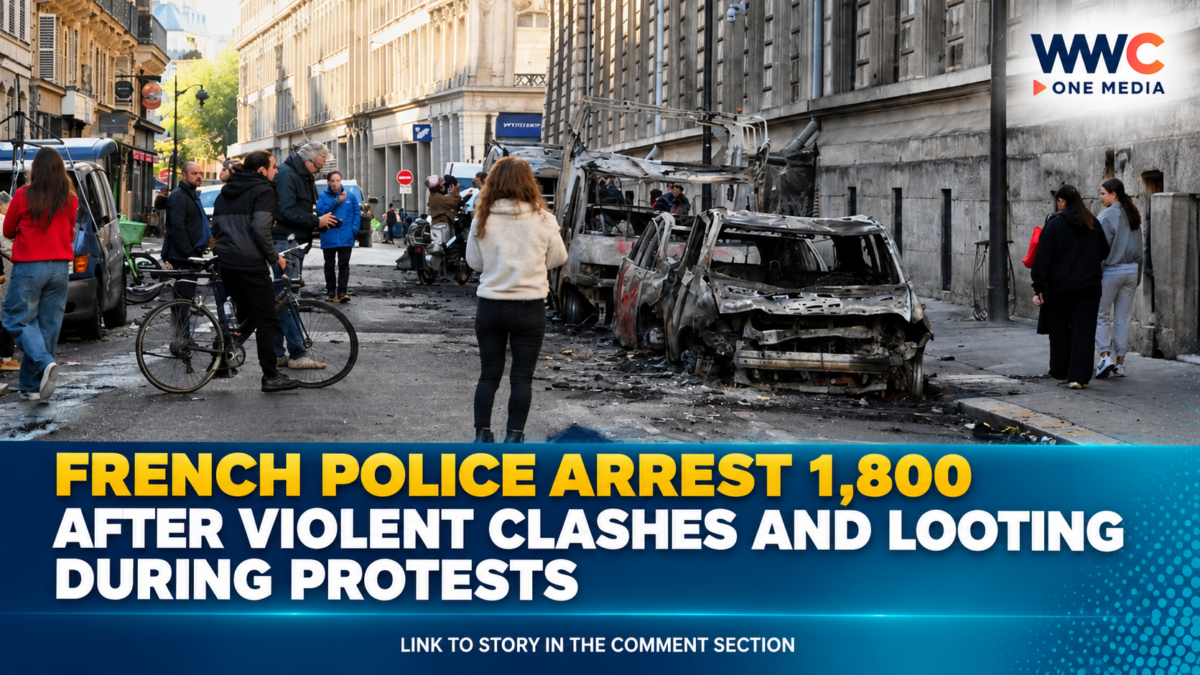
French authorities launched a major law-enforcement response after protests escalated into violent clashes and looting, with around 1,800 people arrested, according to the report.
The arrests highlight the challenges facing French police as demonstrations spill into public spaces, with confrontations, property damage and looting raising concerns about public safety and the impact on local communities
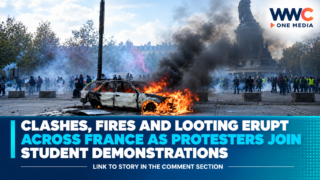
French police arrested at least 1,800 people after nationwide demonstrations over rising living costs and poor school conditions descended into violent clashes, arson and widespread looting on Saturday, October 17.
Hundreds of thousands of people took to the streets across France, with authorities estimating that approximately 550,000 participated in demonstrations nationwide. Organisers put the turnout at around 800,000, reflecting widespread frustration over the cost of living, inadequate public services and deteriorating school facilities.
Although many demonstrators marched peacefully, masked groups clashed with police, attacked public buildings and ransacked businesses in several cities. More than 500 police officers, gendarmes and firefighters were reported injured, according to Interior Minister Laurent Nuñez.
The violence was particularly severe in Paris, where police recorded 855 arrests in the capital region alone. Shopfronts were smashed, luxury boutiques and supermarkets were looted, and police deployed tear gas as confrontations spread through central shopping districts.
In Limoges, central France, a fire engulfed the city’s historic 19th-century town hall, causing its roof to collapse. Authorities said the blaze was deliberately set. Elsewhere, incidents involving damaged police facilities, public buildings and commercial properties were reported in Marseille, Lyon, Bordeaux, Strasbourg and other cities.
The demonstrations grew out of a student movement that began in September over teacher shortages, inadequate school facilities and concerns about education standards in working-class suburbs around Paris. The protests subsequently expanded into a broader expression of anger over inflation, inequality, rising living expenses and the quality of public services.
French Prime Minister Sébastien Lecornu and Nuñez blamed some of the violence on radical far-left groups and opportunistic criminals who took advantage of the demonstrations to loot businesses. Authorities said those responsible would face legal consequences.
President Emmanuel Macron was scheduled to convene an emergency meeting with senior officials before addressing the nation. The government faced growing pressure to restore order while responding to the economic and social concerns that had brought so many people onto the streets.
One person died after suffering a cardiac arrest during demonstrations in Paris, according to police. Prosecutors opened an investigation, although further details surrounding the death were not immediately available.
The unrest has also raised concerns among business owners and local authorities about the cost of repairing damaged buildings and replacing stolen goods. Mayors of Paris, Marseille and Lyon called for discussions with the prime minister to address the scale of the destruction.
The protests underline the growing challenge facing France as economic pressures and dissatisfaction with public services fuel demonstrations across the country. While the right to peaceful protest remains protected, the widespread looting and attacks on public property have intensified calls for accountability and a response to the grievances driving the movement.