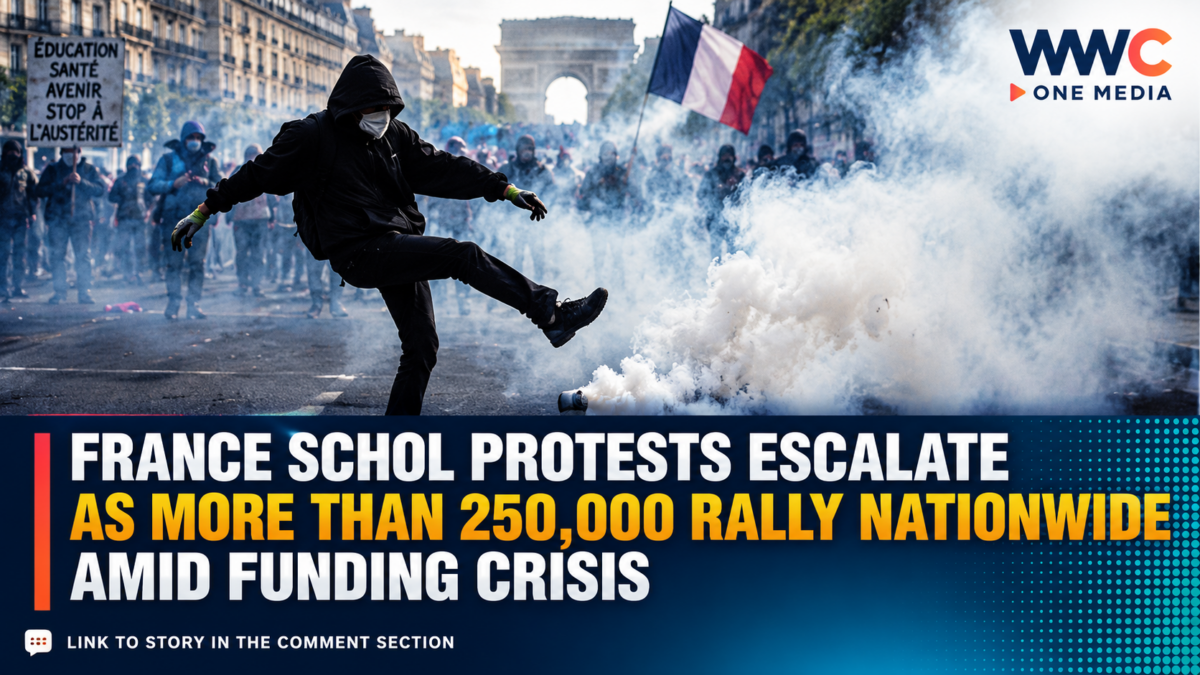
PARIS — France faced its biggest day of student-led demonstrations in weeks on Oct. 6, as more than 250,000 people took to the streets nationwide to demand greater investment in public schools.
Police used tear gas in Paris and other cities after some clashes broke out on the fringes of largely peaceful demonstrations. France’s Interior Ministry estimated that 256,000 people participated nationwide, including about 56,000 in Paris. Reuters reported a similar government estimate of more than 250,000, while organizers put the turnout substantially higher.
The protests began in September with high-school students raising concerns about overcrowded classrooms, teacher shortages and deteriorating school facilities. They have since developed into a nationwide movement involving students, parents and teachers.
Why French Students Are Taking to the Streets
Demonstrators are demanding improvements to school conditions, including more teachers, better-maintained buildings and changes to demanding school schedules.
Students have reported problems ranging from inadequate classroom facilities to staff shortages and heavy workloads. The Education Ministry said classes were fully or partially suspended at 891 schools on Tuesday as blockades and demonstrations continued.
The government has responded by acknowledging the concerns and promising to examine possible solutions.
Prime Minister Sébastien Lecornu said ministers must address issues including replacing absent teachers, reviewing school schedules and repairing ageing school buildings. He has asked ministers to submit initial proposals by the end of October.
Police Response Sparks a Second Controversy
The demonstrations have also generated growing scrutiny over the police response.
The Interior Ministry said nearly 500 people were detained Tuesday, while authorities reported injuries among police officers and protesters. Reuters reported that at least 215 teenagers and 85 school staff had been injured since the protests began, alongside more than 700 injured police officers.
Rights groups and some protesters have accused authorities of using excessive force, while Interior Minister Laurent Nuñez has defended the police response as proportionate in almost all cases and said officers intervened when demonstrations turned violent.
Authorities have also opened internal investigations into allegations concerning police conduct.
Thousands of Arrests Since Protests Began
The unrest has been accompanied by thousands of arrests since the movement started more than two weeks ago. The Korea Times, citing AP, reported that more than 6,100 people had been arrested, most of them minors.
The scale of the disruption has pushed the education issue well beyond individual schools.
The Education Ministry has launched an anonymous online reporting portal where students can describe problems at their schools and suggest changes. Officials say the initiative is intended to gather information directly from students as the government considers its response.
A Growing Test for the French Government
The demonstrations are unfolding as France faces difficult public-finance pressures, making major new education spending more complicated.
The government is simultaneously dealing with a large budget deficit, weak economic growth and higher borrowing costs. Reuters reported that France’s 10-year borrowing costs recently reached their highest level in more than two decades.
That leaves officials facing two immediate challenges: responding to students’ demands while finding room in the budget to finance improvements.
For protesters, however, the argument is increasingly about the future of France’s education system.
With schools disrupted, thousands arrested and tensions between young demonstrators and police escalating, the government’s next moves could determine whether the protests begin to fade — or become one of France’s biggest youth movements in decades.
WWC ONE MEDIA G,A